September 26, 2026:


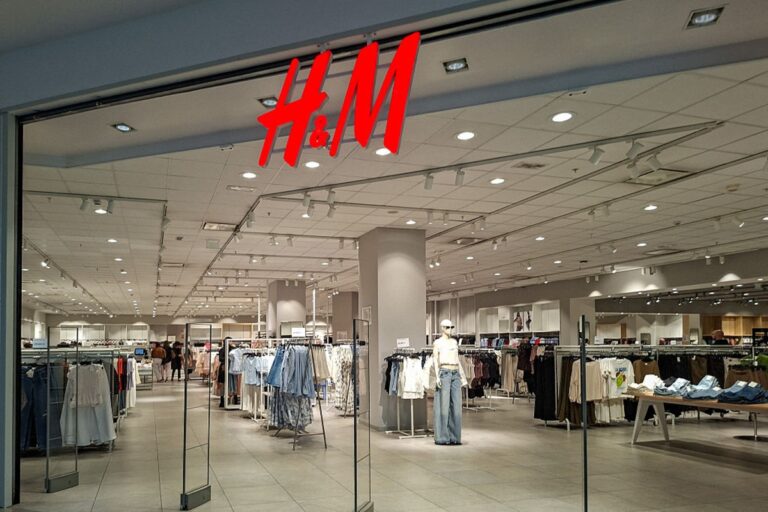
With H&M reporting a third-quarter miss that sent analysts reaching for downgrade notes on Wednesday, a quieter number buried in the Swedish retailer’s books tells the more enduring story: Sellpy, the fully managed resale platform H&M has owned since 2019, generated more than 2 billion Swedish kronor (approximately $206 million USD) in revenue in its most recent fiscal year and still managed to lose 168 million Swedish kronor (approximately $17.3 million USD) — more than double the prior year’s loss.
That combination — record revenue, record losses — is not simply a sign of a young company that has not yet found its stride. Sellpy processed roughly 20 million items across its European warehouse network last year, and the company has been running for more than a decade. The problem it cannot solve is structural: it costs more, per item, to collect, inspect, photograph, price, store, and ship a cheap secondhand garment than a cheap secondhand garment can earn.
The global secondhand market grew to $393 billion in 2025 and is projected to expand at twice the rate of the overall apparel industry through 2030, according to ThredUp’s 14th annual Resale Report, conducted by GlobalData and released in April 2026. By nearly every headline metric, the timing for a platform like Sellpy could not be better. Yet Sellpy’s losses are widening, not narrowing — and the reason illuminates a structural divide that separates winners from casualties in the secondhand space.
Research by PwC UK on circular fashion identifies a minimum processing cost of £5 to £7 (approximately $6.50 to $9 USD) per item for managed-marketplace operations — covering intake, sorting, quality inspection, photography, storage, and fulfillment. For premium or luxury garments that sell for £50 or more, that processing cost is a manageable fraction of the sale price. For fast-fashion items — the kind that H&M’s core brand produces at scale — a significant share may sell for less than $10 on the secondhand market, meaning Sellpy absorbs those logistics costs on items that cannot cover them. Labor, PwC notes, accounts for more than 50 percent of the cost of resold clothing.
This is not a problem Sellpy can grow its way out of without fundamentally changing what it accepts for sale. Processing 20 million items means processing millions of H&M T-shirts and children’s leggings alongside desirable vintage finds, and the math is unforgiving: the items at the cheap end of the range drag the average economics down regardless of how efficiently the warehouse runs.
H&M’s own chief sustainability officer, Leyla Ertur, acknowledged as much in a public statement backing a joint industry call for intervention: “Resale keeps products in use while meeting customer demand for more affordable and sustainable choices. But today, this business model is still economically penalised.” That is a notable admission from the head of sustainability at the company pouring capital into a resale platform that is losing $17 million a year.
Sellpy’s fiscal year runs through November, so the figures now being discussed cover the period ending November 2025. The company’s annual report, first detailed by Swedish financial outlet Breakit and reported by Placera.se on August 10, 2026, shows revenue rising to more than 2 billion Swedish kronor (approximately $206 million USD) from 1.6 billion Swedish kronor (approximately $165 million USD) the prior year. The operating loss deepened to 168 million Swedish kronor (approximately $17.3 million USD) from 79 million Swedish kronor (approximately $8.1 million USD) in Sellpy’s fiscal 2024 annual report. Revenue grew 25 percent. Losses grew 113 percent.
H&M now holds approximately 80 percent of Sellpy’s equity and has been consistently writing checks to keep it running. At the end of fiscal year 2024, H&M extended a 50 million kronor (approximately $5.2 million USD) loan to Sellpy to expand warehouse capacity. During fiscal year 2025, Sellpy conducted share issuances totaling 134 million kronor (approximately $13.8 million USD). The parent company is not stepping back; it is doubling down.
The H&M Q3 FY2026 results, released Wednesday, showed operating profit of 5.91 billion Swedish kronor (approximately $609 million USD) — below the analyst consensus of 6.3 billion kronor — with shares falling more than 5 percent before a partial recovery. Chief Executive Daniel Ervér acknowledged that results fell short of the company’s own expectations, citing supply chain disruptions and weak consumer demand in Western Europe. Sellpy’s escalating losses are one element in that broader pressure.
The contrast with Vinted is instructive. The Lithuanian peer-to-peer marketplace posted Vinted’s 2025 annual results showing revenue of more than €1.1 billion (approximately $1.26 billion USD) in 2025 — a 38 percent increase over the prior year — alongside a net profit of €62 million (approximately $71 million USD). In April 2026, an April 2026 secondary share transaction valued Vinted at approximately €8 billion (approximately $9.2 billion USD).
Vinted’s model is structurally different from Sellpy’s in a decisive way: it does not touch the items. Sellers photograph, describe, and ship their own garments; Vinted charges buyers a service fee. That shift removes virtually the entire reverse-logistics cost from the platform’s economics. A seller listing a €4 blouse on Vinted absorbs her own labor; Sellpy warehouses that blouse, photographs it, and potentially earns less from its sale than it spent processing it.
ThredUp, which operates the same fully managed model as Sellpy in the United States, remains unprofitable — though it has been targeting a 6 percent EBITDA margin for 2026 as it works toward positive free cash flow. The RealReal, which focuses on authenticated luxury consignment and thus works with higher price points, spent years in the red before narrowing its gap. Neither has cracked breakeven at scale.
The pattern points to a simple conclusion: peer-to-peer platforms can profitably intermediate secondhand, but fully managed platforms have not yet demonstrated that the model is sustainably profitable — particularly at fast-fashion price points. PwC’s analysis suggests the only paths to better economics are reducing labor costs through automation, raising the average selling price by curating higher-value inventory, or securing policy changes that reduce the VAT and regulatory burden on resale. H&M is pursuing the first two; it is also explicitly lobbying for the third.
Adding reputational weight to the financial pressure, a documentary produced by German public broadcaster SWR and aired in early 2026 followed 12 garments submitted to Sellpy after the researchers equipped them with hidden tracking devices over an 18-month investigation. Items marked as destined for donation or recycling after failing to sell were tracked to a Polish reseller supplying African markets, and to a secondhand market in Karachi, Pakistan — where, the documentary reported, unsaleable clothing is sometimes used as fuel in brick kilns.
The findings challenged the core of Sellpy’s brand promise: that unsold items are “donated or recycled,” extending their useful life. H&M’s response was that it “firmly believes clothes should never end up in nature,” while Sellpy said it took the findings seriously and had been working with its logistics partners — including Looper Textile Co. joint venture, formed by H&M with waste management company Remondis in 2023 — to increase traceability. Sweden’s consumer authority separately opened an investigation into Sellpy in late 2025 following complaints about missing items and inadequate traceability for rejected garments.
The documentary, whatever its specific methodological limits, landed in a context where the fashion industry’s circular economy claims are facing growing scrutiny. A platform that loses money processing garments and cannot always account for where those garments end up has a compounding credibility problem: the financial and the reputational narratives reinforce each other.
H&M’s strategic rationale for Sellpy has always been layered. Resale burnishes the group’s sustainability credentials; it offers a way to touch customers across a broader range of spending budgets; and it potentially contributes to the group’s stated goal of fully recycled or sustainably sourced materials by 2030. Through the Fashion ReModel collaboration — a project with the Ellen MacArthur Foundation — H&M and peer brands have argued that circular models generate value metrics that do not show up on a conventional income statement: customer acquisition, loyalty, avoided environmental costs.
That argument may be strategically sound. But it does not translate directly into covering an operating loss that grew from $8 million to $17 million in a single year, on revenues that are already past $200 million. At some point, a business losing this much at this scale is not a nascent experiment — it is a structural problem.
The question H&M has not yet answered publicly is whether Sellpy’s economics can be fixed, or whether the fully managed resale model for fast-fashion items is simply incompatible with profitability regardless of how well the warehouse runs. The secondhand market is growing fast. Whether any company can profitably manage the reverse logistics of cheap clothes at scale remains, so far, an open question.
The core issue is unit economics — the cost to process each item versus what that item earns when sold. Research by PwC estimates that managed resale operations face minimum costs of roughly $6.50 to $9 per garment for intake, inspection, photography, storage, and shipping. Fast-fashion items — which form a large portion of Sellpy’s inventory — often sell for less than that on the secondhand market, making them structurally loss-generating regardless of how many of them Sellpy processes. Growing the volume does not fix this if the underlying per-item economics are negative for a large share of throughput.
Vinted uses a peer-to-peer model: sellers handle their own photography, description, and shipping, while Vinted charges buyers a transaction fee. This removes almost the entire reverse-logistics cost from Vinted’s books. Sellpy, like ThredUp in the United States, operates a fully managed model — it collects, processes, and ships every item itself. That makes it more convenient for sellers but more expensive to operate, and those costs cannot always be recovered from the sale prices of cheap garments.
According to Sellpy’s stated policy, unsold items are donated or recycled. A 2026 investigation by German broadcaster SWR, using tracking devices embedded in 12 garments, found that some items marked for donation or recycling appeared at resellers shipping goods to African markets and at secondhand markets in Pakistan — with local reports suggesting some clothing is incinerated as fuel. Sellpy said it is working with logistics partners to tighten traceability. Sweden’s consumer authority opened a separate investigation in late 2025 into complaints about missing items and inadequate tracking of rejected garments.
H&M has committed to 100 percent recycled or sustainably sourced materials by 2030, and it frames Sellpy as a key mechanism for that goal. If Sellpy continues to lose money at this rate — or if the investigation into where unsold items end up undermines the platform’s circular-economy claims — the company faces pressure from both the financial and reputational directions simultaneously. H&M’s own sustainability chief has publicly argued that the resale business model is currently “economically penalised” and that government action is needed to make the math work — an acknowledgment that the company cannot fix this problem internally.