How the U.K. Is Supporting Saudi Arabia In Its Fight Against the Houthis

September 24, 2026:

How the U.K. Is Supporting Saudi Arabia In Its Fight Against the Houthis

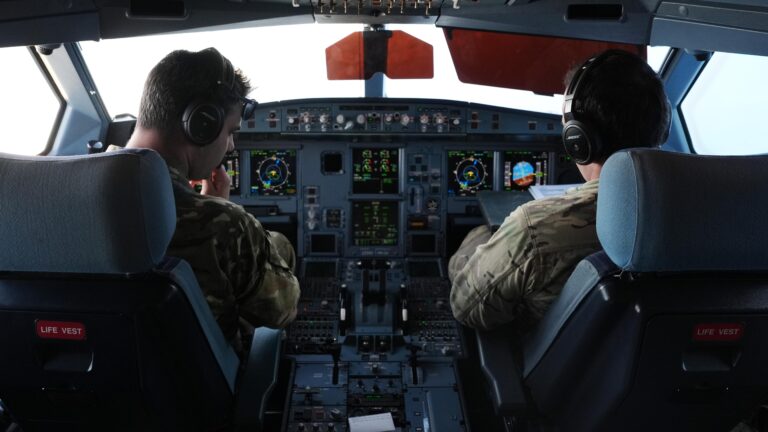
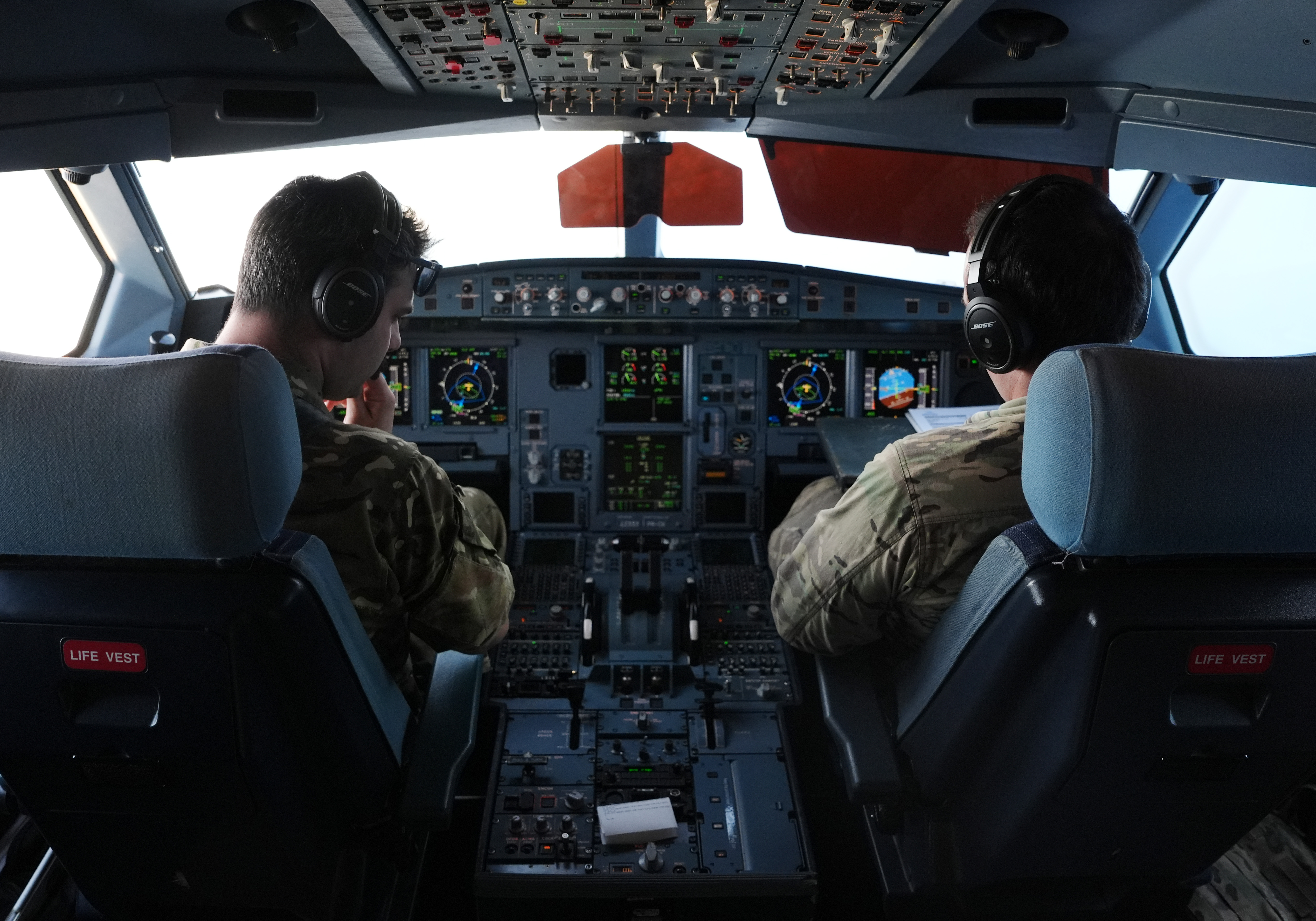
Crew in the cockpit of an RAF Voyager air-to-air refuelling (AAR) aircraft above RAF Akrotiri in Cyprus on March 27, 2026. —Jonathan Brady—Getty Images

Saudi Arabia will have assistance from a key Western ally in its fight against Yemen’s Iran-backed Houthis, as Britain is providing military support to the Kingdom in a bid to help restore stability in the region and ease pressures on the global energy supply.

“We’re working with our friends to try and deliver that de-escalation,” British Defense Minister Luke Pollard said in an interview Tuesday. The “purely defensive” deployment of an RAF Voyager to Saudi Arabia is intended to “ensure there’s no further escalation in the Red Sea, which could further risk our fuel prices,” he added.

The international assistance comes following weeks of fighting between the Saudi-backed government of Yemen and the Houthis, which shattered a four-year informal cease-fire in the country’s civil war. The Houthi rebels have made significant advances along the Red Sea coastline as they seek to tighten their grip on the Bab el-Mandeb, a critical maritime chokepoint that links Asia and Europe via the Red Sea and Suez Canal. With global energy supplies already under strain due to the disruption in the Strait of Hormuz amid the Iran war, the strangling of another trade route could further impact global oil and fuel prices.

“Much of our trade, both in goods and in energy, comes through that part of the world. And so, what happens in that part of the Middle East is absolutely vital for our own national security and our own economic security,” Pollard said, explaining why Britain responded to the Kingdom’s request for help.

When talking to reporters en route to the United Nations General Assembly in New York, ahead of his sit-down with President Donald Trump on Tuesday, U.K. Prime Minister Andy Burnham also cited the cost of living “pressures” at home as a key reason for the support and said he was “acting to secure the interests of Britain and the wider region.”  

Burnham emphasized that it’s a “time-limited agreement in terms of the assistance that we will provide, but we will keep it under review.”  

The support extended to Saudi Arabia marks Burnham’s first military deployment since he became Prime Minister in July. However, it’s far from the first time the U.K. has offered assistance to Saudi Arabia, as the two nations share a close military alliance.

How exactly will the U.K. be supporting Saudi Arabia?

The Ministry of Defense on Tuesday confirmed it had agreed to “provide an RAF Voyager air-to-air refuelling aircraft to support Saudi defensive activity” in the region. According to the British Royal Air Force (RAF), a Voyager provides strategic air support by allowing jets and other aircraft to refuel while in flight.

Andreas Krieg, a senior lecturer in defense studies at King’s College London, says the Voyager “basically allows the Saudi Air Force to stay in the air over Yemen for longer without having to fly a single sortie and then returning to base.”

“It increases the operational tempo in terms of targeting strikes and being more flexible, and more agile in responding to changing situations on the ground,” he tells TIME.

According to Pollard, the Voyager is set to operate from the British RAF base in Cyprus, which was targeted by Iran earlier this year, and will support the British-built Typhoon jets used by Saudi Arabia. “That will help them with their defensive actions against the Houthis, who have been attacking not just the capital of Saudi Arabia in Riyadh, but also the Republic of Yemen as well,” he said.

Britain has historically held the role of “guarantor for maritime freedom of navigation all around the world,” says Krieg, describing the U.K.’s latest attempt to ease tensions over the Red Sea as an example of the government “stepping up to the plate.”

“We’re not just helping a partner in the region,” he adds. “We’re also helping ourselves, because the Houthis having the Bab al-Mandeb is not something that the U.K. can tolerate.” 

Krieg says the move signifies a small success for Saudi Arabia and other Gulf states as they seek to strengthen bilateral security relationships beyond their traditional reliance on the U.S. This is “the worst security situation the Saudis have been in [for] a very long time,” he notes.

“Gulf states are trying to supplement the existing U.S. capabilities with all kinds of [other] agreements, like the Mecca pact,” he says, referencing a trilateral defense security pact made between Pakistan, Saudi Arabia, and Turkey in August. “The U.K. wants to be seen as being active and being there when a friend is in need.” 

The long-standing alliance between the U.K. and Saudi Arabia

The U.K. and Saudi Arabia share an alliance that dates back to almost a century ago. 

“It’s a very long, strategic partnership,” says Krieg. “It goes back to the early days of the current Kingdom, where Britain, at the time, was still the only superpower in the world, and was controlling the waterways and a lot of the territories in Arabia, including in South Yemen.”

Britain was among the first governments to recognize the independent territories of Saudi Arabia through the Treaty of Jeddah in 1927, which helped solidify the boundaries of the nascent kingdom ahead of the formation of modern Saudi Arabia in 1932.

Decades later, the U.K. supported the Saudi-led military coalition in its campaign against the Houthis from 2015 until the 2022 truce.

According to the Campaign Against Arms Trade (CAAT), the published value of U.K. arms export licenses to Saudi Arabia from the start of the bombing campaign in March 2015 through the April 2022 truce was £7.1 billion ($9.4 billion).

“The two main Western backers of the Saudi Kingdom are the Americans and the British,” says David Wearing, an assistant professor in international relations at the University of Sussex. “From the British and the American point of view, the Middle East is strategically important because it’s a huge source of global energy suppliers, oil, and gas.” 

In late 2023, the Houthis started disrupted shipping in the Red Sea, targeting cargo ships they said were linked to Israel, in what they described as a show of support for Palestinians in Gaza. Amid concerns over the impact on the world economy, the U.S. and U.K. joined forces in January 2024, striking multiple Houthi targets in Yemen. In April 2025, the U.K. government participated in another joint operation with the U.S. against a Houthi military facility in Yemen.

In March of this year, the U.K. deployed a Sky Sabre, the army’s medium range air defense missile system, to Saudi Arabia to defend the Kingdom against Iranian missile and drone attacks.

The U.K. government’s Strategic Export Controls Annual Report of 2025 described the military relationship with Saudi Arabia as a “longstanding” partnership providing “Typhoon, Tornado, and Hawk aircraft, mine countermeasure vessels, and associated munitions, infrastructure, logistics and manpower support packages.”

BAE Systems—a major British defense, aerospace, and security company—said in its own 2025 report that Saudi Arabia was its largest customer by sales in its air business.

How are Saudi Arabia’s other allies responding to the Houthis advances?

Saudi Arabia has reportedly sought assistance from allies to stave off Houthi advances. France, Pakistan, and Egypt issued strong statements condemning the Houthi attacks, but have not publicly announced new military support for the Kingdom.

U.S. President Donald Trump is understood to have received requests from Saudi Crown Prince Mohammed bin Salman to strike the Houthi rebels. According to the New York Times, Trump reportedly considered launching strikes against the Houthis over the weekend, before ultimately deciding against it. TIME has reached out to the White House for comment.

Asked Tuesday why Washington has held back from striking the Houthis, Secretary of State Marco Rubio said it’s “a very dangerous and complex” conflict.

“If it comes down to it, the United States will always stand with Saudi Arabia and support them because we have an agreement with them to do so,” he said, referencing the U.S. economic and defense partnership with Saudi Arabia signed last November, that deepened co-operation between the two countries.

Fears mount over global energy supply as Houthis advance

Global energy supplies have been under increasing strain since the start of the Iran war on Feb. 28, as Tehran has leveraged its chokehold over the Strait of Hormuz, through which around a fifth of global oil production flowed prior to the conflict.

In the past few weeks, the Houthis have captured Yemen’s port city of Mokha and the strategic Perim Island, which sits in the Bab el-Mandeb Strait. If the Houthis were to assume control of the strait, shipping companies could be forced to travel via South Africa’s Cape of Good Hope—a longer, costlier route. 

The volume of crude oil and petroleum liquids moving through the Bab el-Mandeb increased sharply earlier this year, as the route has been used as an alternative to the Strait of Hormuz. The shipments have risen from 5.6 million barrels per day in the first quarter of 2026 to 8.1 million per day in the second quarter, according to the U.S. Energy Information Administration (EIA).

However, recent crossings have been marred by uncertainty over the potential threat posed by the Houthis. Data shared with TIME by Kpler, a commodities data and analytics firm, showed an estimated 34 vessels transited the Bab el-Mandeb on Sept. 15, a drop from the estimated 53 crossings recorded on July 15th. 

A spokesperson for the Houthis on Sept. 11 insisted the waterway will remain free to roam “with the exception of Saudi ships.” Yet concerns among global leaders and shipping companies remain.

Burnham and other U.K. officials have framed Britain’s defensive support partly around the potential economic consequences at home. The average price of petrol rose by 9.1 pence per litre between July and August 2026, compared with a rise of 0.3 pence per litre between July and August 2025, according to data from the Office of National Statistics.

Wearing says that because oil is traded on a global market, supply disruptions in one region can push up benchmark prices worldwide, with those costs cascading through the broader economy.

“What Americans call gas and what we call petrol, if that goes up, think how many goods to market are taken by heavy lorries on petrol. It can push up the price of everything: shipping, road transit, energy, all kinds of industrial production and many consumer products,” he says. “Oil is the lifeblood of the world economy, the longer you restrict the supply, the higher the price goes, the more inflationary pressure there is on everything, and that affects Britain, but it affects the whole system. It’s like a heart attack in a human body, suddenly it’s not being pumped round.”

Source link