September 22, 2026:


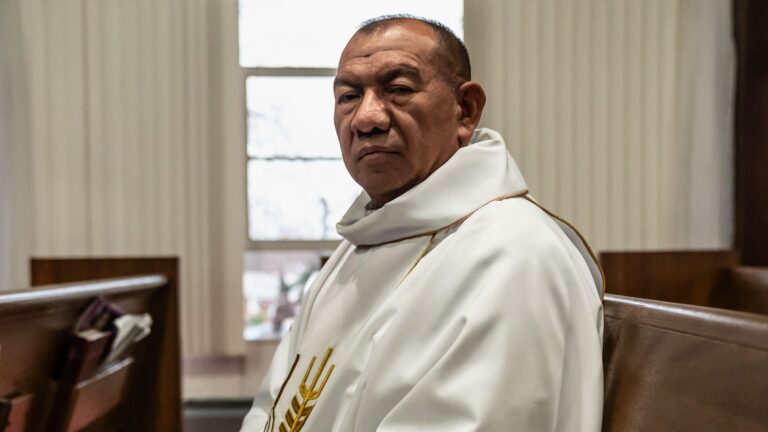
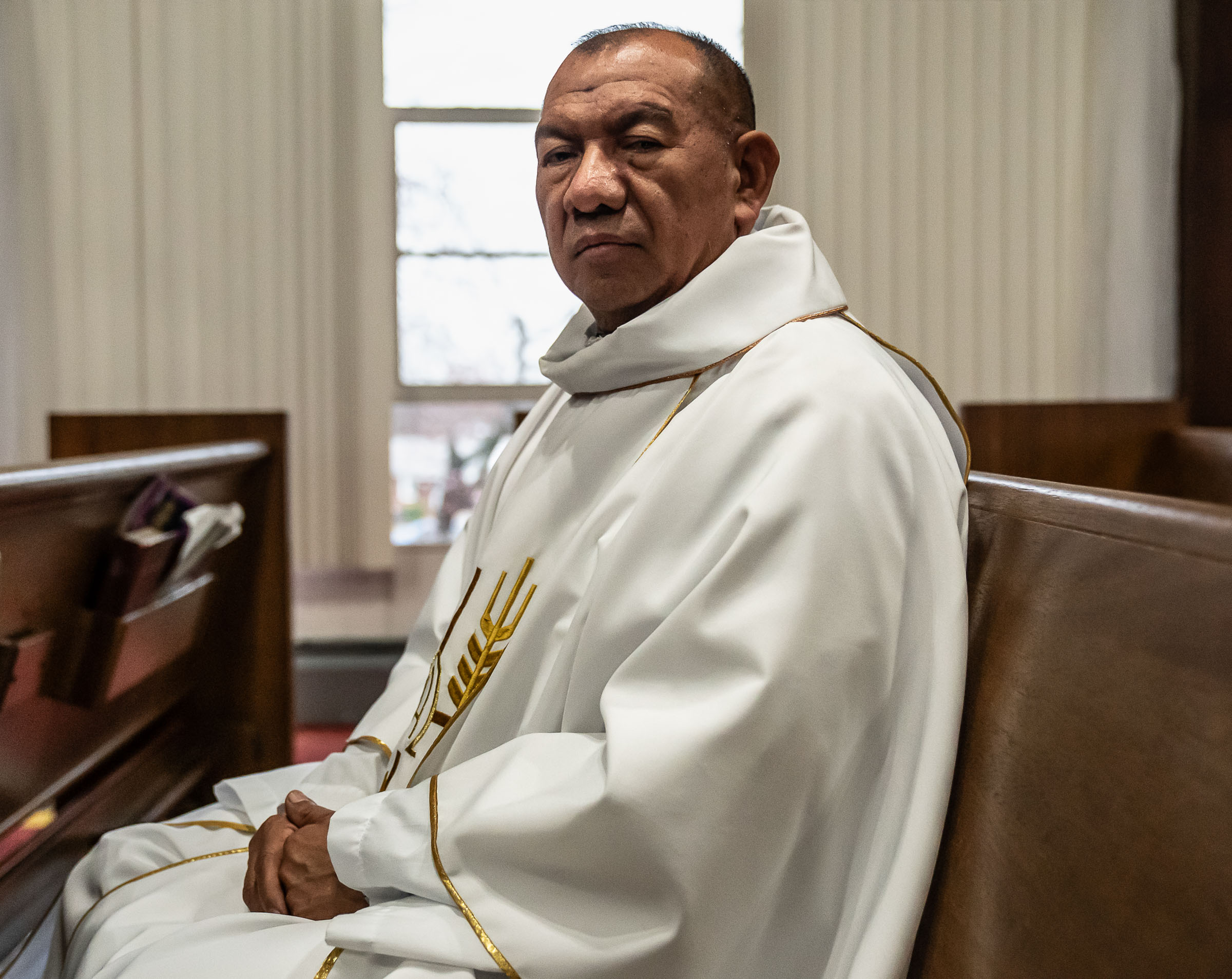
When a mother returned to Maryland earlier this year after four months in Immigration and Customs Enforcement detention, her children, ages one and four, did not recognize her at first. In her absence, they had lived with Vidal Rivas, an Episcopal priest who had agreed to be their temporary guardian if immigration authorities took her into custody.
Rivas’ wife slept beside the children to soothe them while their mother was gone. When his wife became sick, Rivas took on more of the childcare.
The experience was demanding. But Rivas, 62, stands ready to do the same for 29 other children whose immigrant parents have named him as their standby guardian. Two more families are making similar arrangements with him, he says.
“I feel a lot of responsibility, and a very heavy weight,” says Rivas, who has served at St. Matthews Episcopal Church in suburban Washington for nearly two decades.
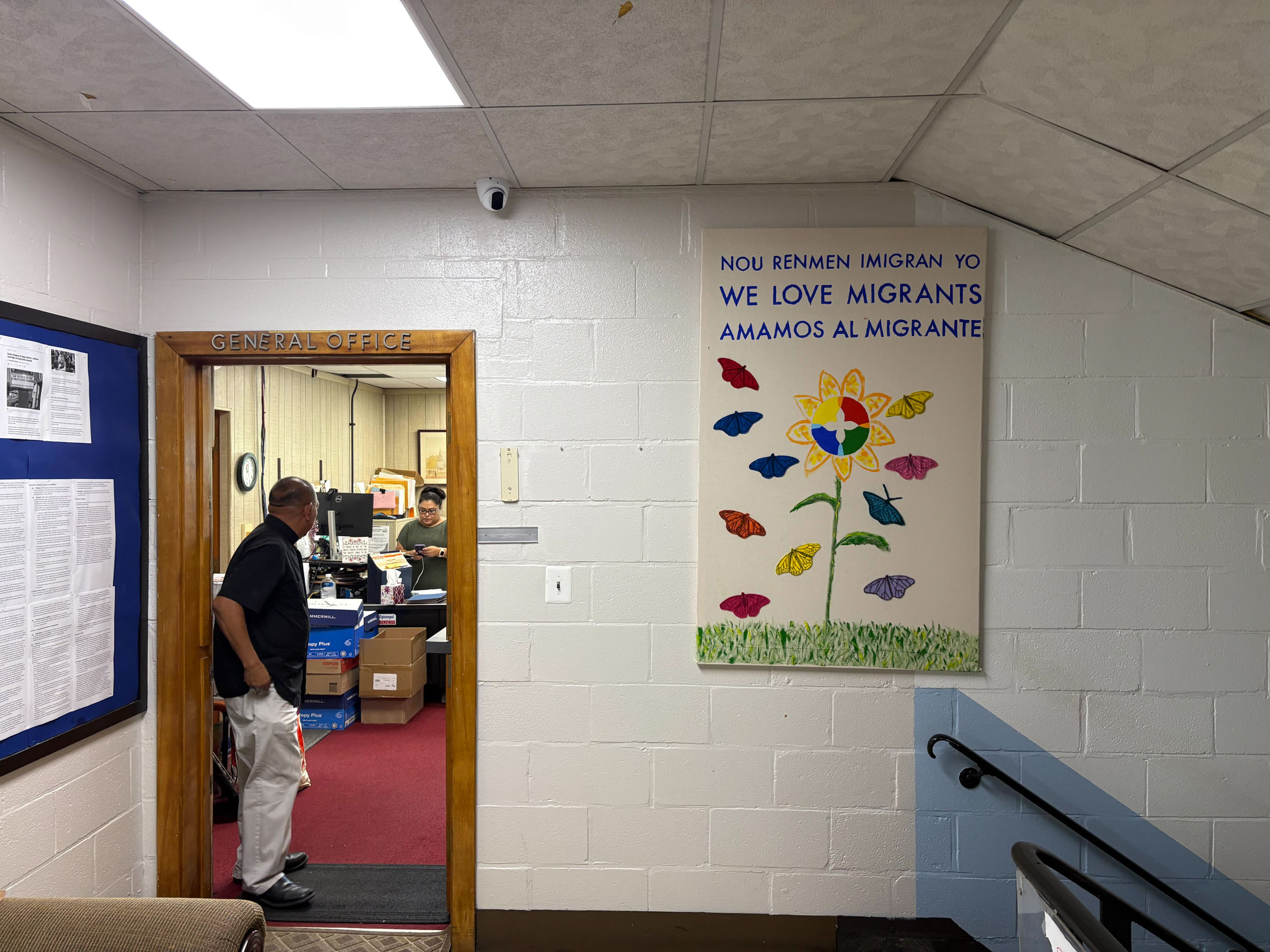
Inside the church hangs a sign bearing the same message in English, Spanish and Haitian Creole: “We love migrants.” For Rivas, the words have become a commitment to the families who fear an immigration arrest could suddenly separate them from their children.
Rivas began encouraging families to name him as a standby guardian last year, shortly after President Donald Trump returned to office. Nearly all of the parents are Salvadoran, like him, and have been bracing for the Trump Administration to end Temporary Protected Status, or TPS, for roughly 170,000 immigrants from that country.
“It’s not easy for parents to know that they could be arrested and their children could be left [in the U.S.] without them,” says Rivas.
Under Maryland law, parents can designate a standby guardian in the event they are arrested by immigration authorities. The designated guardian automatically becomes the child’s legal guardian for six months, with the possibility to extend if approved by a judge. Rivas says some parents have talked to him about contingency plans in case they remain in a detention center for longer.
Maryland was among the first states to revise its guardianship laws to help prevent the children of detained immigrants from entering foster care. During Trump’s first term, state lawmakers passed a law allowing families to name a temporary guardian if detention or deportation separates their family. In July, Massachusetts made a similar change in state law, joining Virginia, New York, California, Nevada, and Washington, D.C. to streamline such arrangements.
After the mother of two young children was released, Rivas and his wife remained close to the family. “We now feel like the children’s grandparents, because we still have a close relationship with her, looking after her and looking after the children,” he says.
Caring for the two children made Rivas acutely aware of the scale of what he has agreed to. If immigration enforcement ramps up in Hyattsville, a small city where more than a third of the population is Hispanic, he could be called upon to care for many children at once
Such fears have been further exacerbated by the uncertainty surrounding TPS, a program Congress created in 1990 to protect immigrants who cannot safely return to countries affected by armed conflict, natural disasters, or other extraordinary conditions. El Salvador was the first country designated for TPS in 1990 due to its civil war, and that protection was renewed in 2001 after the country. Since 1990, more than 170,000 Salvadorans have been granted TPS status, becoming one of the largest groups protected by the program.
The Trump administration has recently rolled back TPS protections for more than a dozen other groups—including Haitians, Hondurans, and Nicaraguans—fueling fears that El Salvador could be next.

In early September, hours before the TPS designation for Salvadorans was set to expire, the Department of Homeland Security released a notice that suggested it would remain in place for now. The short notice said Salvadorans under TPS would continue to “retain protection including work authorization,” but added that an announcement on the program’s future “will be made at the appropriate time.”
The statement offered little reassurance. Reports quickly emerged of Salvadorans in Hyattsville and elsewhere losing their jobs amid confusion over their immigration status. Even those still employed worry that the Trump Administration’s reprieve is only temporary.
“Many people have left the church for other cities, and some have returned to their country,” Rivas says. “People are in fear and become insecure.”
Maryland is home to many Salvadorans who fled to the United States in the 1990s or the early 2000s. Around that time, El Salvador was just rebuilding itself from a brutal civil war, before a powerful hurricane and a pair of earthquakes hit the Central American country.
For those who have been in the United States for more than 20 years, returning home may no longer feel like a viable option. More than 27% of El Salvaror’s population lives below the national poverty line, according to the World Bank. It also has the highest imprisonment rate in the world, according to data from the World Prison Brief, a database compiled by the Institute for Crime & Justice Policy Research (ICPR) at Birkbeck, University of London. President Nayib Bukele has overseen an aggressive crackdown on gang violence as well as critics of his administration. The strategy is credited with reducing the country’s crime rate, but rights groups accuse his government of arbitrary detention and abuses in prison. Last year, Trump sent hundreds of deported Venezuelan migrants to El Salvador’s CECOT, a maximum security jail designated for gang members.
Rivas grew up in El Salvador during another tumultuous era. A military coup in 1979 led to a deadly decade-long civil war between the U.S.-backed Salvadoran government and a left-wing guerrilla group backed by Cuba.
Rivas decided to become a Catholic priest at age 27. He says the military viewed Catholic clergy who advocated for social justice and human rights as communists. He was detained, beaten and hospitalized, he says.
Rivas came to the U.S. in 1998 to work at a Catholic Church in Washington, D.C., where his advocacy work put him at odds with the church’s leadership. He eventually converted to the more liberal Episcopalian Church, and joined St. Matthews in 2008.
As the church’s Hispanic membership has grown, Rivas has felt an increasing responsibility to help parishioners struggling with immigration issues. Watching parents cry as they discussed what might happen to them—and their children—convinced him that he had to do more.
Rivas says the support from the community over his guardian commitments has been overwhelming. Many have donated clothes and toys, and other churches and immigration organizations are also helping parents with standby guardianship arrangements.
If he ultimately takes in more children, he intends to open a bank account in the church’s name to accept donations to cover the costs of childcare. “I know that there are also other churches that are willing to support us,” he says.
Rivas acknowledges that caring for so many children at once would be an enormous challenge. But in the current political environment, he sees it as “a moral obligation.”
“I’m going to keep doing it as much as I can,” he says.