New Underwater Drone Floats Aim to Track Ocean Warming at Extreme Depths

September 22, 2026:

New Underwater Drone Floats Aim to Track Ocean Warming at Extreme Depths

More than 70% of Earth is covered by ocean. Yet large parts of it remain difficult to explore.

That is becoming a bigger concern as climate change warms the world’s oceans. Scientists need better data from deeper waters to understand where heat and carbon are stored.

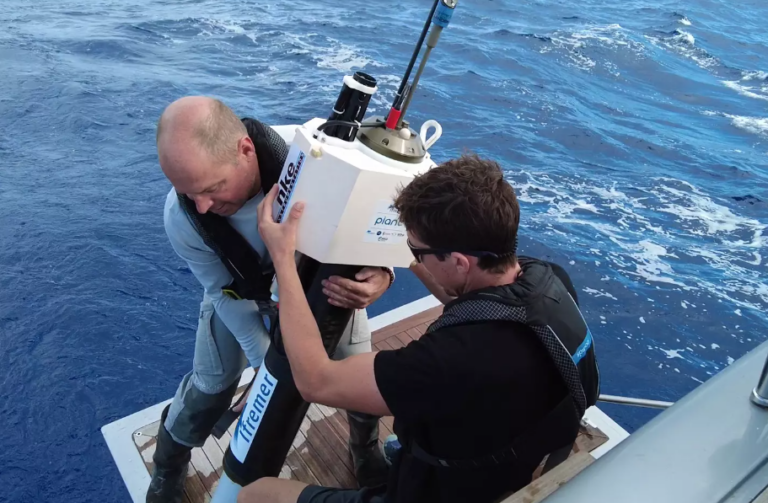
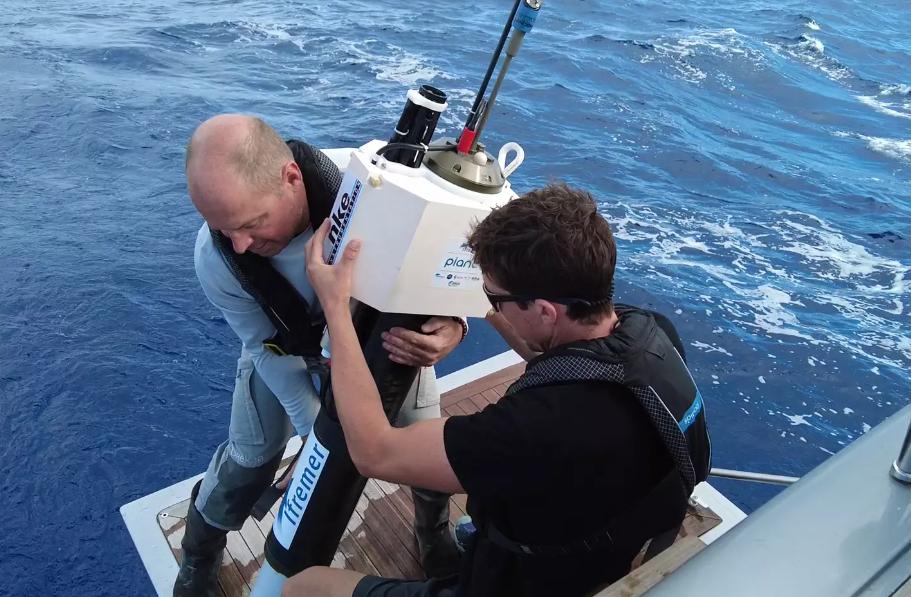
A new type of autonomous underwater drone float could help address this challenge. France’s state ocean research agency, Ifremer, has developed Deep-6000 prototypes that can travel to depths of 6,000 meters.

The project could eventually add around 30 more deep-sea floats to the international Argo network by 2028. This would give researchers access to data from more than 98% of the ocean’s volume.

Taking Ocean Exploration to 6,000 Meters

Ifremer, Guillaume LE PROVOST

The Argo Program has been a major source of ocean data since it began in 1999. The international network uses roughly 4,000 autonomous floats across the world’s oceans.

Most of these floats operate at depths between 2,000 and 4,000 meters. However, ocean warming is not limited to these layers.

Some heat moves into deeper parts of the ocean. Without measurements from those areas, scientists can miss important changes below the surface.

The Deep-6000 project is designed to address this data gap.

Ifremer said its two prototypes completed five dives to 6,000 meters between January 11 and February 2. The missions successfully gathered measurements from the abyssal zone.

France is now the third country, after China and the United States, to develop Argo floats capable of reaching 6,000 meters.

Building Floats For Extreme Ocean Pressure

Reaching the deep ocean is not easy. Water pressure increases by about one atmosphere for every 10 meters of depth.

At 6,000 meters, pressure can reach roughly 600 times the pressure at sea level. Any equipment operating at that depth must be built to withstand extreme conditions.

Ifremer designed the Deep-6000 floats with composite materials instead of pure titanium. Each float weighs about 88 pounds. That makes it roughly twice as heavy as a typical Argo float.

The devices are built to complete repeated missions. They can drift for about nine days before beginning a deeper descent.

Once they reach their profiling depth, the float spends roughly three hours collecting measurements. It then rises back to the surface.

After surfacing, the float sends its data to researchers through a satellite connection.

What Argo Floats Measure

Deep-sea floats collect several types of ocean data. These include temperature, salinity, oxygen, and pressure.

Each measurement can help scientists understand how the ocean moves and changes.

According to Engadget, the information is also useful for studying ocean warming and circulation. It can support forecasts related to monsoons, sea-level rise, and other climate processes.

The Argo network currently produces more than 100,000 temperature and salinity profiles each year. The collected data is freely available to researchers and other users.

Improving Data on Deep Ocean Changes

The Deep-6000 project could give scientists a better view of conditions far below the ocean surface.

Measurements from deeper waters can help researchers track how heat and carbon move through the ocean. They can also improve models used to understand future changes in ocean conditions.

Researchers could gain significantly more information from the deepest parts of the ocean if they successfully deploy around 30 additional deep-sea floats in the Argo network by 2028.

Speaking of ocean warming, Tech Times reported earlier this month that this phenomenon reverses king crab larval swimming. This also threatens the Florida Reef program, which focuses on natural coral conservation.

Source link