HomeAuto Stuart Fails Episode 9 DC Crossover: Five Quantum Physics Concepts, One Blocked Hero
Stuart Fails Episode 9 DC Crossover: Five Quantum Physics Concepts, One Blocked Hero
September 22, 2026:
Hbomax.com
Stuart Bloom’s gang escaped a warzone last week only to land inside a printed DC Comics comic book, and the ninth episode of Stuart Fails to Save the Universe — titled “Spoiler: We Couldn’t Get Green Lantern” — quietly ran five distinct physics thought experiments in 25 minutes and got most of them substantially right. That the Golden Age Flash, Jay Garrick, served as the dimensional rescue mechanism was not an accident: the choice reaches back to the specific 1961 comic that first made the DC multiverse legible and invokes, almost certainly without realizing it, the same quantum coherence logic that Hugh Everett III had introduced to physics only four years earlier. The episode aired on HBO Max on September 18, 2026, and the Season 1 finale is scheduled for September 24, 2026. Season 2 is already confirmed, announced via the Season 2 renewal press release in August 2026.
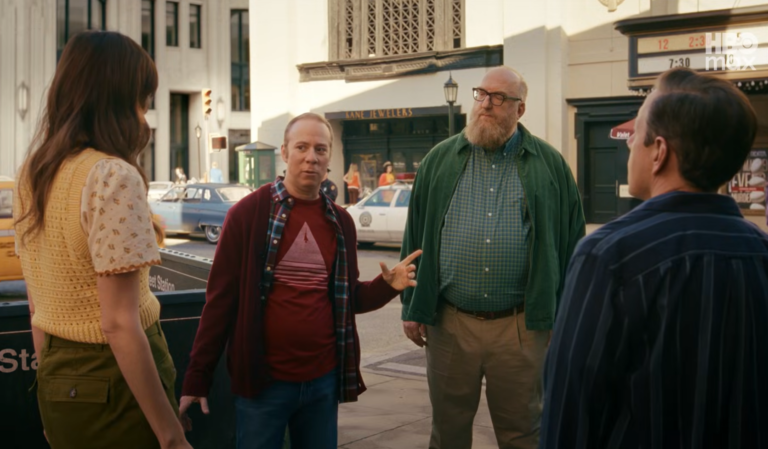
The episode 9 recap and ending confirms the episode’s full scope: Stuart, Denise, Bert, and Kripke embedded inside a DC Comics universe, navigating Gotham City and Central City before Jay Garrick’s Flash extracts them — and the Pasadena comic book store they return to has been replaced by a void.
The Comic-Book Entrapment Problem: Is a 2D Universe Physically Possible?
The episode opens with Stuart, Denise, Bert, and Kripke physically embedded inside a printed comic book, moving between panels and interacting with fictional residents of Gotham City and Central City as fully three-dimensional beings. From a strict materialist standpoint this is impossible: a printed comic book is a two-dimensional information substrate — cellulose and ink — with no dimensional depth sufficient to house biological organisms.
The closest real physics analog is the holographic principle physics explainer, first proposed by Dutch theoretical physicist Gerard ‘t Hooft in 1993 and given a precise string-theory formulation by Leonard Susskind. The principle holds that the total information content of a three-dimensional region of space can be fully encoded on its two-dimensional boundary surface — at most one bit per four Planck areas, per the Bekenstein bound. If the comic book were understood not as paper but as a holographic projector, a 2D surface whose information density encodes a full 3D universe, the characters would inhabit the projection space and experience it as fully three-dimensional, even though its description fits on a flat page.
This is a speculative extension of the principle — the holographic principle describes quantum gravity near black hole event horizons, not printing processes — but the mapping is internally consistent with the show’s worldbuilding logic. Within the show’s premise, the broken quantum-interference device generates branching universes through uncontrolled quantum decoherence. The comic-book universe is simply one branch whose physical constants evolved to mirror DC Comics’ internal continuity rules rather than the Standard Model. The show earns its speculative physics by giving it a coherent foundation.
Jay Garrick, Vibrational Phasing, and Why the Choice of Flash Matters
That Jay Garrick — not Barry Allen, not Wally West — is the Flash who rescues Stuart’s team is the episode’s most historically precise decision, even if it was partly a production workaround.
Garrick first appeared in Flash Comics #1 in 1940 as the original bearer of super-speed, but his significance to multiverse physics in fiction came later. In September 1961, writer Gardner Fox and artist Carmine Infantino published Flash of Two Worlds, the landmark story in The Flash #123, in which Barry Allen vibrates his molecules to the correct resonant frequency and crosses from Earth-One to a parallel Earth where Garrick exists. That story formalized the DC multiverse and established the mechanism for crossing it: vibrational resonance — changing a system’s quantum state to phase between dimensional branches.
“Flash of Two Worlds” appeared in September 1961 — just four years after Everett’s 1957 doctoral thesis proposing the Many-Worlds Interpretation of quantum mechanics, in which every quantum measurement event causes the universal wave function to branch into all possible outcomes simultaneously, all branches equally real. The physics community largely ignored Everett’s paper; DC Comics, apparently independently, put the same basic intuition into pop culture in the same four-year window. By choosing Garrick as the dimensional rescue agent, the writers — consciously or not — invoked the original fictional instantiation of inter-branch transit via quantum state adjustment.
In the show’s internal logic, the Speed Force is an extradimensional energy field that allows vibrational phasing: adjusting a speedster’s molecular frequency to match the resonant state of a different dimensional branch. The real physics analog is quantum tunneling in physics, the phenomenon in which a particle passes through a potential barrier it classically lacks sufficient energy to surmount. Quantum tunneling is real — it powers the scanning tunneling microscope, tunnel diodes, and nuclear fusion in stars. At macroscopic scales, the probability becomes vanishingly small: a team at the University of Leicester calculated in their paper “Dodging a Bullet” that the Leicester quantum tunneling calculation of a bullet quantum-tunneling through a human yields a probability of approximately ((5.11 × 10⁻¹⁹) × e^(−4.48 × 10²⁴)) raised to the power of 3.21 × 10¹⁹ — effectively zero. The show’s fiction is not the tunneling itself but coherent quantum-state control imposed on an entire organism, which is far beyond any current or theoretically near-term capability. That speculative leap is clean and acknowledged by the show’s logic.
When the Flash Fights Too Fast to See: Relativistic Perception and the Comedy of Physics
The episode’s sharpest science joke is also its most physically grounded. The Flash-versus-Mister-Freeze battle takes place at super-speed, rendering it invisible to the characters and the audience — Stuart narrates it in real time based on sound alone. That choice is scientifically defensible.
A Flash moving at even Mach 10 — roughly ten times the speed of sound, or about 2.1 miles per second (3.4 km/s) — would be entirely invisible to the human eye. Human visual motion perception resolves roughly 10 to 12 distinct images per second (the flicker-fusion threshold for smooth motion perception, distinct from the higher ~60 Hz flicker-fusion threshold). At Mach 10, a human-sized object would cross a typical room in a fraction of a millisecond. No retina in the room would register it.
If the show’s Speed Force operates at a meaningfully relativistic velocity — which the DC mythology implies for cross-dimensional transit — the numbers become stranger. At 99.9999 percent of the speed of light, the Lorentz factor and time dilation is approximately 707, meaning the Flash would experience roughly one second for every 707 seconds elapsed in Stuart’s reference frame. The formula: γ = 1/√(1 − v²/c²), with v/c = 0.999999, gives √(1 − 0.999998) = √0.000002 ≈ 0.001414, and γ ≈ 707. This figure is mathematically correct.
The comedy beat is structurally sound: the only accurate way to convey a super-speed fight to a non-speedster audience is through its side effects, not its actions. Stuart hearing metal impacts and concussive blasts and narrating them as observed facts is exactly the epistemological position a non-relativistic observer occupies relative to a genuinely relativistic event.
Mister Freeze vs. Captain Cold: Why Stuart’s Continuity Complaint Is Scientifically Valid
Stuart explicitly flags the use of Mister Freeze — a Batman/Gotham villain — in what should by rights be a Flash/Central City story arc as a canon error, arguing that Captain Cold (Leonard Snart) would have made more scientific and canonical sense. Stuart is correct on both counts, and the distinction is more than trivia.
Mister Freeze (Dr. Victor Fries) weaponizes conventional cryogenics: his suit and ray gun achieve rapid heat extraction, bringing targets to near absolute zero by accelerated thermal conduction. The physics here mirrors real cryogenic technology — liquid helium cooling and Peltier-effect heat pumps, just scaled and weaponized. In thermodynamic terms, Freeze reduces the average kinetic energy of matter in the target region.
Captain Cold’s cold gun physics, as established in DC Comics continuity, operates on a fundamentally different principle: rather than simply removing heat, it slows the vibrational frequency of matter at the quantum level — specifically targeting the Speed Force resonance frequency that speedsters use for dimensional phasing. This distinction is meaningful. Temperature is a measure of average kinetic energy, so conventional cooling and quantum-state slowing are not the same operation. A weapon designed to disrupt Speed Force vibration is by design a specific countermeasure against a Flash’s physics, not a general thermal weapon repurposed as a villain.
The show flagging this mismatch as an in-universe error functions as embedded science communication. The writers are teaching the audience that different fictional technologies, even within the same genre universe, operate on distinct physical frameworks — and that villain assignment to hero is not arbitrary but reflects specific adversarial symmetries. That is a more sophisticated point about the internal logic of superhero physics than most genre commentary bothers to make.
Where Gotham City Really Is: The Urban Geography Problem Stuart Actually Solves
One of the episode’s recurring comedy beats involves Stuart deploying encyclopedic comics knowledge of where fictional cities map onto real American geography. This knowledge becomes literally navigational — Stuart knows which fictional transit routes connect fictional boroughs because he memorized decades of Silver Age issue numbering.
This is a genuine area of unresolved DC Comics scholarship. Gotham City’s real-world geography has been associated at various points with New York City (particularly lower Manhattan and a New Jersey-adjacent waterfront), Baltimore, and Chicago, reflecting the 1930s–40s industrial East Coast anxieties of its founding stories. Central City — home of the Flash — is most commonly placed in the American Midwest, with Kansas City or St. Louis as the nearest real-world analogs, though early issues positioned it in Ohio.
The urban planning implication is genuine. Gotham’s Gothic grotesquerie, its dense verticality, its persistent economic stratification, and its aesthetic of industrial decay all reflect the anxieties of 1930s New York. Central City’s more open, grid-planned, optimistic character reflects the postwar American suburb — the Flash as a figure of forward momentum through open space. The show’s thesis that Stuart’s specialist knowledge constitutes genuine expertise is validated by this moment: the knowledge that seems most arcane (which fictional superhero city maps onto which real metropolitan region) is the knowledge that navigates a life-or-death situation.
When Warner Bros. Becomes a Decoherence Mechanism
The episode’s title — “Spoiler: We Couldn’t Get Green Lantern” — is self-aware comedy, but it encodes the episode’s most philosophically interesting claim. Co-creator Zak Penn confirmed to Deadline that the team did ask to use the character, and Chuck Lorre told TV Guide that HBO blocked it to protect the concurrent prestige series Lanterns, which had premiered on August 16, 2026, just weeks before this episode aired. HBO needed the Green Lantern brand held in reserve for a high-stakes investment; using the character in a comedy context — even a loving one — risked diluting the tonal territory Lanterns was trying to occupy.
The show names this constraint directly in its title and then treats it as a punchline. But the structural claim is worth taking seriously: intellectual property law functions as an institutional decoherence mechanism for narrative multiverses.
In Hugh Everett’s Many-Worlds Interpretation, the process of quantum decoherence is the process by which different branches of the universal wave function become mutually inaccessible — once environmental interaction has entangled a branch with its surroundings, that branch cannot interfere with adjacent branches without destroying the coherence that makes it a distinct reality. Decoherence is not a barrier imposed from outside; it is an emergent property of the system protecting its own internal consistency.
IP law does the same thing for narrative universes. Once Warner Bros. commits a character to a specific tonal branch — a prestige detective thriller, say — allowing that character to simultaneously inhabit a comedy branch risks destroying the coherence of the prestige branch. The legal mechanism (licensing exclusivity) enforces the same structural outcome as physical decoherence: two branches that would interfere with each other are kept separate. “Flash of Two Worlds” could only be written because both characters existed within a single corporate entity; Stuart Fails could include the Flash for the same reason. The Green Lantern was inaccessible not because it does not exist in the same universe but because the decoherence mechanism was actively protecting another branch.
This is not just a clever metaphor. It is a description of how narrative multiverses actually work in practice: their accessible topology is determined by IP ownership, not by physics.
Season 2, the Finale, and the Cosmic Entity Overhead
The show was renewed for Season 2 in August 2026 — announced after just four episodes had aired — on the strength of becoming HBO Max’s second-biggest global comedy launch globally. Season 1 earned a Certified Fresh rating on Rotten Tomatoes, and critics called it “the most dynamic sitcom that has ever existed” (Slate), “relentlessly, inventively funny” (NPR), and “otherworldly hilarious” (The Wall Street Journal). The Season 1 finale, titled “Spoiler: Filmed Before a Live Studio Audience,” is scheduled to drop on the September 24 finale date.
Episode 9 ends with the group returning from the comic-book universe only to find their home — the Pasadena comic book store — replaced by a void of nothingness. Whatever the cosmic entity that has been directing Kyle and Trevor from outside the branching structure has planned, its architecture is now more visible: it can issue commands across the branch boundary, it has visibility across all branches simultaneously, and it appears to be managing events toward a specific outcome.
In Everettian physics, this kind of agent has a name: a super-observer — a theoretical entity with access to the global wave function rather than any single branch. Such an agent cannot exist within a branch; it operates outside the branching structure entirely. Whether the show ultimately resolves its cosmic entity in terms consistent with that framework, or breaks toward something more mythological, is one of the genuine questions the finale and Season 2 will have to answer.
Frequently Asked Questions
Why couldn’t Stuart Fails to Save the Universe use Green Lantern in Episode 9?
Co-creator Zak Penn confirmed to Deadline that the production did request to use Green Lantern and was denied. Co-creator Chuck Lorre told TV Guide that HBO blocked the character specifically to protect the brand value of Lanterns, the prestige HBO Max series starring Aaron Pierre and Kyle Chandler that had premiered on August 16, 2026 — just weeks before the episode aired. Having Green Lantern appear in a comedy context risked tonal dilution of the concurrent property, so the team pivoted to Jay Garrick’s Flash instead.
Is the multiverse in Stuart Fails to Save the Universe based on real physics?
More than it might appear. The show’s core premise — a broken quantum-interference device causes uncontrolled branching across parallel universes — maps directly onto Hugh Everett’s 1957 doctoral thesis proposing the Many-Worlds Interpretation, in which every quantum event causes the universal wave function to split into all possible outcomes simultaneously, all equally real. The Speed Force mechanism for crossing between worlds — vibrational phasing — maps loosely onto quantum tunneling. The holographic principle physics explainer (proposed by ‘t Hooft and Susskind) provides a theoretically coherent, if speculative, basis for the comic-book-universe entrapment. The time-dilation figures cited for a near-light-speed Flash are mathematically correct. The show’s physics is genuinely grounded even where it is speculative.
Why does Stuart argue that Mister Freeze is the wrong villain for a Flash crossover?
Captain Cold — Leonard Snart, one of the Flash’s primary Rogues — operates on a fundamentally different principle from Mister Freeze. Where Freeze uses conventional cryogenics (rapid heat extraction reducing average kinetic energy of matter), Captain Cold’s cold gun physics slows the vibrational frequency of matter at the quantum level, targeting specifically the Speed Force resonance that speedsters use for dimensional phasing. A weapon designed to disrupt Speed Force vibration is a specific countermeasure against a Flash; a Batman freeze-ray is not. Stuart’s complaint is both a canon point and a legitimate applied-physics argument about adversarial weapon design.
When is the Season 1 finale of Stuart Fails to Save the Universe?
The Season 1 finale, titled “Spoiler: Filmed Before a Live Studio Audience,” is scheduled to premiere on HBO Max on Thursday, September 24 finale date.