HomeAuto Sentenced to Be a Hero Season 2: Memory Science and Epidemic Math Explain Its Darkest Mechanics
Sentenced to Be a Hero Season 2: Memory Science and Epidemic Math Explain Its Darkest Mechanics
September 21, 2026:
Kadokawa.co.jp
With Kadokawa’s Sentenced to Be a Hero (勇者刑に処す) heading into a Season 2 production announcement following its acclaimed Winter 2026 run on Crunchyroll, and with the Yen Press English manga adaptation manga second volume releases tomorrow, the series has earned a closer look at why its four core speculative systems feel so convincingly relentless — because each one maps, with surprising precision, onto a real scientific domain.
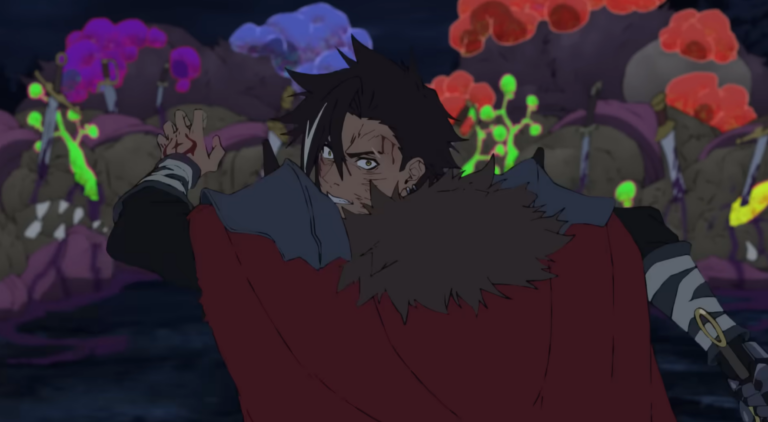
The series, which finished its 12-episode first season on March 26, 2026, with a MAL score of approximately 8.2/10 from more than 290,000 users, depicts a world where heroism is a punishment worse than death: convicted criminals are made immortal, deployed against an expanding demonic plague, and forcibly resurrected when killed — each revival stripping away fragments of who they were. Studio KAI’s adaptation, written by series composer Kenta Ihara (known for Tsukimichi -Moonlit Fantasy- and Ishura), treats all four of its speculative systems as material facts rather than magical conveniences — and the result, when examined through neuroscience, epidemiology, philosophy of mind, and materials engineering, holds up in ways the show’s creators may not have consciously intended.
Why Four Systems Form One Economy
The deepest insight the series earns is one it never states directly: its four speculative systems — compulsory resurrection, goddess power economy, the Demon Blight, and sacred-seal rune technology — are not parallel inventions. They are interlocked. The Blight is not merely the enemy; it is a soil-level environmental pathogen that destroys the iron mines that produce the substrates for sacred seals. Lose enough territory, and you lose the raw materials that power your only effective countermeasures. That scarcity is precisely why expendable, resurrectable penal heroes exist at all: conventional engineering solutions fail when the supply chain for your technology is being eroded faster than you can replace it. Each system’s vulnerability is what makes the others necessary. The science behind each one explains why.
Resurrection, Identity, and Memory Loss: What Parfit Predicted
The series’ resurrection mechanic — “soul dragging,” in the show’s terms — rests on two precise philosophical and neurological concepts that the academic literature has wrestled with for decades.
The first is Derek Parfit’s personal identity teletransportation paradox, formalized in his 1984 work Reasons and Persons. Parfit asked: if you disassemble a person’s information content and reconstitute it elsewhere, is the result the same person? His answer was that what matters in survival is not strict identity but psychological continuity — what he called “Relation R,” the degree to which the reconstructed person retains the memories, personality, and psychological connectedness of the original. Crucially, he recognized that this continuity can be gradual and lossy: a reconstituted person who retains most but not all prior experience is a diminished continuation, not a replacement. That is precisely what the series depicts. Xylo’s veteran colleague Tatsuya, who has been resurrected so many times that he “displays little cognitive function,” is not a copy of a dead man. He is the catastrophic endpoint of Parfitian gradual degradation: a person whose Relation R has collapsed to near zero through iterated lossy reconstitution.
The second concept is memory reconsolidation, described in a landmark 2009 review published in Trends in Neuroscience: “retrieval of a memory places it into a plastic state, as a result of which the memory can be disrupted or even enhanced by experimental treatment.” In biological brains, each time a memory is retrieved it enters a transient labile state before restabilizing — a process that is not perfectly faithful. It is, in the language of information theory, lossy. A forced soul-transfer that re-instantiates prior neural states would be, by definition, a retrieval event — triggering destabilization before the information can restabilize in a new substrate. The memory-erosion-per-resurrection mechanic is not poetic license. It is the expected output of an imperfect reconsolidation cycle applied to a mandatory retrieval.
The horror the series extracts from this is philosophically correct. Resurrection is not death and return. It is partial survival: a smaller version of the person, carrying less of what made them who they were, condemned to repeat the process.
Is There a Real-World Question About Tatsuya?
Tatsuya Ninagawa’s case — an Earthling summoned thousands of years ago, his consciousness deteriorating across millennia of repeated deaths — raises what is perhaps the series’ most unsettling implicit question: at what point does a reconstituted person stop being the legal, moral, or experiential subject of their own punishment? Parfit’s framework gives a principled answer: once Relation R falls below the threshold required for psychological continuity, the reconstituted person is not meaningfully the same individual who committed the original crime. The series does not resolve this question, which is exactly right. It is the contested frontier of contemporary philosophy of mind.
Goddesses as Bioengineered Weapons: Social Reward as Fuel
The series’ most formally original contribution to dark fantasy is its treatment of the “goddesses”: not divine beings, but bioengineered weapons created by humanity thousands of years before the story begins, each purpose-designed with a specific domain ability and a metabolic dependence on human social validation. Teoritta, the 13th goddess of the sword domain, visibly weakens when deprived of praise and acknowledgment and visibly strengthens when given it. At depletion, she becomes vulnerable to Blight corruption — an opportunistic threat that exploits her lowered defenses.
The neurochemical reality behind this premise is well established. In 2017, Hung and colleagues published in Science a study demonstrating that oxytocin release in the ventral tegmental area (VTA) is necessary to elicit social reward in mice. Oxytocin neurons from the paraventricular nucleus project directly to the VTA’s dopamine neurons, amplifying the reward signal when social validation occurs. The reward circuit activated by praise is a measurable neurochemical event involving specific receptors, specific projection pathways, and specific energy expenditures. A sufficiently advanced biotechnology could, in principle, engineer an organism that metabolizes this signal transduction as a direct energy input — converting the neurochemical correlates of acknowledged purpose into stored potential energy. This would be an extension of bioelectrochemical energy conversion, the field that already explores how biological voltage gradients power cellular metabolism.
The immunity-as-energy-level interpretation is equally coherent. The goddess’s vulnerability to Blight corruption when energy-depleted mirrors immunocompromised states in real organisms: when the regulatory mechanisms that maintain an organism’s defenses require energy inputs to function, depriving the organism of those inputs opens the door to opportunistic pathogens. The Blight is exactly such an opportunistic threat. The series handles this with what amounts to epidemiological logic, even without naming it.
What the engineered-goddess design also implies — and the show earns this politically — is that the social compact between humanity and its protectors is not optional. To protect the goddesses is to keep them powerful enough to protect you back. Neglect or disrespect them, and your weapons degrade. It is a mutual-dependence framework embedded in a bioengineering premise, and it is more structurally sophisticated than any standard divine-protector fantasy.
The Demon Blight as Soil-Persistent Environmental Pathogen
The Blight does not behave like a traditional fantasy evil army. Over the course of Season 1, it behaves like a soil-level environmental pathogen: it infects the land itself, transforms exposed organisms into faeries through biological corruption, and spreads geographically over decades in a manner consistent with an outbreak where the basic reproduction number R0 is sustained well above one.
According to the Centers for Disease Control, R₀ describes the average number of secondary cases generated by one infectious individual in a fully susceptible population: when R₀ exceeds one, the outbreak grows; when it falls below one, transmission chains break. The Blight has consumed approximately half of humanity’s habitable territory over two decades, which implies a sustained R₀ far above one. More importantly, the show’s description of the Blight “poisoning the land itself” — and the persistent contamination of former iron mines — implies environmental substrate persistence. Real-world analogues include Phytophthora-class soil-persistent environmental pathogen oomycetes (water molds responsible for crop blights including the Irish Potato Famine of 1845–49), which do not merely attack host plants but colonize soil, making agricultural recovery of affected land extremely difficult without radical intervention.
This framing has a crucial strategic implication that the show exploits correctly: you cannot defeat a soil-persistent pathogen by killing its commander. You can only contain it, push it back, and hope not to lose more territory than you can replace. The impossibility of a decisive “final battle” win condition — which the series’ attrition-warfare logic implies throughout — is a direct consequence of the Blight’s substrate-level persistence. It is precisely why the penal hero system exists: when your only effective countermeasure against a soil-level pathogen is physically destroying infected material at the front line, you need expendable, resurrectable soldiers to do it, because every other solution requires resources the Blight itself is busy consuming.
The Zewan Gan mine arc in Episodes 2 and 3 makes this resource constraint explicit: the mine’s contamination is not incidental but strategic. Sacred-seal iron production is directly dependent on territory that the Blight is actively reclaiming. Losing that mine does not just mean losing land. It means degrading your ability to produce the technology that holds the front line. The Blight is self-reinforcing in exactly the way a persistent environmental pathogen would be.
The supply-chain consequence follows directly: if iron is the substrate for sacred seals, and the Blight is systematically overrunning iron mines, then the Blight’s territorial advance is not just a land-loss problem — it is a weapons-technology-production problem. Every mine lost is not just acreage forfeited; it is a reduction in seal manufacturing capacity. The interlocked strategic logic the show builds on its four systems is coherent at the engineering level.
Solar-Powered Sacred Seals: Photovoltaic Capacitors as Rune Technology
The series’ most technically specific claim — that sacred seals are powered by sunlight, hold a finite charge that cannot be replenished once expended, and discharge explosively when activated — maps with remarkable precision onto photovoltaic capacitive storage systems.
In real-world engineering, photovoltaic cells convert solar radiation into stored electrical energy; that energy is then stored in capacitors for rapid release. Capacitive discharge — the rapid dump of stored charge — produces exactly the kind of burst-energy event the show depicts: light, heat, and kinetic force (via rapid thermal expansion of air) in a fraction of a second. Xylo’s seals are described in the show as “light and heat” — consistent with photonic storage in a capacitive system. Norgalle Senridge’s role as the unit’s seal engineer maps onto the real engineering discipline of photonic crystal design, where geometric patterning at the microscale determines the electromagnetic absorption properties of a surface.
Iron as the primary seal substrate is physically significant. Ferromagnetic materials interact with electromagnetic fields in complex ways that influence both energy storage and discharge directionality. A seal’s inscribed geometry on an iron surface would determine its effective electromagnetic behavior — more like a microstructured photovoltaic surfaces light-absorbing antenna than a passive container. This is the principle behind functional metamaterial-based photovoltaic research: structured geometric patterning on a material surface can dramatically enhance its electromagnetic absorption properties.
Season 2 — What the New Characters Signal
Season 2 of Sentenced to Be a Hero was officially Season 2 confirmed at AnimeJapan on March 28, 2026, alongside the companion game Sentenced to Be a Hero: Game of the Goddess, developed by VIC GAME STUDIOS. Crunchyroll has confirmed it will stream the new season internationally. An official premiere date has not been announced; based on the first season’s January 2026 debut, the production is broadly expected to arrive in January 2027.
Shōya Chiba, who voices Yuji Itadori in Jujutsu Kaisen, joins the cast as Jayce Partiract, a dragoneer who initiated a rebellion to save dragons and whose larger-than-usual uprising prompted a punitive hero sentencing out of governmental spite. Yōko Hikasa, known for Mio Akiyama in K-On!, voices Neely — Jayce’s dragon, whose fire breath proves decisive in the Season 1 finale’s Port City Ioff engagement. Both characters are introduced in the series’ light novel arc character entries covering the light novel’s later arcs, alongside a Season 2 story arc in which the Second Capital of Zeyllent has fallen to the Blight and Unit 9004 must help retake it, beginning with establishing a fortified position on snow-covered Mount Tujin.
The Zeyllent arc will test the show’s thematic framework directly: the Second Capital’s fall is the consequence of exactly the strategic failure the series’ systems predict — the Blight drew military attention to Port Ioff as a decoy while the main offensive captured the capital unopposed. The Blight, in other words, is capable of strategic deception on a scale that exploits the attentional limits of human defenders. That is a more troubling pathogen than any simple spreading blight. Season 2 will operate in that shadow.
Readers who want to get ahead of the story before the new season can find the English manga volume two from Yen Press releasing September 22, 2026. The first five English light novel volumes — covering everything through the mid-novel arcs — are available from Yen Press under its Yen On imprint. Volume 9 of the original Japanese light novel is anticipated for October 2026.
Frequently Asked Questions
Is Sentenced to Be a Hero Season 2 confirmed, and when will it premiere?
Season 2 was officially Season 2 confirmed at AnimeJapan on March 28, 2026, with Crunchyroll confirmed as the international streaming partner. An exact premiere date has not been announced by Kadokawa as of September 2026. The first season debuted in January 2026, and based on that precedent the new season is broadly expected to arrive in early 2027.
Why does resurrection cause memory loss in Sentenced to Be a Hero — is that scientifically grounded?
Yes, in two converging ways. Memory reconsolidation research, particularly Jonathan Lee’s 2009 review in Trends in Neuroscience, established that every act of memory retrieval temporarily destabilizes the stored memory before it restabilizes — a process that is not perfectly faithful. Forced soul-transfer would constitute a mandatory retrieval event applied to an entire person’s psychological substrate — lossy by design. Philosopher Derek Parfit’s personal identity teletransportation paradox further predicts that iterated lossy reconstitution produces a series of diminished continuations rather than a single identical person restored. The character Tatsuya — cognitively depleted across thousands of years of resurrections — is this process taken to its logical endpoint.
How close is the Demon Blight to a real biological phenomenon, and why can’t it simply be defeated?
The Blight behaves most closely like a soil-persistent environmental pathogen — an organism that colonizes the land substrate itself rather than only its hosts, analogous to Phytophthora-class oomycetes responsible for crop blights that persist in soil for years after host plants are removed. The consequence is that territorial recovery is extremely difficult: you cannot simply defeat the Blight by eliminating its visible manifestations, because its substrate-level persistence means the land itself remains contaminated. Combined with an effective basic reproduction number R0 sustained above one — implied by the Blight’s decades of territorial expansion — no decisive “final battle” win condition is mathematically available. Attrition, containment, and expendable soldiers are the only viable strategy. That is why the penal hero system exists.
What does the series’ science framework tell us about why Season 2’s stakes are higher than Season 1’s?
Season 1 established that every system in the show is materially interconnected: sacred-seal production depends on iron mines, iron mines depend on holding territory, holding territory depends on goddesses remaining functional, and goddess functionality depends on sustained social investment from the humans they protect. Season 2 begins with the Second Capital already captured — not through military defeat, but through a strategic Blight deception that exploited the attentional limits of human defenders. That is qualitatively more troubling than any single loss of soldiers or land. It means the Blight is not just spreading. It is outthinking its opponents. Season 2’s opening question is whether Xylo’s unit — expendable weapons working within a system designed to destroy them — can do anything about an enemy that has already demonstrated the capacity for coordinated strategic deception. Details on the Season 2 Second Capital arc confirm this as the central challenge facing Unit 9004 from the first episode.