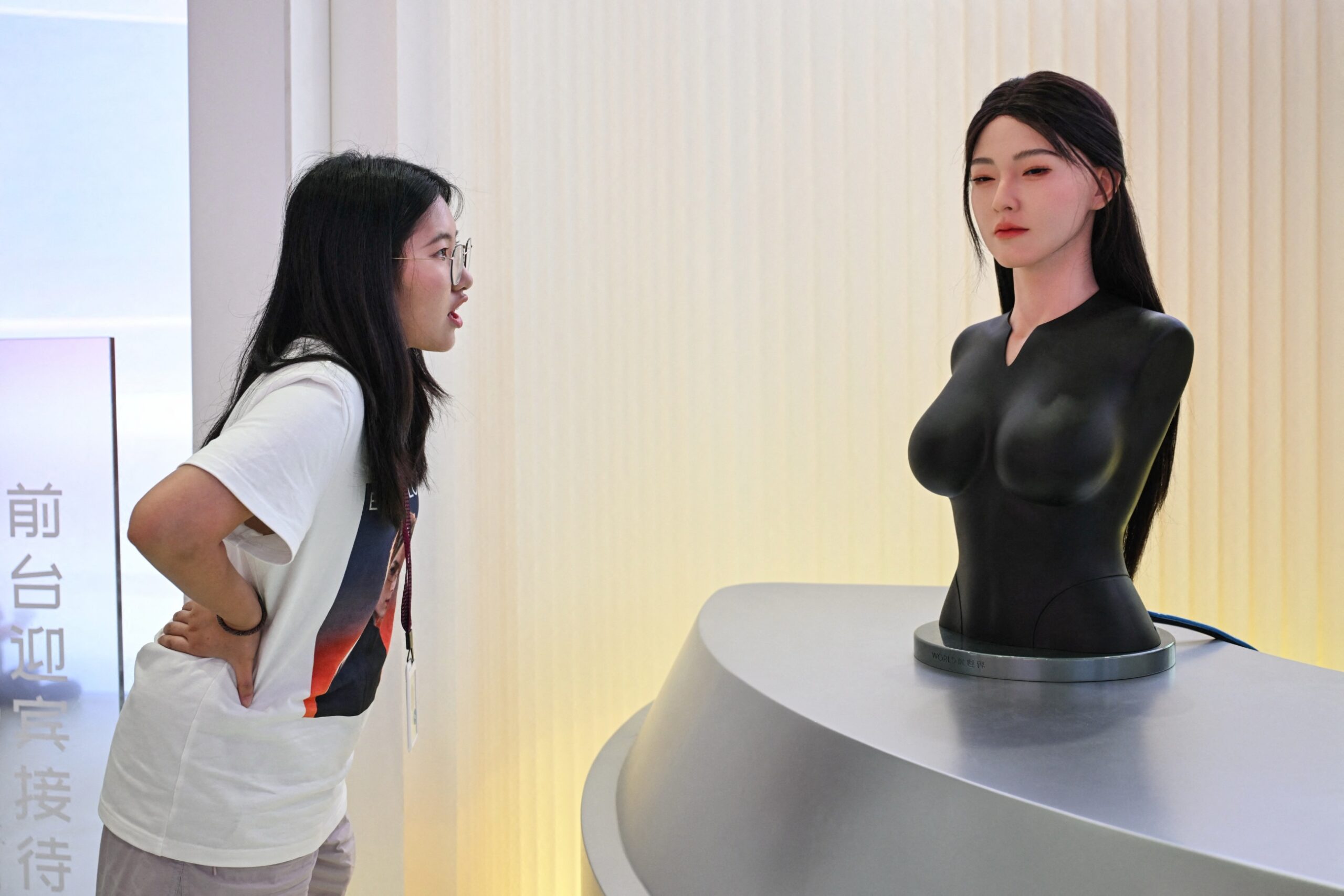
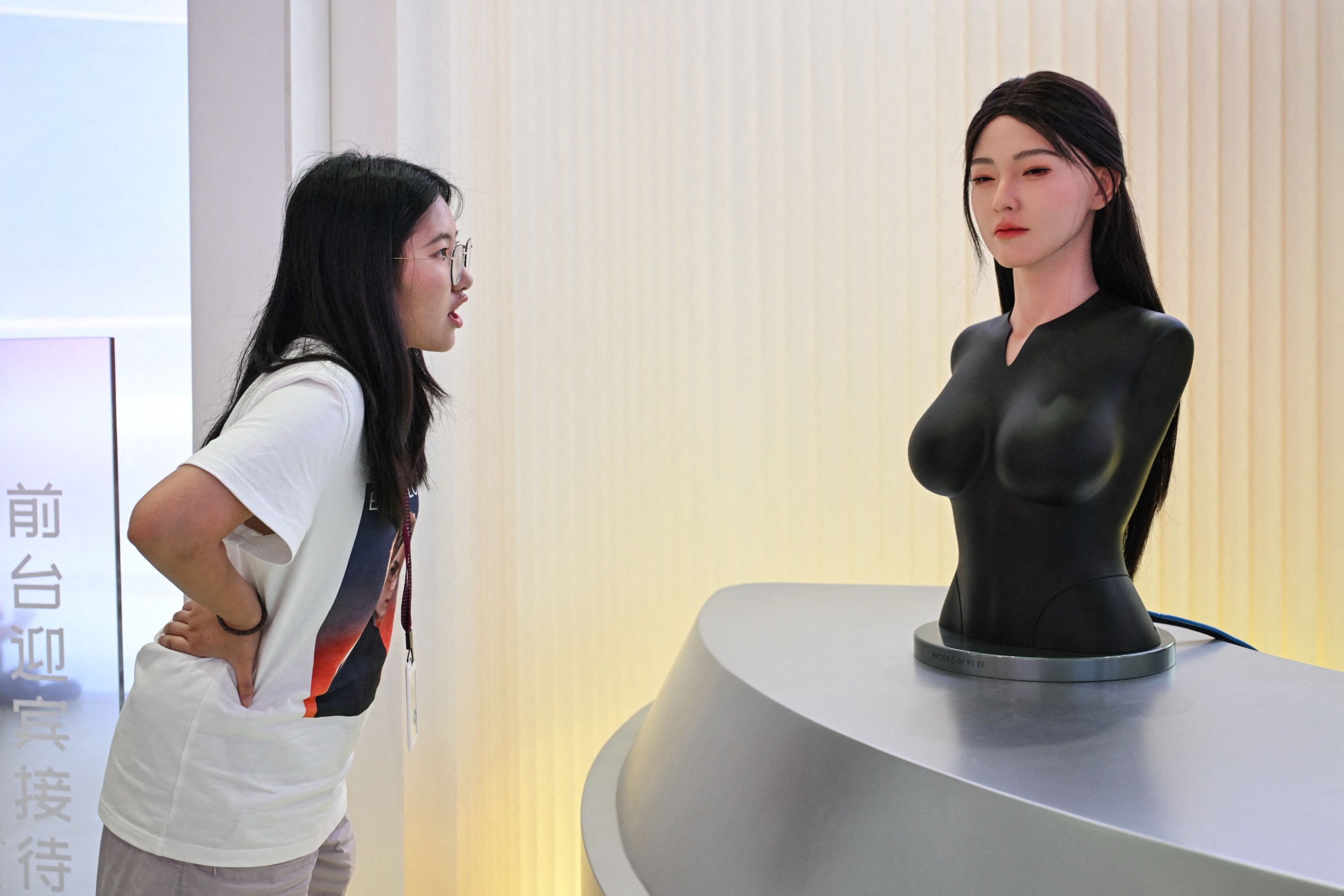
Three days ago, the first wave of UBTECH’s UWORLD U1 consumer humanoid robots — full-size, silicone-skinned, emotionally responsive machines ordered by more than 13,000 buyers across China — began leaving company warehouses. The factory that made those robots possible, and that also produces UBTECH’s industrial Walker S series for automotive and logistics clients, is a 14,000-square-meter (150,700-square-foot) facility in Liuzhou, Guangxi, that opened on September 12 and is now the most tightly calibrated humanoid robot production line on earth: one completed industrial humanoid every ten minutes.
What the factory represents is not just an engineering milestone for one company. It is the clearest single data point yet in a manufacturing race whose outcome is, by most measures, already decided — and whose geopolitical consequences arrived formally on July 29, when the US Federal Communications Commission added humanoid robots to Covered List, banning new imports on the grounds that the machines pose “unacceptable cybersecurity and safety risk” to Americans.
How a 10-Minute Takt Time Works — and What It Actually Means
In lean manufacturing, the interval between consecutive completed units rolling off a line is called takt time — derived from the German word for rhythm or beat. Toyota popularized just-in-time production in the mid-twentieth century as the heartbeat of this system; a Camry assembly line runs at roughly one vehicle per minute. A designed takt of ten minutes for a humanoid robot is a different category of achievement: the Walker S2 contains more than 2,000 screws across more than 50 different specifications, requires four-plus hours of whole-machine testing after assembly, and passes through an automotive-grade lighting inspection tunnel for a 360-degree appearance screening.
Two things are essential to understand about that ten-minute figure. First, it is a designed benchmark — the line’s cadence when running at full capacity — not a verified measure of sustained round-the-clock annual output. A 10,000-unit annual capacity at a ten-minute takt implies roughly 1,667 hours of actual production time per year, achievable with two-shift operations on a normal industrial calendar. Whether sustained commercial demand fills that schedule remains the industry’s central open question. Second, the company’s own sales figures illustrate the gap between capacity and current demand: UBTECH sold 16,123 humanoid robots of all sizes in the first half of 2026, generating 590.3 million yuan (approximately $86.8 million USD) in full-size industrial humanoid revenue — a 1,445 percent year-over-year increase, but with the Walker S2 still running at roughly 50 percent of human worker efficiency, according to UBTECH’s own January 2026 disclosure.
The Digital Brain Behind the Line
UBTECH did not design the factory alone. Siemens Digital Industries Software, under a partnership signed in March 2026, contributed product lifecycle management software, manufacturing operations management, and digital twin simulation to create what the companies call an end-to-end digital thread through the entire operation.
A digital twin — in its strict engineering definition, a computational model continuously synchronized with real-time data from a physical counterpart — allows engineers at Liuzhou to simulate process changes, test new assembly configurations, and identify defect patterns in the virtual environment before any physical adjustment is made. In the context of a product as mechanically complex as the Walker S2, that capability is significant: a quality defect that propagates across a run of assembled units is extremely costly; a defect identified in simulation before the run begins is not.
The joint manufacturing operations management system handles work-order scheduling, material distribution, and quality monitoring in a continuous closed loop. Each completed robot is assigned a unique serial number — a one-item-one-code system — that tracks its assembly and inspection records throughout the manufacturing cycle and beyond.
What “Robots Building Robots” Actually Means
UBTECH’s marketing describes the factory as “robots building robots,” and the image is compelling. It is also, precisely speaking, an overstatement. UBTECH’s Cruzr humanoids handle only materials — their role is confined to depalletizing, palletizing, loading components, and material transfers between stations. The core mechanical and electrical assembly of each Walker unit is performed by collaborative robotic arms, power-assist manipulators, unmanned forklifts, and autonomous guided vehicles, not by the humanoid robots themselves.
What is accurate is that the factory uses humanoid robots as a class of flexible, mobile logistics worker — a role that traditional industrial automation cannot efficiently fill. Moving components between stations in a mixed-model environment, where Walker S2 and Cruzr units share the same line, requires a form of dexterity and spatial adaptability that fixed robotic arms do not provide. The 360-degree rotating worktables that enable multi-angle precision work in place are what allow different robot models to move through the same assembly sequence. That is the genuine engineering achievement: a humanoid robot production line that is itself partially operated by a different generation of the same company’s humanoids.
The warehouse attached to the facility is notable on its own terms. UBTECH says it independently developed the humanoid robot industry’s first fully automated stereoscopic warehouse for the completed units, holding 112 robots in 65 square meters (approximately 700 square feet) — a space-utilization improvement of more than 50 percent over conventional layouts.
China’s Dominant Position, and Where Its Rivals Stand
The Liuzhou factory’s opening comes inside a market whose shape is already nearly unrecognizable from what existed eighteen months ago. Chinese companies accounted for 97 percent of global humanoid shipments in the first half of 2026, according to Smart Analytics Global data cited by Bloomberg. AgiBot, the Shanghai-based company backed by battery giant CATL, led the market with approximately 8,400 units shipped; Hangzhou-based Unitree shipped roughly 5,900 units, completing its debut on Shanghai’s STAR Market on August 19, 2026, after raising approximately 6.1 billion yuan (approximately $904 million USD) in an IPO. Together, the two companies hold more than 70 percent of the global market.
UBTECH occupies a distinct position in the Chinese market, trailing AgiBot and Unitree in total unit volume but commanding the highest-unit-value segment: large industrial humanoids deployed inside genuine production environments, not research labs or educational institutions. Its Walker S2 units are working on assembly lines at BYD, Geely Auto, FAW-Volkswagen, Dongfeng Liuzhou Motor, Audi FAW, and BAIC New Energy; at Foxconn factories; and at SF Express logistics operations. Airbus purchased Walker S2 units in January 2026 for aerospace manufacturing evaluation, though the company describes the collaboration as an “early concept testing phase.” Texas Instruments has also purchased units for semiconductor plant operations.
China’s National Bureau of Statistics reported that the country’s industrial robot output in July 2026 reached 98,677 units, a year-on-year increase of 30.2 percent; from January through July, total output reached 635,056 units, up 28.5 percent.
UBTECH Vice President Pang Jianxin was direct about the structural reason Western manufacturers cannot quickly close this gap. “Without the Chinese supply chain, mass-producing complex components would be extremely difficult unless cost advantages were completely sacrificed,” he told the Global Times, a Chinese state-run outlet. More than 90 percent of Walker S2 components are manufactured in China, and manufacturing costs decline annually by 20 to 30 percent as scale increases. UBTECH has set a target price below $20,000 per unit by 2030.
American competitors remain significantly behind on production volume. Tesla’s Optimus program, Figure AI, and Agility Robotics each shipped roughly 150 humanoid robots in all of 2025, compared to the thousands that AgiBot and Unitree shipped in that same period.
What American Buyers Cannot Access
On July 28 and 29, 2026, the Federal Communications Commission added humanoid robots to its Covered List — along with quadruped robots and connected power inverters — under the Secure and Trusted Communications Networks Act, blocking new equipment authorizations for these product categories. The ban applies to new and unreleased models; devices already in use in the United States are unaffected. The FCC acted on a national security determination made by a White House-convened interagency body, which found that internet-connected robots could create data privacy risks and cybersecurity vulnerabilities.
The specific stated concern: advanced robotic devices collect data enabling foreign surveillance and “enhance the capabilities of foreign intelligence services” or allow adversaries to “remotely commandeer the robots,” according to the FCC’s determination. UBTECH and Unitree, the two companies whose products the ban most directly affects, were both named in news coverage of the action.
That concern is not abstract in the context of the Walker S2 and the UWORLD U1. Both platforms are internet-connected. Both are subject to China’s National Intelligence Law (2017), whose Article 7 requires all organizations and citizens to “support, assist, and cooperate with national intelligence work” — a legal obligation that applies regardless of any company’s stated privacy policy, its server locations, or its Western business relationships. China’s Data Security Law (2021) and Cybersecurity Law (2017) include government data access provisions that reinforce this framework.
An independent security analysis of a humanoid robot from a Chinese manufacturer, published as an academic preprint, documented continuous data transmission to remote servers without user notification or consent indicators. That study did not specifically examine UBTECH’s Walker S2, and its findings should be treated as a category-level finding, not a confirmed description of UBTECH’s specific data practices. UBTECH states that the UWORLD U1 stores user data locally by default with encryption and no mandatory cloud uploads.
Readers in the United States cannot legally purchase new Walker S2 units or UWORLD U1 robots through commercial import channels under the current FCC Covered List designation. The ban does not affect units already in the United States and does not prevent US companies from partnering with UBTECH in jurisdictions where the robots are not subject to the restriction.
What the Factory Was Designed to Become
UBTECH’s immediate production targets set 5,000 robots for all of 2026, rising to 10,000 in 2027 — the numbers Liuzhou is now architected to support. The company posted 1.27 billion yuan (approximately $187 million USD) in total revenue for the first half of 2026, a 104.2 percent year-on-year increase, with its gross margin improving to 44.7 percent. Adjusted EBITDA improved 45.9 percent from the year-earlier period; the company remains unprofitable but has stated a goal of reaching profitability in a healthy and rapid manner.
UBTECH founder Zhou Jian has described the factory’s purpose beyond its immediate output: “Chinese robots have already entered the global first tier,” he told reporters at the factory’s opening, adding that the facility is intended as “a replicable mass-production model” that the wider industry can draw from as humanoid robotics transitions from a market of hundreds to one of thousands, and eventually tens of thousands, of units per year.
Rivals are not waiting. AgiBot targets 10 billion yuan revenue (approximately $1.47 billion USD) by 2027 and has launched a Hong Kong IPO process. Unitree CEO Wang Xingxing has forecast delivering between 10,000 and 20,000 units in 2026.
For US manufacturers and policymakers, the factory that opened seven days ago in Liuzhou is not primarily a curiosity about robots building robots. It is a benchmark of what Chinese industrial supply chain integration, lean manufacturing discipline, and state-directed market creation have produced — and what American robotics companies, none of which have yet demonstrated comparable production volume, need to eventually match, or surpass, or bypass with something the Liuzhou playbook cannot produce.
Frequently Asked Questions
Can American companies buy or import Walker S2 robots from UBTECH?
Not as new products under current law. The FCC added Chinese humanoid and quadruped robots to its Covered List in July 2026, blocking new commercial imports of these devices on national security grounds. Units already in operation in the United States are unaffected, and US companies can still partner with UBTECH for deployments outside the US. The ban applies to new and unreleased models entering the American market.
What does “robots building robots” actually mean at UBTECH’s Liuzhou factory?
It is accurate but more limited than it sounds. UBTECH’s own humanoid robots — Cruzr models — work the factory floor doing material handling: moving components between stations, loading and unloading pallets. The actual mechanical assembly of each Walker S2 is performed by collaborative robotic arms, power-assist manipulators, and automated vehicles. The humanoids are logistics workers within the factory, not assemblers. That is still a notable role — flexible, mobile logistics capability that fixed automation cannot easily replicate — but it differs from the implication that humanoids are performing precision mechanical construction of other humanoids.
Does buying a Chinese humanoid robot mean sharing data with the Chinese government?
Under China’s National Intelligence Law (2017), all Chinese organizations and citizens are legally required to cooperate with Chinese intelligence requests. This obligation applies to UBTECH regardless of where its servers are physically located or what its privacy policy states. China’s Data Security Law (2021) and Cybersecurity Law (2017) add data-localization and government-access provisions. UBTECH states that its UWORLD U1 consumer robot stores interaction data locally with encryption and no mandatory cloud uploads; however, the legal framework in which the company operates cannot be altered by its stated data practices. The FCC’s July 2026 import ban cited exactly this concern, finding that internet-connected robots from foreign adversaries could enhance the capabilities of foreign intelligence services.
How close are Chinese humanoid robots to matching human worker productivity?
Not close, by the manufacturer’s own account. UBTECH disclosed in January 2026 that its Walker S2 operates at roughly 50 percent of human worker efficiency. The company has set an internal target of 80 percent by 2027, to be achieved through iterative updates to its multimodal reinforcement-learning models. The robots currently deployed at BYD, NIO, Geely, and Foxconn are primarily handling repetitive, mobility-heavy tasks — material transport, component loading, quality inspection — where the full-motion capability of a humanoid form is more useful than fixed automation but where the precision and speed of an experienced human worker still set the performance ceiling.