HomeAuto European Spaceplane VORTEX Confirmed for Crewed Flight: 2031 Hinges on Heat Shield
European Spaceplane VORTEX Confirmed for Crewed Flight: 2031 Hinges on Heat Shield
September 16, 2026:
BAS CZERWINSKI/ANP/AFP via Getty Images
Europe’s most ambitious spaceplane program formally confirmed this week that its ultimate goal is carrying astronauts into orbit, with a full crewed prototype targeted for 2031 — provided the critical 2028 heat-shield test first proves that the vehicle can survive hypersonic reentry without becoming expensive to maintain.
At a specialist journalist briefing in Paris on September 15, OHB officials confirmed that the VORTEX program is designed to culminate in an astronaut-carrying vehicle, the clearest declaration the consortium has made since Dassault Aviation first unveiled the VORTEX program at the Paris Air Show in June 2025. The disclosure came five days after French President Emmanuel Macron publicly committed French government support to VORTEX at the International Space Summit on September 10 — a two-day gathering at the Grand Palais in Paris that drew approximately 2,000 participants from around 120 countries and produced more than 51 signed deals worth roughly €20 billion (approximately $23.1 billion USD) in investment commitments.
What Is VORTEX?
VORTEX — short for Véhicule Orbital Réutilisable de Transport et d’Exploration (Reusable Orbital Transport and Exploration Vehicle) — is a winged, reusable spaceplane designed to launch on an Ariane 6 rocket for later variants, conduct orbital missions, and return to Earth for a conventional runway landing. The VORTEX official program description confirms the vehicle’s dual civil and military mission scope. That last element is what makes it different from every crewed spacecraft currently operating. NASA’s Dragon capsule, the Orion capsule, and the Soyuz all return by parachute and splashdown or landing airbag, with no landing precision beyond a broad geographic zone. A runway landing like the one VORTEX is designed to make is what the Space Shuttle and Boeing’s X-37B can do — and that capability is why both are considered categorically more capable for rapid turnaround than capsule-based systems, at least in theory.
The key phrase is “in theory.” The Space Shuttle promised fast turnaround too, and took months between flights. The reason, in significant part, was its thermal protection system.
What VORTEX-D Must Prove in 2028
VORTEX is being developed in four successive configurations: a one-third-scale demonstrator (VORTEX-D), a two-thirds-scale multi-purpose free-flyer (VORTEX-S), a full-scale uncrewed cargo vehicle (VORTEX-C), and the crewed variant, VORTEX-M, measuring 12 meters (39.4 feet) long with a 7-meter (23-foot) wingspan.
The most important of these is VORTEX-D. The demonstrator is not primarily about demonstrating that the design can fly — it is about answering the question that has defined the economics of every reusable spaceplane program since the 1970s: can the vehicle’s heat shield be built to survive hypersonic reentry without needing extensive replacement or repair between flights?
At the hypersonic speeds VORTEX will reach on reentry — approximately Mach 12, or roughly 9,100 miles per hour (14,650 km/h) — the air around the vehicle compresses and heats to temperatures capable of melting most metals. The vehicle’s thermal protection system must absorb, reflect, or dissipate that heat without being destroyed in the process. The Space Shuttle addressed this with approximately 24,000 to 25,000 ceramic tiles, each individually fitted to the orbiter’s contour. Tile inspection and repair between missions imposed a substantial maintenance burden, and the per-flight labor required was one of the primary reasons the Shuttle never came close to its promised per-flight cost target.
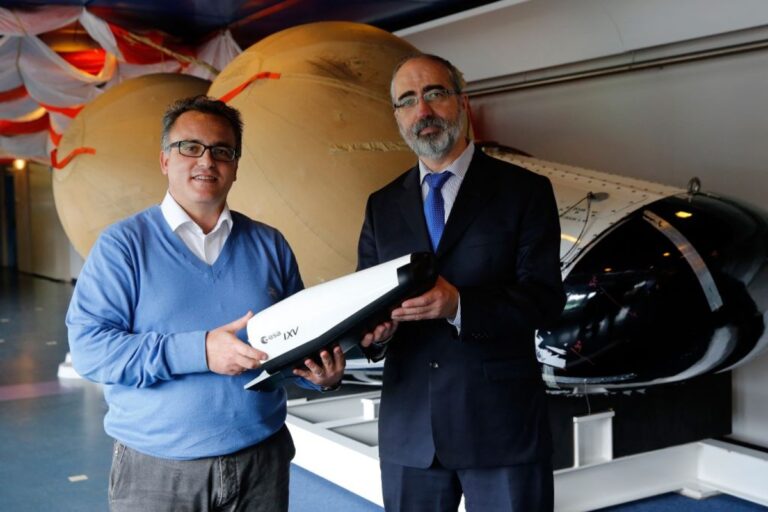
VORTEX-D, which is scheduled to make its suborbital flight by 2028 using a Rocket Lab Electron launch vehicle (not Ariane 6, which is reserved for the larger VORTEX-S and subsequent variants), will attempt to validate a more durable TPS approach at Mach 12. Dassault’s prior work on this precise problem is worth noting: the company served as aerothermodynamics designer for the European Space Agency’s Intermediate eXperimental Vehicle (IXV), which in February 2015 completed first European lifting-body reentry — the first time a lifting-body spacecraft had successfully reentered Earth’s atmosphere and been recovered in Europe. VORTEX’s lifting-body design — a configuration in which the fuselage itself generates aerodynamic lift without relying on large wings — traces a direct engineering lineage through IXV, a connection formalized when the ESA-Dassault Letter of Intent was signed in June 2025.
If VORTEX-D’s TPS validates, the program can credibly advance toward a crewed vehicle by 2031. If it does not, the 2031 target moves further out, or the vehicle’s cost structure converges with the very problem it was supposed to solve.
A Four-Year Political Acceleration
The speed at which VORTEX went from a dismissed concept to a state-backed program is as notable as the vehicle itself. In April 2025, Dassault CEO Éric Trappier delivered Dassault CEO April 2025 testimony to the French National Assembly’s Defense Committee, raising concerns about the lack of domestic ambition for reusable space vehicles and citing the contrast with the United States and China’s aggressive investments. Two months later, at the Paris Air Show in June 2025, the French Ministry of Armed Forces signed an agreement with Dassault, committing the French Ministry €30 million in initial funding to support VORTEX-D, and Dassault simultaneously signed a Letter of Intent with ESA. The €70 million demonstrator total budget for the VORTEX-D program sees Dassault contributing the majority of funding beyond the government allocation.
By May 2026, Dassault had brought in Germany’s OHB — a space systems specialist headquartered in Bremen and one of Europe’s largest independent space companies — to architect and integrate the vehicle’s service module, with the OHB service module partnership announced on May 11, 2026. Spanish propulsion firm Arkadia Space was separately selected in April 2026 to supply the propulsion system for the demonstrator phase. The broader consortium now includes MT Aerospace, Sener, Sonaca, APCO Technologies, and Space Cargo Unlimited, all confirmed in the VORTEX consortium September 2026 announcement.
At the September 10 International Space Summit — where Macron announced government backing for the broader program — the French president also set a Macron 10-year crewed launch target for a European crewed capsule to lift off from the Kourou spaceport in French Guiana. That political timeline aligns directly with the VORTEX-M 2031 prototype target, suggesting Macron views VORTEX as at minimum one component of Europe’s path to crewed spaceflight independence.
How the Engineering Actually Works
VORTEX’s lifting body reentry L/D advantage produces a meaningful benefit over capsule-based systems in the reentry phase: a much higher lift-to-drag (L/D) ratio. A blunt capsule like Dragon or Orion has an L/D of roughly 0.3, giving it limited ability to maneuver laterally during descent. A lifting body like the X-37B or the planned VORTEX achieves an L/D of approximately 1 to 2, enabling the vehicle to choose its landing zone from a much wider geographic envelope and to impose gentler deceleration forces on crew. For a crewed vehicle, reduced g-loads on reentry matter: both medically and in terms of the pool of people who can safely complete the mission.
The tradeoff is complexity. A higher L/D ratio requires precise aerodynamic control surfaces — elevons, flaps — that must function during the transition from hypersonic to subsonic flight, a regime where the aerodynamics change dramatically as the vehicle slows through Mach 5, Mach 3, and then into conventional subsonic glide. Above roughly Mach 5, conventional control surfaces are ineffective, and the vehicle must rely on reaction control system (RCS) thrusters to steer; below that threshold, aerodynamic controls take over. The hypersonic flight control transition challenge is one that VORTEX-D’s flight-control validation program specifically targets.
Dassault’s heritage is relevant here. The company’s experience in high-performance fighter aircraft — the Rafale, the Mirage family — includes deep expertise in unstable aerodynamic configurations that require active fly-by-wire control to remain manageable. Translating that expertise into a hypersonic vehicle is not a straightforward extension, but it is a more natural one for Dassault than for a company without that background.
A Different Structure Than FCAS
The industrial structure of VORTEX is designed specifically to avoid the dynamics that killed the Future Combat Air System. FCAS — a €100 billion-plus (approximately $115 billion USD) sixth-generation fighter program launched by France and Germany in 2017 — was FCAS terminated June 2026, after Macron and German Chancellor Friedrich Merz acknowledged that Dassault and Airbus could not agree on workshare and intellectual property terms. The collapse of FCAS, the largest joint defense program Europe had ever attempted, came eight years after its launch and left billions in development investment without a path to deployment.
VORTEX assigns Dassault unambiguous architectural and integration authority over the entire vehicle. OHB’s role is defined and bounded: the architecture and integration of the service module. That cleaner division of responsibility — a single prime with defined subcontractors, rather than two primes disputing supremacy — was explicitly cited by both companies when the Dassault OHB joint press release was released in May 2026. Trappier called OHB “natural partners” and emphasized his company’s leading role; OHB CEO Marco Fuchs described VORTEX-S as an initiative “driven by the need for autonomous European space transportation capabilities” and framed the arrangement as complementary rather than competitive.
Notably, Chancellor Merz did not attend the International Space Summit despite Germany co-chairing the event. His absence is a signal worth reading: German political support for VORTEX, as of mid-September 2026, is coming through OHB — a private company, not the German government. Whether Berlin translates OHB’s industrial participation into an ESA member-state funding commitment for VORTEX at a future ministerial council is an open question. ESA ministers meet every two to three years; no VORTEX ESA program has yet been formally approved by the member states.
Context: What Changed at the Summit
The International Space Summit produced a string of significant contracts, but the largest was unambiguous: ESA signed a €760 million ALADDIN contract awarded to The Exploration Company under its ALADDIN program, covering a demonstration flight of the startup’s Nyx capsule to the International Space Station plus options for two additional cargo missions. That contract — the biggest transportation contract ESA has ever awarded to a European company — is the Phase 2 successor to the earlier LEO Cargo Return Service initiative and goes to a capsule-based system, not a spaceplane.
VORTEX is pursuing something different and further out: not the immediate cargo demonstration market that ALADDIN is addressing, but the longer-horizon capability for crewed orbital transport — the category that, as of September 2026, no European vehicle can serve. The ISS is scheduled for deorbit around 2030 to 2031. If VORTEX-M reaches full crewed prototype status by 2031, Europe could achieve independent crewed orbital transport at almost exactly the moment the station it might have used is being retired. Whether that timing becomes an asset or a liability depends on what commercial stations are operational by then, and on whether ESA secures the member-state funding to advance VORTEX through its later development phases.
The dual-use military dimension is also worth noting plainly. VORTEX is designed for “civil and military orbital missions,” and the French Ministry of Armed Forces is co-funding its development. The closest operational precedent is Boeing’s X-37B — an uncrewed, classified military spaceplane that has completed seven long-duration orbital missions for the US Air Force. A crewed European equivalent would be a significant capability in any environment where orbital access is contested.
What VORTEX Needs for the 2031 Milestone to Hold
Whether the 2031 VORTEX-M prototype date is achievable depends on a sequence of decisions and results that have not yet occurred. The VORTEX-D hypersonic test by 2028 must demonstrate reusable thermal protection. ESA member states must authorize and fund a VORTEX program — separate from the ALADDIN contract just awarded — at a future ministerial council. Germany’s government, not just OHB, needs to be on board financially. And the two-thirds-scale VORTEX-S demonstrator must itself validate autonomous free-flying and cargo return operations before a crewed version can reasonably be certified.
Each of those gates is manageable individually. The question Dassault and its partners cannot fully answer yet is whether they are all manageable in sequence, on a timeline that keeps 2031 in reach, in an environment where European space funding is simultaneously building ALADDIN, Space Rider, Themis, and multiple other reusability programs.
Currency conversions in this article are based on the EUR/USD mid-market rate of 1.1540 as of September 15, 2026, and are approximate.
Frequently Asked Questions
What is the difference between VORTEX and a capsule like Dragon or Orion?
VORTEX uses a lifting-body design in which the fuselage itself generates aerodynamic lift during atmospheric reentry, giving the vehicle a much higher lift-to-drag ratio than a blunt capsule. This allows VORTEX to maneuver precisely to a runway landing and exposes crew to gentler deceleration forces. Capsules like Dragon or Orion have limited reentry maneuverability and typically land by parachute in the ocean or on land. The tradeoff is complexity: the lifting-body design requires a reusable thermal protection system that can survive hypersonic heating at roughly Mach 12 — the engineering problem that the Space Shuttle never fully solved at low operational cost, and the one VORTEX-D’s 2028 test must address.
Why does the heat shield matter so much for whether VORTEX can achieve its 2031 crewed prototype target?
The Space Shuttle was supposed to make spaceflight routine and affordable, but its thermal protection system of ceramic tiles required extensive per-flight inspection and repair — one of the primary reasons each mission cost far more than originally projected. VORTEX’s commercial case rests on the same promise: reusable and low-cost. If VORTEX-D’s 2028 suborbital test demonstrates that its heat-resistant materials can survive Mach 12 reentry without requiring per-flight replacement, the path to a reusable crewed vehicle opens. If the TPS requires extensive servicing after each flight, the cost structure changes fundamentally, and the 2031 crewed prototype date becomes harder to sustain economically even if it is achievable technically.
Does the ESA ALADDIN contract going to The Exploration Company’s Nyx capsule mean VORTEX has lost the competition?
No — the two programs are addressing different markets. ALADDIN/Nyx is a near-term cargo return initiative aimed at the International Space Station with a demonstration flight targeted for 2028-2029. VORTEX-S is a spaceplane-based system being positioned for a future ESA program — one that has not yet been formally approved by ESA member states at ministerial level. They compete for European space budgets in a general sense, but not for the same contract. VORTEX-M, the crewed variant, addresses a capability that no European capsule currently targets.
Is VORTEX a military program, a civilian program, or both?
Both. French government funding comes through the Ministry of Armed Forces, and Dassault explicitly designed VORTEX for “civil and military orbital missions.” The clearest operational precedent is Boeing’s X-37B, an uncrewed military spaceplane operated by the US Air Force for long-duration classified orbital missions. A crewed VORTEX-M would be Europe’s first vehicle capable of carrying astronauts to orbit independently of American or Russian systems — a capability that is simultaneously a civilian scientific asset and a strategic defense one.