HomeAuto Cat and the Dragon Finale: Imprinting Science Made This Dragon Feline at Heart
Cat and the Dragon Finale: Imprinting Science Made This Dragon Feline at Heart
September 15, 2026:
Tkj.jp
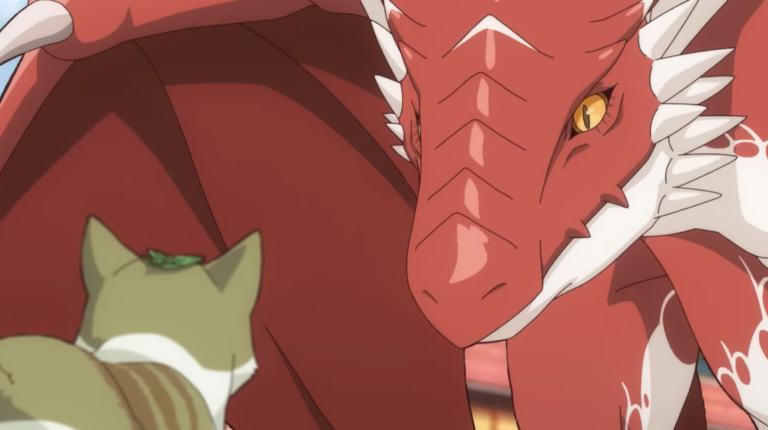
The dragon at the center of The Cat and the Dragon (Neko to Ryuu, 猫と竜) cannot retract his claws. He cannot land silently. He cannot fit into the small, warm, fur-lined spaces his feline siblings inhabit so naturally. And yet, when he looks at the world, he sees it through the emotional software of a cat — because the first being to love him was one. Season 1 of the Crunchyroll simulcast wrapped on September 13, 2026, closing a 12-episode arc that turned out to be not merely a warm fantasy, but a remarkably accurate dramatization of one of ethology’s most consequential findings.
This is the science the show borrowed — and why it holds.
What Actually Happened to Uncle Wings, Explained by Lorenz
The dragon’s situation has a formal name in ethology: filial imprinting. The Austrian zoologist Konrad Lorenz, who shared the 1973 Nobel Prize in Physiology or Medicine with Nikolaas Tinbergen and Karl von Frisch, demonstrated the mechanism with greylag geese in the 1930s: hatchlings would follow and bond with the first suitable moving stimulus they encountered, within a developmental window now understood to be approximately 13 to 16 hours after hatching. The goslings famously imprinted on Lorenz himself — more specifically, on his wading boots — and followed him everywhere.
The critical finding, for our dragon, is not the fact of imprinting but its endogenous character. Lorenz showed that the attachment forms automatically within the critical period, independent of whether the imprinted object feeds the animal. This challenged the dominant “cupboard love” theory of bonding — the idea that attachment forms because a caregiver provides food — and established that imprinting is genetically encoded behavior. The organism is born with the machinery; the environment only determines which specific stimulus activates it.
For the dragon who hatches inside a Cait Sith den, the critical period opens into a world that contains only cats.
Cross-species imprinting is rarer than its within-species equivalent, but it has been documented with striking results. In a landmark study published in Nature in 1998, neuroscientist Keith Kendrick of the Babraham Institute in Cambridge led a series of cross-fostering experiments with sheep and goats: newborn male lambs were placed with nanny goats, and newborn male kids were placed with ewe sheep. When these animals grew up and were exposed to females of both species, the males consistently preferred their foster species for socializing and mating — not their biological species. Importantly, this preference persisted across three years of observation, even when the cross-fostered males were living exclusively with their own kind. The imprinting had not merely shaped their early attachment; it had, in Kendrick’s framing, determined their social and sexual identity.
What the cross-fostered animals experienced was a specific mismatch: the behavioral software of the adoptive species running on the native hardware of the biological one. A cross-fostered billy goat runs on goat hardware — cloven hooves, ruminant digestion, caprine vocal range — but navigates its social world using the emotional architecture of a sheep. Uncle Wings is this mismatch externalized at cartoon scale: he runs on dragon hardware (fire production, scale, wings, longevity) while navigating his social world using the emotional and behavioral architecture of a domestic Cait Sith cat.
The show handles this with more biological fidelity than it gets credit for. The dragon’s frustration at being unable to perform cat behaviors he identifies with — landing silently, fitting in small spaces, earning the social recognition that comes naturally to cats in the clowder — mirrors exactly what real cross-fostered animals demonstrate. Kendrick’s sheep raised by goats did not lose their sheep-specific physical capabilities. They retained them entirely. What they could not change was what they wanted, emotionally and socially.
One note of scientific precision the show takes with its source material: research also suggests that imprinting is not as irreversible as Lorenz’s original framing implied. Later studies by Philip Guiton (1966) and W. Sluckin (1965) showed that for some species, contact with the biological species can partially reverse the imprinted preference. The dragon’s gradual warming to humans across the 12-episode arc is therefore not biologically implausible — it is a fantasy dramatization of what ethologists call “post-imprinting social learning,” the softer adjustments that can modify (though never fully erase) the foundational imprint.
Does Any Real Animal Breathe Fire? The Bombardier Beetle Has Thoughts
The dragon’s other defining trait — his fire breath — is treated in the show as a natural expression of identity, something he learns to modulate through the emotional coaching of his feline family rather than something he discovers as a weapon. Biologically, this framing turns out to matter.
No vertebrate in the fossil record or the living world has been documented producing fire. The closest real-world analogue is the bombardier beetle (Brachininae), a group of beetles found on every continent except Antarctica, whose defensive chemistry mirrors dragon lore. Inside the beetle’s abdomen are two separate internal reservoirs: one containing hydroquinone and hydrogen peroxide, the other housing the enzymes catalase and peroxidase. When threatened, the beetle releases the contents into a reaction chamber where the enzyme-driven decomposition of hydrogen peroxide generates oxygen and heat, while the hydroquinones oxidize into benzoquinone. The resulting exothermic reaction produces a near-boiling jet — approximately 100°C (212°F) — that the beetle fires in rapid pulses, as many as 20 discharges in sequence.
The key engineering insight is the dual-chamber design: by keeping the reactive compounds separate until the moment of deployment, the bombardier beetle avoids burning itself. Evolutionary biologist Henry Gee, writing for BBC Science Focus, explored how dragon fire-breathing could work biologically and noted that the beetle has nearly solved the core chemistry. The next question is scale. A mechanism that works elegantly at beetle size requires significant biological investment to produce flame at dragon size — which may explain, as speculative biologist and chemist Mark Lorch has proposed, why every mythological tradition that features fire-breathing dragons also attributes to them extraordinary appetite and metabolic demands.
One proposed mechanism for a large vertebrate: a primary hydrogen-peroxide reservoir paired with combustible oil stored in vascular glandular tissue. The hydrogen-peroxide decomposition pre-aerates the oil mist and drives exothermic combustion, producing a pressurized burning aerosol closer to a flamethrower than a torch. The ignition problem — the hardest part — could in principle be solved by piezoelectric minerals accumulated in specialized dental tissue, which generate sparks through mechanical friction. Electric organs, evolved independently at least six times in teleost fish lineages, represent a biological precedent for bioelectricity as a bodily system; a spark-generating organ is not categorically beyond evolutionary reach.
In the world of Neko to Ryuu, magical substrate removes the need for strict biochemical plausibility. But the show’s framing — fire-breathing as communication and self-expression, learned within a relational context, morally neutral until shaped by how it is used — is consistent with what speculative biology actually suggests about the evolution of exotic defensive capabilities: they emerge in response to environmental pressures, and the context of use shapes what they mean.
Mama-nyan and the Cait Sith: A Figure from the Edge of the Human World
The mother figure who raises the dragon is not simply a magical talking cat. She is a Cait Sith — the cat-sìth (Scottish Gaelic: cait-shìth), a specific figure from Celtic mythology that has haunted the Scottish Highlands in folklore for centuries.
The cat-sìth is described in Highland Scottish tradition as a large black cat with a white spot on its chest, capable of walking upright, of speech, and of crossing the boundary between the mortal world and the Otherworld. In Samhain folklore, it was believed to possess the souls of recently deceased humans before proper burial rites could be completed — which is why communities placed rowan wood, iron scissors, and milk offerings near the body of a person who had just died. The tradition is specific enough to name the risk: the fairy cat could intercept a soul in transit.
What makes the cat-sìth mythologically significant is its ambiguity. It was simultaneously feared as a psychopomp — a soul-escort between worlds — and recognized as a being with whom negotiation or pact-making was possible. In Scottish Kirk Session records from the period 1590 to 1662, confessions from accused women described the assumption of feline form through psychotropic ointments containing hemlock, belladonna, and aconite. Whether these confessions reflect genuine hallucinatory experience, coercion, or suppression of pre-Christian practices, the cultural result was firm: the fairy cat and the witch who could become a cat collapsed into a single liminal figure.
The familiar bond — the summoning of an animal spirit to serve as a magical partner — is the specific mechanism Neko to Ryuu uses to move Mama-nyan from the forest into the human world when Anne Rossa summons her as a familiar for magical studies. The show presents this correctly as a two-way relationship: Mama-nyan accepts the bond and shapes Anne Rossa as much as Anne Rossa employs her, reflecting the Celtic understanding that a Cait Sith did not submit to a witch but entered a pact in which both parties gained and were changed.
The pop-cultural mediation through which Japanese audiences arrive at the cat-sìth is worth naming: the figure appears in Final Fantasy games under the localized name “Cait Sith,” most famously as a playable character in Final Fantasy VII. The genealogy runs Celtic mythology → Western fantasy gaming → Japanese light novel and anime. Mama-nyan inherits this pathway, arriving as a maternal archetype who is simultaneously a Celtic mythological being and a figure familiar to Japanese audiences through gaming and fantasy media. The franchise’s warmth comes precisely from what it does with the cat-sìth’s ambiguity: it takes Celtic mythology’s most uncanny figure and renders her as the most unconditionally loving mother in the story.
Why This Show Heals: Iyashikei and the Year Japan Could Not Forget
Neko to Ryuu is categorized on AniList primarily as iyashikei (癒し系) — the Japanese genre whose name translates roughly as “healing-type.” The classification accurately describes the show’s emotional register: conflicts resolve through connection rather than combat; the pace is episodic and vignette-structured; warmth is the ambient atmosphere in which even the dragon’s genuine grief and genuine anger are held.
What the AniList tag does not explain is where iyashikei came from — and why that origin changes what the genre means.
Paul Roquet, associate professor of media studies and Japan studies at MIT and author of Ambient Media: Japanese Atmospheres of Self (University of Minnesota Press, 2016), documented the emergence of iyashikei as a distinct cultural response to the catastrophic events of 1995: the Great Hanshin earthquake, which killed more than 6,000 people, and the Tokyo subway sarin attack by the Aum Shinrikyo cult, which followed weeks later. The combination of natural disaster, terrorist attack, and simultaneous economic recession produced what Roquet calls the “iyashi trend” — a healing boom in Japanese ambient media, including music, literature, video art, and eventually anime. Japan needed, collectively, to be soothed.
Iyashikei is therefore not escapist fiction. It is therapeutic fiction: media that was specifically developed in response to trauma and designed to help an audience recover, reconnect with warmth, and re-establish a sense of safety in the world. The genre is the aesthetic form of a population that has been frightened and needs to find its way back to trust.
This context reframes what Neko to Ryuu‘s central arc actually performs. A dragon raised to fear and hate humans — socialized into categorical hostility — who gradually learns through sustained individual encounter that the category cannot hold against the specificity of actual people: this is not a metaphor. It is a dramatization of the mechanism by which collective trauma heals. The dragon’s journey from rigid categorical fear to individual connection is what the iyashikei genre was invented to model.
The Japanese aesthetic concept of mono no aware (物の哀れ) — the bittersweet awareness of impermanence, articulated as a critical term by 18th-century scholar Motoori Norinaga in his readings of The Tale of Genji — inflects iyashikei at its best with a trace of genuine melancholy that keeps sentimentality honest. Neko to Ryuu earns its healing register precisely because it acknowledges what needs to be healed: the dragon’s grief at his mother’s death, the cats’ vulnerability in a human world that once killed them for their fur, the slow and fallible process by which fear becomes openness. The warmth is real because the damage is real.
What the Finale Completes
The 12-episode run of The Cat and the Dragon aired from June 27, 2026, through September 13, 2026, on Crunchyroll (and on Japanese terrestrial broadcast from July 4, 2026, on Tokyo MX, BS NTV, ytv, AT-X, and NCC), adapted a portion of a franchise that encompasses at least ten light novel volumes and 13 manga volumes as of the series’ finale, with more than 1.2 million copies in total circulation across formats.
The source material, written by Amara and originally published on the Shōsetsuka ni Narō web novel platform in 2013 before being acquired by Takarajimasha for print publication in April 2016, continues well beyond what 12 episodes could adapt. The anime was animated by OLM Division 3 and directed by Jin-Koo Oh, with series composition by Mitsutaka Hirota, character designs by Rie Nishino and Chiaki Kurakazu, and music by Takahiro Obata. Takehito Koyasu (known internationally for roles as Dio Brando in JoJo’s Bizarre Adventure and Toji Fushiguro in Jujutsu Kaisen) voices the dragon/Nekoryuu; Kikuko Inoue voices Mama-nyan.
The opening theme, “Nekohi (Cat Day),” is performed by Suis from the indie duo Yorushika; the ending theme, “Tadaima no Basho (A Place to Call Home),” is performed by Lia of Shallm. Both choices are deliberate genre signals: Yorushika’s sound sits comfortably in the iyashikei emotional register, and “A Place to Call Home” names the show’s central question about identity and belonging with characteristic directness.
Whether a second season is announced remains, as of September 14, 2026, officially unconfirmed. The franchise has audience appetite — the drop rate on SIMKL trackers through the run was reported at approximately 2.2% — and the anime was announced in February 2025 on Japanese National Cat Day. The summer 2026 season is now complete.
Frequently Asked Questions
What is iyashikei, and why is The Cat and the Dragon classified as that genre?
Iyashikei (癒し系) is a Japanese genre — primarily manga and anime — whose name translates as “healing-type.” It emerged as a distinct category in 1995 in the aftermath of the Great Hanshin earthquake and the Tokyo subway sarin attack, when Japanese artists and audiences developed what MIT media scholar Paul Roquet documented as the “iyashi trend”: ambient, soothing media designed for collective mood recovery rather than plot-driven entertainment. The Cat and the Dragon is classified as iyashikei because it resolves its conflicts through connection rather than combat and maintains warmth as its ambient emotional register — while retaining the trace of genuine melancholy (the Japanese concept of mono no aware) that keeps the healing honest.
What does real imprinting science say about a dragon raised by cats?
Filial imprinting, first described in detail by Nobel laureate Konrad Lorenz through experiments with greylag geese, is a phase-sensitive learning process in which a young animal forms a lasting social and emotional bond with the first suitable stimulus it encounters during a developmental critical period. Once established, the imprint shapes the animal’s social, emotional, and — in mammals — sexual preferences for life. Keith Kendrick’s 1998 Nature study of cross-fostered sheep and goats found that males raised by foster mothers of the other species maintained their preference for the foster species for at least three years, even when living exclusively among their own kind. A dragon hatching into a Cait Sith family and bonding with a mother cat would, according to this science, genuinely identify emotionally as a cat — which is exactly what The Cat and the Dragon depicts.
Could a real animal breathe fire like the dragon in this show?
No vertebrate in the known fossil record has produced fire. The closest biological model is the bombardier beetle, which stores hydroquinone and hydrogen peroxide in separate abdominal reservoirs and combines them in an enzyme-catalyzed reaction to produce a near-boiling (100°C/212°F) defensive spray that fires in rapid pulses. Scientists including evolutionary biologist Henry Gee and chemist Mark Lorch have proposed that a scaled-up vertebrate version could in principle use similar dual-reservoir chemistry, potentially paired with a biological spark-generating mechanism, but the metabolic cost at large vertebrate scale is immense — which may explain why every dragon mythology worldwide attributes extraordinary appetite to these creatures.
What is a Cait Sith, and is Mama-nyan an accurate representation?
The cat-sìth (Scottish Gaelic: cait-shìth) is a fairy creature from Celtic mythology, described as a large black cat with a white chest spot that walks upright and can cross the boundary between the mortal world and the Otherworld. In Highland Scottish Samhain tradition, it was believed capable of stealing souls of the recently deceased before burial rites protected them. In Irish and Scottish folklore it was also associated with witches who could transform into cats — a tradition that may be the origin of the “cats have nine lives” proverb. Mama-nyan is a recognizable Cait Sith: a liminal, magically powerful, soul-adjacent being. What Neko to Ryuu does with the figure is reclaim its pact-making tradition — the familiar bond — and render it as unconditional maternal love, which is the show’s most original mythological move.