HomeAuto Iran’s Burnt City Board Game Count Doubles; Season 21 Confirms Second Distinct Type
Iran’s Burnt City Board Game Count Doubles; Season 21 Confirms Second Distinct Type
September 10, 2026:
Whc.unesco.org
A Bronze Age city already famous for producing one of the ancient world’s most complete board game sets now appears to have hosted a second, independent gaming tradition — a discovery that suggests the people of Shahr-i-Sokhta did not play just one game but moved through a social landscape where different games likely meant different things to different people.
Archaeologists working the site’s 21st excavation season announced last week that they had uncovered a previously unknown game, an engraved bone comb with parallels in Central Asia but no known local equivalent, and an unusually rich collection of organic materials — including eggshell, textile fragments, and leather — that rarely survive thousands of years of burial. The announcement came from lead excavator Rouhollah Shirazi of the University of Sistan and Baluchestan, who leads the current excavation team.
“These discoveries can provide researchers with new information about less-known aspects of the life, culture, and social relations of the inhabitants of the Burnt City,” Shirazi said, according to reports first published by Miras Aria and subsequently picked up by Archaeology Magazine — the AIA publication — on September 8, 2026.
The City That Already Had One Extraordinary Game
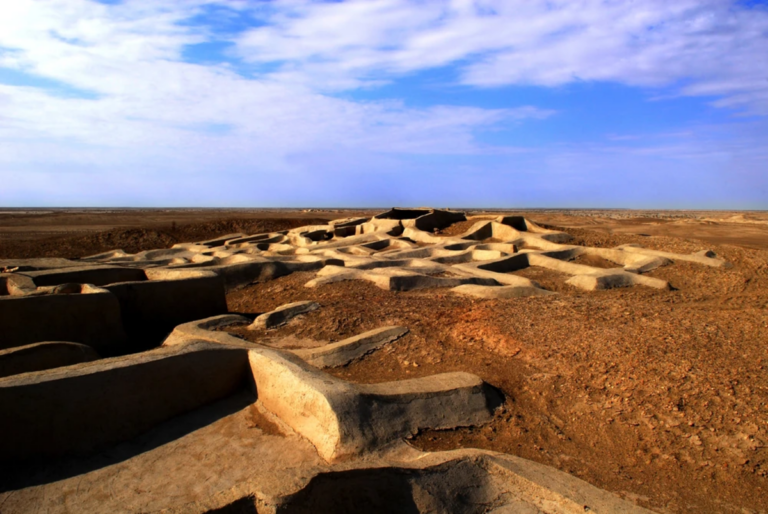
Shahr-i-Sokhta — whose name translates from Persian as “Burnt City” — sits about 56 kilometers (35 miles) south of Zabol in Iran’s Sistan-Baluchestan province. The site covers roughly 273 hectares (675 acres), encompasses a cemetery estimated to contain between 25,000 and 40,000 graves, and was occupied through four principal periods between approximately 3550 BC and 2300 BC, with its urban peak coming somewhere in the third millennium BC. UNESCO added it to its World Heritage List in 2014, citing its role as a key example of the emergence of complex societies and long-distance cultural contact in Bronze Age eastern Iran.
The city’s reputation in the history of games rests on a 1977 discovery by an Italian archaeological mission excavating Grave 731 in the site’s vast cemetery. That grave yielded what has since been described as one of the most complete board game assemblages from the ancient world: a carved wooden board featuring a serpentine design coiling to create 20 circular spaces and 27 pieces, and four dice. The set has been dated to approximately 2600–2400 BC, placing it roughly contemporaneous with the Royal Game of Ur from Mesopotamia — the other great ancient board game whose physical remains survive from this era. Unlike the Ur game, which archaeologist Irving Finkel deciphered from a cuneiform tablet held at the British Museum, the Shahr-i-Sokhta set came without written instructions.
For decades, researchers worked to reconstruct how the game was played. In February 2024, computer scientist Sam Jelveh of the University of Essex and independent archaeologist Hossein Moradi published a reconstruction of plausible rules using a combination of physical evidence and AI simulation. Their method involved running thousands of candidate rule sets through computational models to identify which produced balanced, enjoyable gameplay — then testing the rules with 50 players. The reconstruction suggested a strategic racing game in which each of two players moved 10 pieces off the board using dice rolls, with “runner” and “blocker” piece types adding layers of complexity that testers found more engaging than the simpler Ur game. The researchers acknowledged their reconstruction represents plausible rules, not confirmed historical ones.
What makes the 2026 discovery significant is that the new game is explicitly not a variation or a duplicate of that 1977 find. Shirazi described it as a “previously unknown type” of intellectual or board game. The distinction implies Shahr-i-Sokhta preserved not one gaming tradition but at least two — which raises questions that go well beyond the objects themselves.
What Multiple Game Traditions Mean for a Bronze Age City
When archaeologists find a board game in a grave, the object carries weight beyond its recreational function. Games placed with the dead — especially in a grave as furnished as Grave 731, which research has described as belonging to a wealthy non-royal individual — served as markers of social identity. The 1977 game did not come from a royal tomb; unlike the Royal Game of Ur, which was buried with Mesopotamian royalty, the Shahr-i-Sokhta game was non-royal. That detail already suggested games in this part of the ancient world were more widely distributed across social strata than in Mesopotamia.
A second distinct game type, if confirmed, pushes that inference further. It raises the possibility that different game traditions circulated among different groups within the city, or were used in different social or ritual contexts, or marked different community identities. The 2024 study of the site’s cemetery by Giorgia Vincenti and colleagues — published in the American Journal of Biological Anthropology — found that the burial population was unusually female-biased among 549 adult skeletons, with a sex ratio of roughly 70 males per 100 females. Ancient DNA analysis of X-chromosome heterozygosity supported a hypothesis of matrilocal residence — meaning women stayed in their birth communities while men moved in after marriage. That finding, combined with strong evidence of long-distance trade activity, suggests Shahr-i-Sokhta was a socially and economically complex city, not a homogeneous one. A gaming culture differentiated by game type would fit that picture.
For now, those implications remain speculative. The excavation team has not yet released the technical details needed to fully characterize the new object: how it was played, whether all its components survived, and precisely how it differs from the 1977 set. Full publication of the new material will be required before those questions can be answered.
What Did a City Feel Like at Its Scale?
Shahr-i-Sokhta was not a village. At its urban peak, around 2600–2400 BC, it occupied roughly 80 hectares (198 acres) of built area within a larger landscape containing more than 100 contemporary settlements across the Sistan basin. Its workshops produced pottery, stone, and ornaments. Archaeological evidence connects its inhabitants to the Indus Valley, the Persian Gulf, Oman, southwestern Iran, and Central Asia. The Helmand Civilization — the Bronze Age cultural complex centered on the Helmand River basin and linking Shahr-i-Sokhta to sites like Mundigak in present-day Afghanistan — extended across a wide band of southeastern Iran and southwestern Afghanistan during the third millennium BC.
Previous excavations at the site have produced a remarkable record of personal culture and medical practice alongside the games: an artificial eye crafted from bitumen paste and covered with a thin layer of gold, with a diameter of approximately 2.5 centimeters (about 1 inch), fitted with tiny drilled holes through which a golden thread held it in place in its wearer’s socket. The woman in whose burial it was found, dated to approximately 2900–2800 BC, was approximately 1.82 meters (6 feet) tall. Human skulls from the site show evidence of brain surgery. A 2015 find produced a Bronze Age piece of leather bearing drawings. Traces of cumin and coriander have been identified among the organic remains from earlier seasons.
The 21st season, which began on July 20, 2026, extended that record. Archaeologists opened three excavation areas: one in the residential quarter and two around the cemetery. The residential zone work, focused on the city’s northeastern sector, identified two distinct architectural phases and a range of material that complicates any simple division between “home” and “workshop.” Animal remains, tools, stone-working debris, plain and decorated animal figurines, and hearths appeared within the same architectural spaces. Shirazi said domestic and craft production overlapped in the same residential spaces — a pattern that adds texture to how daily life was organized in one of the Bronze Age world’s most complex urban settings.
Why the Bone Comb Matters
Exchange artifacts are often the cleanest evidence of long-distance connection, and the engraved bone comb recovered in the 21st season may be exactly that. Shirazi noted that no close parallel exists at Shahr-i-Sokhta for the comb’s design, while comparable objects have been reported from archaeological sites in Central Asia.
That matters because the direction of influence is unknown. The comb could represent a manufacturing tradition with roots north of Shahr-i-Sokhta — consistent with the site’s documented Central Asian connections in pottery and burial practice — or it could be a locally made object whose design reflects absorbed external influence. Determining which will require detailed analysis of the raw material (bone sourcing), the manufacturing technique, and the specific iconography of the engraved pattern. The fact that no local parallel exists makes the object potentially more interesting, not less: it is either an import or it is an innovation, and either answer says something about the city’s relationship with communities to its north.
This finding connects to the broader archaeological character of the site. The 2024 study of burial practices at Shahr-i-Sokhta found evidence of a cenotaph tradition from southeastern Iran that appears to have originated in the southeastern Iranian sites of the Early Bronze Age before spreading into Central Asia during the Late Bronze Age, through what researchers described as cultural communication networks, nomadic craftspeople, and indirect trade.
Organic Material: Where Desert Conditions Are an Archaeologist’s Ally
Among all the findings from the 21st season, the recovery of organic materials may hold the longest-term scientific value. Eggshell, textile fragments, and leather are recovered from Bronze Age sites only rarely, because organic materials rarely survive burial over thousands of years.
Shahr-i-Sokhta’s location near the Lut Desert — one of the hottest and driest places on Earth, where the hyper-arid conditions slow microbial decomposition dramatically — has made it an exceptional archive of materials that simply do not survive elsewhere in the region. These are precisely the categories of evidence that can reconstruct ancient clothing, food consumption patterns, craft production techniques, and funerary customs in ways that pottery, stone tools, and architecture alone cannot.
The current excavation program is pairing the new organic finds with a suite of interdisciplinary methods: OSL (optically stimulated luminescence) sampling for sediment dating, radiocarbon analysis and ancient-DNA collection, physical anthropology of human skeletal remains (including assessment of disease and trauma indicators), and laboratory analysis of ceramics for provenance studies. Together, these methods aim to build a picture of the people who lived at Shahr-i-Sokhta not just as artifact-makers but as biological and social beings — where they came from, what they ate, what conditions they lived and died under, and how they related to the wider world around them.
What the New Game Does Not Yet Tell Us
It is worth being clear about what is and is not known about the 2026 board game find. Shirazi described it as a “previously unknown type” — but the full technical description, including what the game physically looks like, whether a complete set was recovered, what materials it is made from, and how its design differs from the 1977 serpentine-board game, has not yet been published. The reconstruction of the 1977 game took researchers nearly five decades and ultimately required both cross-disciplinary comparison with the Royal Game of Ur and AI-assisted simulation of thousands of rule sets. Any equivalent understanding of the new game’s mechanics will require a full academic publication of the find — a process that typically takes months to years.
What the 2026 announcement does establish is: the object exists, it is dated to approximately 4,600 years ago, it is distinct in type from the 1977 game, and its discovery in the cemetery context means archaeologists will need to examine whether it was a personal possession, a social marker, a funerary object, or some combination of these. That combination of questions, in the hands of the team now conducting aDNA and physical anthropology studies on the same cemetery population, may eventually produce answers specific enough to test whether the two gaming traditions did indeed map onto different groups within Shahr-i-Sokhta’s population.
Until that analysis is complete and published, the most defensible claim is also the most striking one: a city that archaeologists already knew as a site of remarkable gaming culture turns out to have had more gaming culture than anyone had previously documented.
Frequently Asked Questions
What is the new board game found at Iran’s Burnt City in 2026, and how does it differ from the famous 1977 game?
Archaeologist Rouhollah Shirazi described the 2026 find as a “previously unknown type” of board or intellectual game dated to approximately 4,600 years ago — distinct from the elaborate set recovered from Grave 731 in 1977. The older game, dating to roughly 2600–2400 BC, consisted of a carved wooden board with a serpentine design creating 20 circular spaces, 27 geometric pieces, and four dice; its plausible rules were reconstructed in 2024 using AI simulation by researcher Sam Jelveh of the University of Essex and archaeologist Hossein Moradi. The 2026 game’s full physical description and rules have not yet been published. What is known is that the two games represent different types — implying that Shahr-i-Sokhta may have hosted more than one gaming tradition simultaneously.
Could finding two board games at one Bronze Age city tell us something about its social structure?
Potentially, yes — and that is precisely why archaeologists treat game finds in burial contexts as social evidence, not just recreational curiosities. The 1977 game came from a well-furnished grave of a wealthy but non-royal individual, suggesting games were more widely accessible in eastern Iran than the Ur game’s exclusively royal context implied for Mesopotamia. A second distinct game type could indicate different social groups, ritual contexts, or community identities within Shahr-i-Sokhta’s complex urban population. A 2024 study in the American Journal of Biological Anthropology found the site’s cemetery was unusually female-biased and consistent with a matrilocal society engaged in long-distance trade — reinforcing the picture of a socially differentiated city. Whether the two game traditions mapped onto any of those social distinctions will require full publication and analysis of the new find.
How did researchers decode the rules of the 4,500-year-old Shahr-i-Sokhta board game?
Unlike the Royal Game of Ur from Mesopotamia — whose rules survive on a cuneiform tablet held at the British Museum — the Shahr-i-Sokhta game came without written instructions. Jelveh and Moradi’s 2024 paper, published in the Iran: Journal of the British Institute of Persian Studies, used a two-part approach: first, comparing the game’s physical components (20-square board, 27 pieces, 4 dice) with the Ur game and the broader “Game of Twenty” tradition known from over 100 examples in this region; second, simulating thousands of candidate rule sets computationally to identify which produced balanced, strategic gameplay. The resulting rules describe a racing game using “runner” and “blocker” piece types, rated by test players as more complex and strategically engaging than the Ur game. The researchers stressed these are proposed rules, not confirmed originals.
What makes the bone comb discovered at Shahr-i-Sokhta in 2026 significant?
The comb’s interest lies in what it does not match: Shirazi reported that no close parallel for its engraved design has been found at the Burnt City itself, while comparable objects have appeared at some Central Asian archaeological sites. This places it at the edge of the site’s documented trade and cultural network — which is known to have extended toward Central Asia, the Indus Valley, the Persian Gulf, and Mesopotamia. Whether the comb was imported from the north or locally manufactured in a style reflecting external influence will depend on material and iconographic analysis not yet completed. Either conclusion adds evidence to how ideas and objects moved through Bronze Age trade routes across the Iranian plateau.