HomeAuto Eternally Yours Premieres Oct 8: CBS Vampire Comedy Puts Hedonic Adaptation in 500-Year Marriage
Eternally Yours Premieres Oct 8: CBS Vampire Comedy Puts Hedonic Adaptation in 500-Year Marriage
September 10, 2026:
Cbs.com
When creator Joe Wiseman clears his throat at work, his writing partner Joe Port doesn’t find it charming — and after 26 years of collaboration, it apparently has only gotten worse. That petty, irresistible, profoundly human irritation is the engine of Eternally Yours, the vampire family comedy premiering Thursday, October 8 at 8:30 PM ET on CBS and streaming on Paramount+. But what Port and Wiseman may not have known when they first wrote the script in 2015 is that their conceit maps onto one of the most rigorously documented findings in happiness research: given enough time, even the people we love most become the emotional equivalent of background noise.
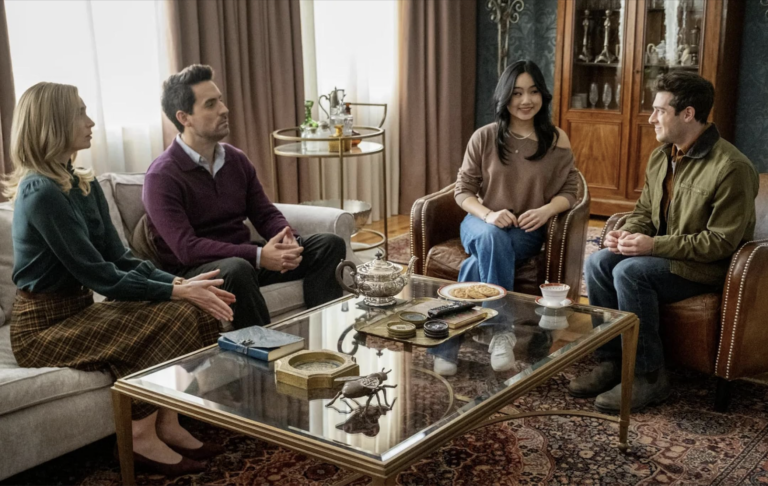
The show stars Ed Weeks (The Mindy Project) as Charles and Allegra Edwards (Upload) as Liz, a vampire couple who have been married for five hundred years. Their once-passionate romance has, in the words of CBS’s own logline, “devolved into a pulseless marriage.” They live in Seattle with their oddball coven — which includes their daughter Emma (Helen J. Shen) and her fully human boyfriend Max (Jaren Lewison), coven member Jesse (Parker Young) who is married to a human, and the rotating cast of immortal domestic troublemakers who make up their enclosed social world. The eternal rut cracks when Max discovers that Emma’s family are vampires, forcing Charles and Liz to confront a question they have apparently deferred for centuries: can love actually last forever, or does forever convert intimacy into something closer to a life sentence?
It is a funnier premise than it sounds — and a more scientifically precise one than it appears.
Why Immortal Love Goes Flat: Hedonic Adaptation at an Extreme Scale
The psychological phenomenon at the center of Eternally Yours has a formal name: hedonic adaptation, sometimes called the hedonic treadmill. Psychologists Philip Brickman and Donald Campbell introduced the concept in their 1971 paper on hedonic relativism, proposing that humans return to a relatively stable emotional baseline regardless of what happens to them. In 1978, Brickman and colleagues tested the idea empirically — surveying recent lottery winners, accident victims who had become paraplegic, and a control group — and found that lottery winners and paraplegic accident victims showed no lasting changes in reported happiness. The good and the catastrophic both get absorbed back to baseline. Humans adapt.
This is a feature of minds calibrated for roughly 70 to 80 years of continuous experience. In that lifespan, hedonic adaptation is largely adaptive — it prevents both prolonged grief and prolonged ecstasy, keeping attention available for what’s actually new. For a 500-year marriage, the same mechanism has had half a millennium to operate. Every possible source of novelty — a new home, a new city, a new century, a new cultural moment — has long since been processed and integrated. The specific cough that Liz once found irresistible (“Charles, I want to wake up to that throat clear till the end of time,” she swoons in the show’s trailer before being transformed) is now, 500 years later, the thing she would most like to never hear again.
Psychologist Sonja Lyubomirsky and her colleagues later developed the Hedonic Adaptation Prevention Model, which identifies two mechanisms that slow the rate of adaptation: continued variety in positive experiences, and sustained appreciation of them. Charles and Liz have apparently run out of both. The arrival of Max — a human encountering everything for the first time, experiencing genuine novelty the couple hasn’t felt since the 16th century — functions in the show as a kind of involuntary therapy: exposure to someone for whom nothing is stale, whose wonder is infectious precisely because it is unearned by centuries of desensitization.
Are You Still the Same Person Your Spouse Married Five Centuries Ago?
The comedy goes deeper than relationship fatigue. Beneath the hedonic treadmill problem lies a genuinely unnerving philosophical question, one the British philosopher Derek Parfit spent his career trying to answer: what makes a person the same person across time?
In Parfit’s Reasons and Persons (Oxford University Press, 1984), Parfit argued that personal identity consists not in any metaphysical essence — no soul, no Cartesian ego — but in psychological continuity and connectedness: overlapping chains of memory, belief, desire, and personality that link successive stages of a person’s life. You are the same person as your 10-year-old self not because some entity persists unchangingly from then to now, but because there are continuous links — you remember being that child, you carry some of their preferences and fears forward, and each stage connects to adjacent ones. His central thesis, stated deliberately provocatively, is that “identity is not what matters” — what matters is the psychological relation itself.
Apply Parfit’s framework to Charles in the year 2026. Is he meaningfully the same person as Charles who fell in love with Liz somewhere in the 1520s? Five centuries of accumulated experience, cultural conditioning, loss, humor, and adaptation have produced a being so psychologically distant from the original that the claim of continuous identity becomes philosophically strained. The overlapping chains still connect — he presumably has some memories of the early centuries — but the specific memories, desires, and personality traits that made Charles-in-1526 the person Liz fell in love with are buried under 500 years of subsequent accumulation. The commitment was made by someone who, in any meaningful psychological sense, no longer exists. And yet the commitment remains — enforced, in the show’s worldbuilding, by vampire law that prohibits divorce on pain of dismemberment.
This is Eternally Yours‘ most precise comic insight, and it emerges from the show’s premise whether or not its writers intended it. Eternity doesn’t preserve love. It preserves the institutional structure of love while eroding the psychological substance of the people bound by it.
What Science Says About Real Biological Immortality
The show’s vampires presumably do not age visibly — they must relocate periodically to prevent neighbors from noticing their stasis, a detail that grounds their immortality in something resembling biological mechanism. Real biology offers instructive context.
Biological aging is driven by several converging processes: telomere shortening (the protective caps on chromosomes erode with each cellular division until the cell can no longer faithfully replicate), accumulation of oxidative damage, protein glycation, and epigenetic drift — the slow, cumulative methylation changes in DNA that serve as one of the most reliable biological clocks for estimating an organism’s age. Cellular senescence, the process by which cells cease dividing and enter a state of inflammatory metabolic arrest, accelerates tissue dysfunction across the whole organism.
A biologically immortal organism would need mechanisms to halt or reverse all of these simultaneously. What makes this scientifically interesting rather than merely fictional is that evolution has produced partial solutions at least twice. Hydra vulgaris, the freshwater polyp, maintains continuous populations of active pluripotent stem cells that enable whole-body regeneration and negligible senescence — no measurable increase in mortality or reproductive decline with age. The term “negligible senescence” itself was coined by biogerontologist Caleb Finch in his 1994 work Longevity, Senescence and the Genome.
Even more striking is Turritopsis dohrnii, the so-called “immortal jellyfish,” which can revert to its juvenile polyp stage through a process of cellular transdifferentiation — essentially reprogramming differentiated cells back into pluripotent ones — when stressed or aging. A 2022 comparative genomics study published in PNAS found that T. dohrnii possesses enhanced gene variants associated with DNA repair, telomere maintenance, and protection against oxidative stress. It has, in other words, partially solved the engineering problem that vampires in fiction solve completely. A vampire biology might be conceptualized as an organism that achieved what T. dohrnii does transiently — cellular reprogramming, sustained telomerase activity, superior DNA repair — but as a stable, continuous physiological state rather than a stress response.
The vampires of Eternally Yours are therefore not biologically impossible in the way that, say, telekinesis is biologically impossible. They are extremely improbable extrapolations of mechanisms real evolution has approached.
The Coven as a Total Institution: Five Centuries of Path Dependence
The coven in Eternally Yours is the show’s most sociologically rich element, and it maps directly onto a concept developed by Canadian-American sociologist Erving Goffman in his 1961 book Asylums. Goffman defined a total institution as “a place of residence and work where a large number of like-situated individuals, cut off from the wider society for an appreciable period of time, together lead an enclosed, formally administered round of life.” His examples include prisons, mental hospitals, monasteries, and military barracks.
The Seattle vampire coven qualifies. It enforces comprehensive normative governance of member behavior — no divorce, enforced by the threat of dismemberment by “the elders.” It requires periodic physical relocation from the external world (the never-aging problem). It regulates member relationships with outsiders, evidenced by the fact that Jesse’s marriage to a human, Phyllis (Rose Abdoo), is treated as a notable, rule-governed arrangement requiring explanation. These are the markers of a total institution: comprehensive normative regulation, enforced by internal authority, operating in partial separation from wider society.
What makes the vampire coven intellectually interesting as a social form is what Goffman’s framework could never quite account for: its temporal rigidity. Human institutions evolve because human lifespans are short. New generations enter with different values and, over time, reform norms. The coven of Eternally Yours has no such renewal mechanism. Its norms — including the prohibition on divorce — would be literally ancient, persisting long past any conceivable functional justification, sustained purely by the authority of beings old enough to have written the rules themselves. This is institutional path dependence in its purest form: the tendency of institutions to remain locked in historical patterns because the accumulated authority of the existing system exceeds any reforming impulse. In vampire society, there is no generational turnover to supply the reforming energy. The elders are the founders. The rules they set in the 15th century are still the rules.
The Domestic Supernatural Comedy and What This Genre Has Become
Eternally Yours arrives at the endpoint of a specific genre arc, and understanding that arc is essential to understanding what the show is attempting. Vampire mythology is among the oldest and most culturally persistent supernatural traditions in Western fiction, with literary crystallization in John Polidori’s The Vampyre (1819) and Bram Stoker’s Dracula (1897). In the Victorian era, the vampire encoded fears of foreign contamination and transgressive sexuality. Through most of the 20th century, vampires functioned as figures of predatory otherness. In the late 20th and early 21st century, they became vehicles for identity, desire, and the negotiation of difference — Buffy the Vampire Slayer, Twilight, True Blood.
The subgenre to which Eternally Yours belongs — the domestic vampire comedy — emerged primarily with Taika Waititi and Jemaine Clement’s What We Do in the Shadows (2014 film; FX series 2019–2024), which deployed vampires as vehicles for deadpan comedy about the banality of existence, bureaucratic absurdity, and the irrelevance of supernatural power in the face of mundane frustration. Port and Wiseman’s Ghosts, which averages over 9 million weekly viewers per CBS’s reported Live+7 numbers for its run, demonstrated that the supernatural can anchor warm, relational network comedy about intergenerational clash and the persistence of historical attitudes into the present.
Eternally Yours sits inside this lineage but adds something the genre had not previously attempted at broadcast scale: a formal analytical framework that makes the vampire premise do genuine philosophical work. “We thought it’s funny that people don’t think about the long-term consequences of coming together forever and sticking together through the centuries,” Wiseman told USA TODAY’s Bryan Alexander in August. “It can be pretty annoying.”
Port’s version of the same observation is even more precise: “My personal pet peeve is actually [Joe] Wiseman clearing his throat. I never found it adorable, but it did get worse over the years. That very same thing is what annoys Liz about Charles 500 years later.” The show’s biographical root — two writers who have been “stuck together for 26 years” and know each other’s irritating habits down to the last throat-clear — is the engine of the science. The hedonic treadmill they have personally experienced across 26 years of collaboration is projected onto 500 years of vampire marriage, and the result is a premise that is simultaneously autobiographical, comedic, and formally grounded in happiness research.
Seattle, Concealment, and the Mathematics of What Five Centuries Means
The choice of Seattle is worth a moment’s attention. The city averages roughly 226 overcast days per year, a detail the Twilight franchise exploited for the same reason: sunlight avoidance. More importantly for the show’s plausibility, Seattle is one of the most transient metropolitan areas in the United States — a high-churn tech-sector city where neighbors frequently don’t know each other, social surveillance is low, and demographic change is rapid enough that a family that “never seems to age” could realistically escape sustained scrutiny across multiple residential cycles.
The mathematics of five centuries is worth pausing on. Charles and Liz’s wedding would have taken place roughly in the early 1520s — the era of the Protestant Reformation, the Spanish conquest of the Americas, and the early career of Michelangelo. Between their wedding and today, they have outlived approximately 20 to 25 human generations. Every person they knew at the time of their marriage has been dead for nearly 400 years. The cultural world they inhabit in 2026 is as foreign to the world of their wedding as that world would have been to someone from the Bronze Age.
The show’s pilot, written by Port and Wiseman and directed by Trent O’Donnell, is set to arrive at this premise from the comedic end: Max discovers the truth about Emma’s family, and the disruption of a genuinely mortal human encountering centuries of accumulated supernatural domesticity forces Charles and Liz into exactly the confrontation their eternity has been deferring.
How Do You Watch Something Like This When It Has Earned It?
The distinction between watching Eternally Yours as a standard fall comedy and watching it as a formally grounded analytical work is the difference between finding it pleasant and finding it genuinely funny. The latter requires holding the Goffman coven, the Brickman-Campbell treadmill, and the Parfitian identity problem simultaneously, because the show’s best jokes operate at all three levels at once. Charles calculating that “being chopped up into a thousand pieces might be preferable” to continuing the marriage is not just a dark joke — it is a precise comedic formulation of what happens when a total institution prohibits exit from a relationship whose psychological foundation was laid by a different person, centuries ago, who happens to share your face.
The domestic supernatural comedy genre has, across the span of roughly 12 years, moved from WWDITS’s alienated anarchism to Ghosts‘ warm intergenerational nostalgia to what Eternally Yours is attempting: a show where the supernatural premise is the minimum necessary condition to make a serious point about the limits of commitment, the neuroscience of habituation, and the philosophical strangeness of claiming to be the same person who made a promise five centuries ago. Whether it succeeds will depend on whether Port and Wiseman can sustain that precision across 20 episodes. The trailer, at minimum, makes a compelling case that the throat-clearing jokes are doing more work than they appear.
Eternally Yours will premiere Thursday, October 8 at 8:30 PM ET/PT on CBS and Paramount+ — live for Premium subscribers and next-day for Essential subscribers.
Frequently Asked Questions
When does Eternally Yours premiere, and where can I watch it?
Eternally Yours is set to premiere on Thursday, October 8, 2026, at 8:30 PM ET/PT on CBS, airing in the slot Ghosts normally occupies (Ghosts is moving to midseason). New episodes will air Thursdays after Georgie & Mandy’s First Marriage and before the new season of Elsbeth. The show will also stream on Paramount+ — live for Premium plan subscribers and on-demand the following day for Essential subscribers.
Is Eternally Yours a spinoff of Ghosts?
It is a companion series from the same creative team — showrunners Joe Port and Joe Wiseman, who adapted the US version of Ghosts — but not a spinoff in the narrative sense. The two shows exist in the same CBS supernatural universe and a crossover has been discussed (Port told USA TODAY that “maybe one day these vampires might stay in a certain haunted Airbnb”), but Eternally Yours has its own cast, its own mythology, and its own independent premise. Allegra Edwards, who plays vampire wife Liz, appeared as ghost Donna in Ghosts, which is the closest connection between them.
What does hedonic adaptation actually predict for a 500-year marriage?
Hedonic adaptation — the psychological mechanism by which humans return to a stable emotional baseline regardless of positive or negative changes — predicts that any stimulus, including a person you love, will eventually become part of your neutral background. Psychologists Brickman and Campbell coined the concept in 1971; their 1978 study showed that lottery winners were no happier than control groups within a year of winning. In a 500-year marriage, this mechanism has had half a millennium to operate on every conceivable source of novelty — meaning that not just the romantic excitement, but potentially every shared experience, every quirk, and every surprise has long since been absorbed into the emotional baseline. The specific comedy of Charles’s throat-clearing irritating Liz is a scientifically precise dramatization of what hedonic adaptation looks like at its logical extreme.
What is the philosophical problem with promising to love someone for eternity?
Philosopher Derek Parfit argued in Reasons and Persons (1984) that personal identity consists in psychological continuity — overlapping chains of memory, belief, and personality. Over a normal human lifespan, those chains remain intact. Over 500 years, they may attenuate to the point where the question “is this the same person who made the original commitment?” becomes genuinely ambiguous. The being who promised eternal love in 1526 and the being who finds the other person’s cough intolerable in 2026 are connected by 500 years of continuous psychological chain — but they may be psychologically as different from each other as any two strangers. Eternally Yours encodes this problem in its comedy: the commitment is legally and institutionally permanent, but the people who made it may have been replaced, gradually and completely, by the accumulation of centuries.