HomeAuto Coven Academy Premieres October 1: Each Witch’s Power Has Real Scientific Explanation
Coven Academy Premieres October 1: Each Witch’s Power Has Real Scientific Explanation
September 9, 2026:
Thewaltdisneycompany.com
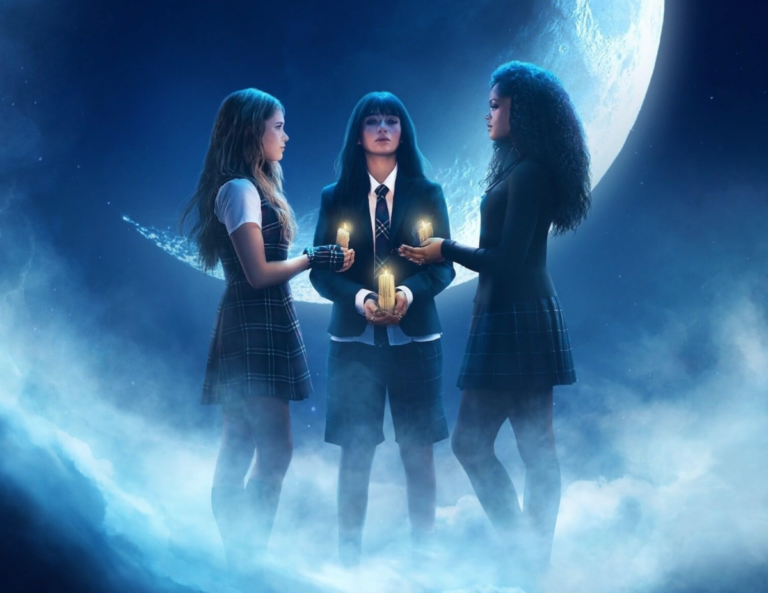
When Coven Academy’s new season of 21 bite-sized chapters arrives on Freeform October 1, 2026 at 8 p.m. EDT/PDT, dropping in full on Disney+ and Hulu the following day, its supernatural abilities will look like genre conventions: a girl who reads minds, a girl who bends time, a boy whose influence feels less like charisma and more like command. What they actually are is a set of real scientific concepts — mirror neuron theory, relativistic time dilation, epigenetics — translated into YA drama, and set against the one city in America whose actual cultural history makes every one of them feel historically earned. New Orleans did not become a fictional backdrop for magical schools by accident. Its Vodou tradition had already articulated the metaphysical framework for Sasha’s empathy, Tegan’s time-bending, and Briar’s inherited power three centuries before neuroscience and physics gave those frameworks their current names.
Briar’s Journey: A New Yorker Meets Her Inheritance
Briar — played by Malina Pauli Weissman (A Series of Unfortunate Events) — arrives at Crescent Veil as an outsider in every sense. She is a sharp-tongued, sarcastic New Yorker sent to a New Orleans boarding school after her mother Mary’s death. The school appears to be an institution for troubled girls. It is not. On her first night, Briar discovers she is a witch — and that Crescent Veil is one of several coven academies worldwide that trains young people whose misunderstood magical abilities have made them difficult to place anywhere else. The central dramatic question the show builds toward is both intimate and cosmic: who killed her mother, and what does the ancient supernatural force threatening New Orleans have to do with it? The show operates in the emotional register of The Craft filtered through Charmed and Dawson’s Creek — gothic atmosphere over pure horror, with romantic and relational drama carrying as much weight as the supernatural stakes. The teaser trailer’s use of “Brutal” (the Olivia Rodrigo song set to the show’s opening scenes) signals this register immediately: the show knows its emotional wavelength is raw, confessional, and unafraid of earnestness.
The series was created by Tim Federle — the Emmy and DGA-nominated writer-director behind High School Musical: The Musical: The Series and the film Better Nate Than Ever — alongside co-showrunners Todd Slavkin and Darren Swimmer. Federle’s Chorus Boy Productions handled the series in association with Disney Kids and Family, with Federle directing the pilot himself. Production ran from December 2025 through March 5, 2026 in Vancouver, with Gastown standing in for the French Quarter. The full season consists of 21 chapters aired in three weekly Freeform blocks — nine on the premiere night, six on October 8, and six on October 15 — with the complete season streaming from October 2 on Disney+ and Hulu.
How Sasha’s Mind-Reading Actually Works: Mirror Neurons and the Architecture of Empathy
Sasha — played by Jordan Leftwich (The Family Switch) — is described as able to “read minds,” but that description slightly misfires. What Sasha’s ability appears to map onto is something more precise and more scientifically grounded: empathic resonance, the capacity to internally simulate another person’s emotional and cognitive state with an accuracy that feels like access. The Disney Plus Press cast description calls her “a deeply empathic student who can read minds,” framing the ability as empathy first, cognition second — a distinction the science validates.
This is not fictional. It has a biological mechanism.
In the early 1990s, neuroscientist Giacomo Rizzolatti and colleagues at the University of Parma discovered a class of neurons in the premotor cortex of macaque monkeys that fired both when the monkey performed an action and when it merely observed another individual performing the same action. These were named mirror neurons in the brain. Subsequent neuroimaging research strongly suggests humans possess an analogous distributed system — a network of brain regions that internally simulate the observed experiences of others. When someone watches another person wince in pain, some of the same neural circuits fire in the observer’s brain that would fire if the observer were experiencing that pain themselves.
The neuroscientist Vittorio Gallese formalized the theoretical implications in his 2001 paper, published in the Journal of Consciousness Studies, proposing what he called the Shared Manifold Hypothesis. His argument: the human capacity to recognize others as intentional agents, to feel empathy, and to imitate and attribute mental states all depend, at their foundation, on a set of mirror-matching mechanisms. The brain does not first observe another person and then reason about what they might be feeling; it simulates it. The distinction matters. Simulation is faster, more automatic, and less mediated than inference. In ordinary life, it operates largely below conscious awareness — which is why we flinch when we see someone stub a toe before we have time to think about it.
Current neuroscience has since complicated the original enthusiasm: Penagos-Corzo and colleagues, in a 2022 review, cautioned against treating mirror neurons as a standalone empathy system, noting that the human evidence comes primarily from neuroimaging rather than single-unit recording and that mirror neurons function within a broader predictive-processing architecture rather than as a self-sufficient empathy system. The system is real; the original claims about its sufficiency were overstated. The Shared Manifold Hypothesis remains influential but contested.
What Sasha would represent, in the fictional world of Crescent Veil, is an amplification of an existing biological system — a mutation or magical enhancement that collapses the gap between the brain’s empathic simulation and something closer to direct cognitive access. The inferential layer that stands between “I observe your facial expression and posture” and “I understand what you’re feeling” would, in her case, be bypassed. The HeartMath Institute has documented that the human heart generates measurable electromagnetic fields extending several feet beyond the body, with emotional states producing distinct patterns in that field that others in proximity can detect at subthreshold levels. That research on heart electromagnetic fields does not claim this enables telepathy. It does provide a mechanistic scaffold on which a fictional amplification could plausibly rest.
Tegan’s Chronokinesis: What Einstein Actually Said About Bending Time
Tegan — played by Ora Duplass (Their Town) — is described as an “irreverent time-bending witch,” and her ability is the conceptually richest of the four, because modern physics does not treat time as fixed, universal, or unbendable. The official cast description gives no further detail than “time-bending” — which is where the physics takes over.
Albert Einstein’s Special Theory of Relativity established in 1905 that time is not a constant. It runs at different rates depending on relative velocity. A clock aboard a spacecraft moving at a significant fraction of the speed of light ticks measurably slower than one on the ground — a phenomenon called relativistic time dilation. This is not theoretical abstraction. The GPS satellites orbiting Earth travel fast enough that their onboard clocks require daily correction for relativistic effects, or navigation errors would accumulate. Without those corrections, GPS positioning errors grow at a rate of about 10 kilometers every day.
General Relativity extends this further: time also slows in stronger gravitational fields. A clock at sea level runs measurably slower than one at altitude. Near a rotating black hole’s event horizon, time would slow to a near-standstill relative to a distant observer.
The more exotic territory concerns Closed Timelike Curves, or CTCs — mathematical solutions to Einstein’s field equations first identified by Willem van Stockum in 1937, then confirmed by Kurt Gödel in 1949, who described a rotating universe enabling spacetime loops in which paths in spacetime close back on themselves. A traveler on a CTC could, in principle, return to an earlier event in their own history. Subsequent work found CTCs permitted by Kerr spacetime, Tipler cylinders, and Gott space — rotating black holes, infinite rotating cylinders, and pairs of cosmic strings. Stephen Hawking proposed in 1992 that physics prevents macroscopic time loops — his Chronology Protection Conjecture — but the conjecture remains unproven, and laboratory quantum simulations of CTC behavior using photon polarization states have been carried out successfully.
Chronobiology adds a third dimension. The brain does not have a single clock. Multiple neural systems interact to produce the subjective experience of time, and those systems are profoundly modifiable by emotional state, attention, and neurochemistry. In states of extreme focus — what psychologists call flow — subjective time stretches. In emergencies, the same perceptual slowing occurs. These effects are well-documented and rest on measurable neurobiological changes in the systems that regulate temporal processing.
Tegan’s chronokinesis most plausibly maps onto a localized field effect rather than literal time travel — a magical manipulation of the subjective and possibly physical temporal experience of the people around her. In the context of New Orleans, this resonates with something specific: in Haitian and Louisiana Vodou cosmology, certain lwa — divine spirits including Papa Legba (master of crossroads and transition) and Mawu-Lisa (governing the cosmos and time) — are understood to exist outside ordinary human time and to intercede in it. Tegan’s power, placed in New Orleans, is not just physics. It is theology.
New Orleans Was Not Chosen for Atmosphere. It Was the Only Defensible Choice.
Of all the settings available to a show about secret magical schools, New Orleans is the only American city that does not require the mythology to be imported. The city has a documented, living, continuously practiced tradition of magical and spiritual systems rooted in the history of the Atlantic slave trade — a tradition that survived three centuries of official suppression not despite that suppression but because of it, through a process of deliberate strategic syncretism that produced one of the most sophisticated and resilient bodies of spiritual practice in the Western Hemisphere.
Louisiana Vodou originated from the collision of West African spiritual systems (Vodún, practiced by Gbe-speaking peoples of modern Benin), Haitian Vodou brought to Louisiana by refugees fleeing the Haitian Revolution in the early 19th century, French and Spanish Catholic colonial practice, and Native American herbal traditions. Enslaved Africans brought to Louisiana during the colonial period carried with them cosmologies centered on ancestor veneration, interaction with divine spirits (called lwa), and practical magic. These practices were officially suppressed by colonial law. They survived through a maneuver of extraordinary sophistication: Vodou practitioners mapped their lwa onto Catholic saints, appearing to worship openly as Catholics while maintaining their spiritual traditions privately. The Catholic imagery became, in the words of practitioners, a mask that the dominant society could accept.
The most historically significant figure in this tradition is Marie Laveau, born a free woman of color in New Orleans around 1801. By the 1830s, she had become the central figure in the city’s Vodou community — a practitioner of extraordinary skill and political influence whose authority extended across racial lines in antebellum New Orleans, a remarkable achievement in a society organized around the violent enforcement of racial hierarchy. She performed public ceremonies, dispensed gris-gris, conducted healing rites, and read fortunes. Her daughter, Marie Laveau II, extended the tradition with more theatrical public displays. Marie Laveau’s legacy persists in active New Orleans Vodou practice today. Zora Neale Hurston, the African-American novelist and anthropologist, documented Vodou practitioners in the 1930s who preserved oral accounts of the Laveau legacy.
Hoodoo and Vodou are often conflated by outsiders, but practitioners distinguish them clearly: Hoodoo is not a religion, but a practical folk-magic system (also called rootwork) that uses herbs, roots, mineral curios, and symbolic objects to effect change in the physical world. It grew from the same West African traditions as Vodou but incorporated European folk magic and Native American plant knowledge into a distinctly American synthesis. The conflation belongs to the tourist industry, not the tradition.
The critical insight this analysis arrives at: New Orleans Vodou cosmology already contained the metaphysical scaffolding for all three of the “modern” scientific concepts the show deploys. Non-linear time was not a surprise in a tradition whose divine spirits exist outside ordinary chronology and intervene in it. Empathic attunement was not a novelty in a tradition built on possession — the practitioner’s consciousness temporarily shared with a lwa, the divine entity who speaks and acts through their body. Inherited spiritual power was not a plot device in a tradition in which Vodou obligation and ability are understood to travel through family lineages. Neuroscience and theoretical physics arrived at these same conceptual destinations centuries later, from a different direction, using different instruments. Coven Academy’s New Orleans setting is therefore not decorative. It is the convergence point where three distinct intellectual traditions — science, mythology, and history — arrive at the same conclusions simultaneously.
Crescent Veil, the secret school in the show’s world, mirrors the historical reality of practitioner secrecy: hidden practice within a hostile dominant culture, operating in plain sight under a surface appearance acceptable to outsiders. The ancient supernatural threat the young witches will defend against echoes the colonial forces that made that secrecy necessary in the first place.
Briar’s Inherited Power: The Epigenetics of What Families Pass Down
Briar’s origin follows a pattern that fantasy has long used but that modern biology has now given specific mechanistic language: a power that lay dormant, activated by the threshold event of a parent’s death. This is not merely a narrative convention. It maps onto one of the most consequential developments in modern genetics — the epigenetics of intergenerational trauma.
Epigenetics refers to heritable changes in gene expression that occur without any alteration of the underlying DNA sequence itself. The mechanisms include DNA methylation, histone modification, and non-coding RNA regulation. What these mechanisms can do, when triggered by environmental stressors, is alter the expression of genes involved in stress regulation, immune function, and neurological development — and some of those alterations appear to be transmissible to subsequent generations. This was controversial when first proposed and remains a field of active research, but the evidence has strengthened substantially. A 2025 review by Banushi, Collova, and Milroy in the International Journal of Molecular Sciences synthesized cross-generational epigenetic transmission evidence and found it consistent and cross-culturally documented. A 2026 Frontiers in Psychiatry review synthesized studies published between 1990 and 2025 and described well-characterized epigenetic changes in stress-response genes including NR3C1 (glucocorticoid receptor) and FKBP5 across generations of trauma survivors.
If magical ability were real and heritable, it would most plausibly be understood as an epigenetically inherited latent trait — a suite of neural and physiological differences, constituting the biological substrate of magical power, dormant in carriers until a sufficient environmental threshold triggers expression. Grief is well-documented as one of the most powerful reorganizers of epigenetic regulation. The loss of an attachment figure triggers measurable neurobiological change in the brain’s predictive and stress-response systems. In Briar’s case — a girl who did not know she was a witch until the night after arriving at a school for witches, the night following her mother’s death — the mechanism is not magical invention. It is a translation of real, peer-reviewed biological dynamics into YA drama.
The genetics would also explain Crescent Veil’s social structure, which the show describes as one where “power is currency and secrets are lethal.” If magical ability follows a heritable distribution, it would produce exactly the kind of dynastic social architecture that appears in every magical-school narrative from Harry Potter onward: lineages that accumulate both ability and institutional power over generations, producing the specific brutality of inherited privilege dressed up as merit.
Jake’s Influence and Ollie’s Hunger: Where Science Gets Thinner
Jake — played by Malachi Barton (Zombies 4: Dawn of the Vampires) — is described as a “magnetic warlock with a dangerous edge” whose abilities involve influence bordering on coercion. The science here is real but less mappable to a specific mechanism. Research on charisma, oxytocin and dopamine release in social contexts, and the neuroscience of dominance hierarchies describes ordinary social influence — compelling, but not coercive in the way Jake’s “dangerous desires” appear to be. The fictional amplification for Jake is more extreme, borrowing from concepts of psychic domination rather than amplified biology. The show’s word “dangerous” does real work: it signals that Jake’s ability has crossed from gift into something more morally complex.
Ollie — played by Louis Thresher (Boarders) — is a newly turned vampire who attends Crescent Veil reluctantly. The Disney+ page describes Ollie as “a fellow student navigating friendships and relationship drama” — a deliberately underplayed description that lets the vampire reveal itself through the narrative. Vampirism has long attracted medical hypotheses: porphyria (a blood disease producing light sensitivity and other symptoms associated with vampire folklore), rabies-like neurological alteration, and historical connections to disease clusters in pre-industrial Europe. The “hunger” and “reluctance” that define Ollie’s introduction mirror clinical descriptions of cravings produced by neurological or metabolic conditions — compelling from a narrative standpoint, if less precisely grounded than the other characters’ abilities. His presence at a witch school signals something interesting about the show’s fictional cosmology: vampirism and witchcraft apparently exist on adjacent, not identical, supernatural spectra, which raises questions about what other traditions and creatures might share that world.
What the Science Cannot Do — and What the History Can
A note on the limits of this analysis, which the show itself will probably navigate more gracefully than any pre-premiere assessment: the scientific frameworks described above are genuine and sourced, but they are not predictive tools for evaluating a work of fiction. Coven Academy will make choices that reflect the dramatic and emotional needs of its story, not the constraints of peer-reviewed biology. Mirror neurons do not actually allow anyone to read minds. CTCs remain theoretical constructs with no known physical mechanism for creation at human scales. Epigenetics does not transmit specific learned abilities.
What the science does is what good genre fiction does: it gives the imagination a credible foothold. A viewer who understands that the human brain already runs a continuous internal simulation of other people’s mental states can receive Sasha’s power as an amplification of something real — which makes the drama of managing that power (controlling it, being overwhelmed by it, using it responsibly) land differently than if she were simply magic for magic’s sake.
The history does something different and perhaps more powerful: it insists that the show’s fictional world is not free-floating. Every scene set inside Crescent Veil is set inside a city where people practicing the magical traditions that Crescent Veil fictionalizes were persecuted, enslaved, and systematically suppressed — and survived anyway, through exactly the kind of institutional concealment the school represents. That is not background. It is the show’s moral infrastructure.
Frequently Asked Questions
When does Coven Academy premiere and where can I watch it?
Coven Academy will premiere on Freeform on October 1, 2026, at 8 p.m. ET/PT, broadcasting the first nine chapters of its 21-chapter season. Additional chapters air on Freeform on October 8 and October 15. The complete season will be available to stream starting October 2, 2026, on Disney+, Hulu, and Freeform on Demand — allowing viewers to binge the full season at once rather than follow the weekly linear schedule.
Do mirror neurons actually explain anything like Sasha’s telepathy?
Mirror neurons — first identified in macaque monkeys in the 1990s by Rizzolatti’s team at Parma and proposed by Vittorio Gallese to underlie human empathy through the Shared Manifold Hypothesis — fire both when an action is performed and when it is observed. In humans, the analogous distributed system enables the brain to internally simulate other people’s emotional and cognitive states, which is closer to what Sasha appears to do than any conventional notion of “mind reading.” Current neuroscience, including a 2022 review by Penagos-Corzo and colleagues, cautions against treating mirror neurons as a sufficient explanation for empathy — they are one component in a larger predictive system. As a biological scaffold for a fictional amplification, though, they are the real thing.
Is time manipulation physically possible, or is Tegan’s power pure fantasy?
Time is more flexible than everyday experience suggests. Einstein’s Special Theory of Relativity demonstrated that time passes at different rates depending on velocity — a fact built into GPS satellite engineering, which must correct for relativistic time dilation daily to maintain accuracy. Closed Timelike Curves — mathematical structures in which spacetime paths loop back on themselves — are permitted by the equations of General Relativity in certain extreme geometries (Gödel’s 1949 rotating universe, Kerr black holes, Tipler cylinders), though no physical mechanism for creating them at human scales is known. Hawking’s Chronology Protection Conjecture proposes the laws of physics prevent macroscopic time loops, but it has never been proved. Tegan’s power, placed most plausibly in the range of local temporal field manipulation rather than literal time travel, is less far from the mathematics than it looks.
What is the real history of New Orleans’ magical tradition, and why does it matter for the show?
Louisiana Vodou is a living tradition, not a Hollywood aesthetic. It emerged from the forced meeting of West African spiritual systems (carried by enslaved people during the Atlantic slave trade), French and Spanish Catholic colonialism, and Native American practice. Practitioners survived centuries of official suppression through strategic syncretism — mapping their lwa (divine spirits) onto Catholic saints, practicing publicly as Catholics while maintaining their traditions privately. Vodou practitioner Marie Laveau, born around 1801 as a free woman of color in New Orleans, became the most influential figure in this tradition, her authority extending across racial lines in antebellum New Orleans. Her legacy persists in active Louisiana Vodou practice today. For Coven Academy, the relevance is structural: Louisiana Vodou cosmology already articulated frameworks for empathic attunement, non-linear time, and inherited spiritual power centuries before neuroscience and physics named them. The show’s fictional school is not just set in New Orleans — it is grounded in a city whose actual history makes its premises historically coherent.