The Labor that Labor Day Doesn’t Count

September 7, 2026:

The Labor that Labor Day Doesn’t Count

Opinion: Pregnancy and parenting require serious physical and emotional work. It’s time we start compensating parents.

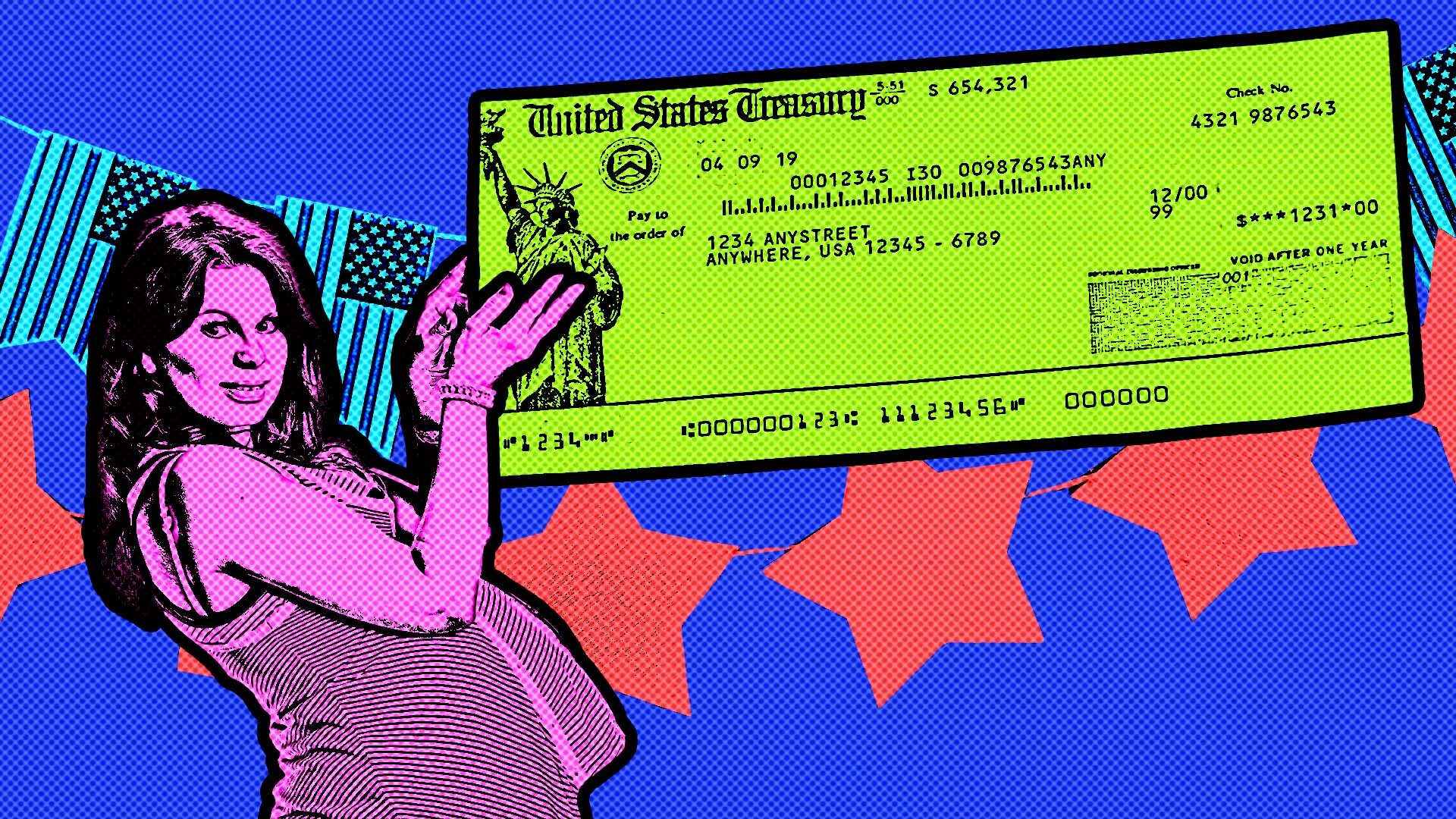
Graphic of a pregnant person holding a check.

Some of the most important work in this country is happening every day, right before our eyes, and it rarely gets acknowledged. This Labor Day, U.S. lawmakers should recognize the critical work mothers are doing to build our country’s future, and support them accordingly with a recurring, monthly income boost both during pregnancy and for at least a year after giving birth. 

Mothers are drowning in both unpaid household labor and paid workforce labor. Seventy-four percent of American women with children at home are in the labor force, the overwhelming majority of whom work full time. Yet according to 2024 data, nearly half of American households do not earn enough to cover their basic necessities. Rising prices, stagnant wages, and receding government services are putting extraordinary pressure on families, and depriving new moms of the option to stay home with their babies—if they so wish. 

In other words, today’s mothers have the unprecedented task of working to provide for their kids while also working to raise and care for them. It’s a lot of labor, often without adequate compensation, and as a result, moms are struggling.

I believe the best way to protect the well-being of mothers and infants in this country is to provide a monthly budget boost during the critical periods of pregnancy and postpartum. Providing a little income support when welcoming a new baby protects two generations at once—as data from other countries shows. 

How financial stress affects pregnancy

Economic strain is not just impacting mother’s wallets; it’s also impacting the health of their pregnancies and births. Research shows that lower-income parents are at significantly higher risk for complications like infants being born premature, underweight, or both. 

It should not be surprising, therefore, that the U.S. has, by far, the highest maternal and infant mortality rates out of all high-income countries. Babies in this country are also born earlier and smaller compared to other wealthy nations. 

Pregnant people are significantly less likely to survive birth if they deliver in the U.S. compared to other high-income nations. These outcomes are the result of too many Americans who can’t afford the basic resources needed for healthy pregnancies and births. This is particularly true for Black and Native American parents, who are contending with generations of systematic economic exclusion and medical racism, and therefore face higher risk of preterm births.

America’s mothers are already working hard. They should not have to do even more just to be housed and fed through childbirth. 

Why compensation is care

Compensating parents for the work of having children is not a new idea. 

For decades, programs in Canada and Mexico have provided cash support in the perinatal period. The province of Manitoba successfully reduced rates of premature birth and low birth weight by providing an income supplement in the second and third trimesters. Until 2019, Mexico provided cash to rural pregnant mothers across the country and was able to decrease the rate of babies being born underweight by 4.6 percent. Relatedly, in the U.S., studies examining earned income tax credits, the Child Tax Credit, and the Alaska Public Dividend, all of which function as an income boost, found that cash in the perinatal period is associated with safer births and healthier babies.

In 2019, my team and I began the California Abundant Birth Project as a small pilot to find out what might happen if we brought this compassionate form of perinatal health care to the U.S. Since then, the California Abundant Birth Project scaled statewide and has now provided perinatal cash support to more than 1,000 mothers across California. 

And we are not alone. 

The Mother Infant Cash Coalition represents 29 programs—including the California Abundant Birth Project—across 26 states that are already trying this approach: distributing stipends to moms before and after birth, and discovering that, when it comes to childbirth, money can be medicine. 

The amount of money provided matters. The costs of housing, food, and gas have become enormous, so the remedy must be proportionate. Parents today are, on average, paying more than $500 per month just for family health insurance coverage. Based on our experience, mothers need at least $500 to $1,000 of additional income per month to ensure they can afford the basic necessities and new expenses that arise before and after birth.

While we do not track all of our participants’ spending, preliminary data from the California Abundant Birth Project show that mothers often spend this additional income on food, housing, and utilities. 

The timing of the cash supplement matters, too. Pregnancy is a unique window of time during which the health of both the pregnant person and their fetus can be drastically impacted. And though this window is relatively short, the effects can be long-lasting. The stress of not being able to make ends meet can be toxic to pregnancies. Ensuring America’s pregnant people are fed and housed, in other words, is not only the humane thing to do—it is also an effective form of health care.

For this reason, it is important to start boosting mothers’ budgets as early as possible in their pregnancies and to provide regular, recurring payments for the duration. 

The motherhood penalty

After a baby is born, families are hit with a whole new set of expenses. Simultaneously, mothers are missing work to recover from birth and to care for their newborn. Financial stress during the postpartum period is associated with life-threatening health complications, depression, and  mother-infant bonding issues. Perinatal cash supplements, therefore, will be most effective when they continue for at least one year postpartum.

Women are also systematically penalized in the workplace for becoming mothers. Reduced hours, lower pay, and biased perceptions about mothers at work combine to create a phenomenon coined as “the motherhood penalty,” which adds up to nearly $300,000 of lost wages over a lifetime and further compounds the problem of mothers’ financial stress.

Pregnancy and postpartum payments cannot fix this problem, but they can help offset the losses.

Lastly, the additional income offered to mothers must be unconditional, meaning mothers do not have to do anything extra to get this support and no one besides the recipient can decide how the money will be spent. Highly regulated benefits programs are not only costly to states, but they are often so burdensome and stigmatizing that they deter eligible families. 

More importantly, mothers know best how to take care of their families. Women deserve trust and autonomy. 

Necessity is the mother of innovation

Over the last two decades, the number of maternal deaths in the U.S. has more than doubled. And in recent years, the infant mortality rate in the U.S. has increased—the first time this has happened in decades. This uptick is thought to be driven by new, restrictive abortion bans that force mothers to give birth to babies with unsurvivable congenital anomalies and make it harder to access reproductive health care. Further, highest rates of infant mortality are found among the mothers with the lowest wealth. 

This urgent public health issue is not going to improve on its own. 

To protect and honor the labor of pregnancy and parenting, the U.S. must develop a national perinatal cash support program, particularly for mothers facing the greatest risks when giving birth. A national program would ensure the widest coverage, but states could enact programs of their own using existing public funding. 

The labor of bringing new life into the world cannot be borne alone. This Labor Day, let’s honor all the labor of mothers, value the country’s future, and make a real investment in keeping moms and kids healthy. 

Source

Source link