Restitched Reveals Building Materials: Creators Get Same Editor Devs Used

September 6, 2026:

Restitched Reveals Building Materials: Creators Get Same Editor Devs Used
Restitched
Trixelcreative.com

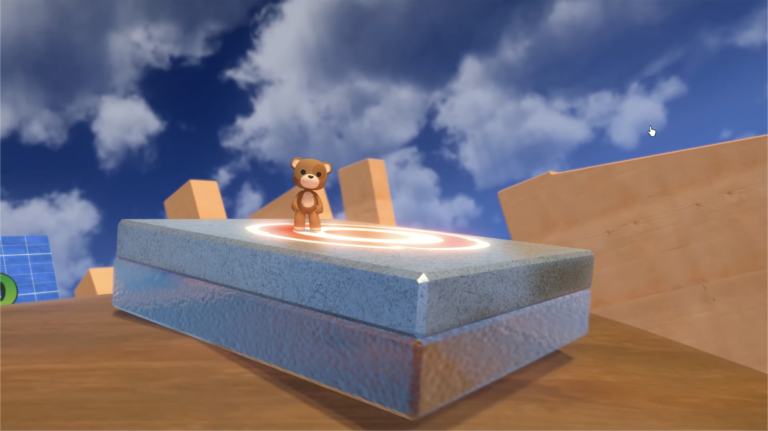
Trixel Creative dropped a new Building Materials Overview Trailer for Restitched on September 4, 2026, and the reveal is about more than texture types — it confirms that the level editor players will use to build custom stages is the exact same tool the hobbyist development team used to construct the game’s official worlds. When Stuffy runs through a Trixel-made world of warm wood planks or cool carved stone, that world was built with the same in-game editor waiting for players on the other side of the main menu.

Restitched is a 2.5D puzzle-platformer coming to PC via Steam, developed and self-published by Trixel Creative, LLC. The studio — a worldwide volunteer team of “industry professionals, students, hobbyists, newcomers, and more,” incorporated in February 2022 — describes the project as a love letter to UGC and platforming genres. No release date has been announced; a free Restitched: Wardrobe Demo is available to download on Steam now.

Stuffy’s World Has Room for Yours

Before any discussion of materials and editors, Restitched deserves a proper introduction on its own terms. Players take on the role of Stuffy, a small and highly customizable teddy bear armed with a Needle ‘n Thread — a tool that is at once a traversal gadget, a combat weapon, and a puzzle element. Stuffy can swing across gaps with it, slash down enemies and obstacles, and pull objects through the environment. Beyond the thread mechanics, Stuffy can push, climb, and crawl through varied terrain: a moveset that turns each level into a layered design problem for whoever built it.

The story casts Stuffy on an adventure to “restitch” communities unraveled at the hands of tyranny. Those words carry a warmth and earnestness that the game’s crafted-toy aesthetic amplifies — every environment is textured to feel handmade, and the character customization system (the Wardrobe, now fully built and already generating over 5,000 community Stuffies on Steam Workshop) extends that handmade feeling to the player’s avatar. The central dramatic question is whether Stuffy — and, by extension, the players building stages alongside the official campaign — can restore what has been taken apart. That question runs through every level whether Trixel built it or a stranger on Steam Workshop did.

What the Building Materials Trailer Actually Showed

The new trailer walks through the range of building materials available in Restitched’s in-game level editor, including tile, wood, stone, and more. For a game whose beating heart is the editor, this is substantive product information: the breadth of a material library is one of the primary determinants of how diverse a Steam Workshop ecosystem becomes.

When creators in LittleBigPlanet — the franchise that established the modern “play, create, share” template — could access different thematic materials, they built wildly different worlds from the same underlying toolset. A platformer editor that restricts builders to a single visual register produces a Workshop full of stages that look like each other. A platform that offers tile for geometric precision, wood for organic warmth, and stone for imposing solidity gives creators the visual vocabulary to distinguish their stages not just by layout but by atmosphere.

Why the Editor Parity Principle Matters

The detail that separates Restitched’s approach from the standard UGC-game template is one that Trixel Creative includes almost as a matter of fact in the game’s promotional materials: the official campaign levels were built “entirely in-game using the level editor, and serve as a prime example of what’s possible in Restitched.”

This is a structural commitment, not a marketing phrase. In most commercial games that include player-facing level editors, there is a gap between the internal development toolset and the one exposed to players — developers use a more powerful pipeline, and the player-facing editor is a simplified, consumer-friendly subset. That gap sets a ceiling: players can never quite make something that looks like the official content, because they don’t have access to the same tools.

Restitched removes that ceiling. Because the development team is simultaneously building the official campaign and maintaining the player-facing editor as one unified system, the editor cannot be simplified without breaking the developers’ own workflow. Every material type and build capability that appears in the official worlds exists in the editor players will open. What the Building Materials trailer is showing off, in effect, is the ceiling — and the ceiling is wherever Trixel Creative’s own imagination took them.

This addresses one of the core challenges creator platforms face: creative effort requires accessible tools, but accessibility often comes at the cost of expressive power. An editor that is both production-quality and player-accessible is the ideal combination, and it is rare outside of dedicated creation platforms like Dreams or the Mario Maker series. The term user-generated content platform design has a long history, and the tension between ease-of-use and expressive depth is well-documented.

How Does Restitched’s 2.5D Architecture Work?

The technical underpinning of the level editor — and the specific reason the building materials system is more visually expressive than a standard 2D editor — is the game’s 2.5D side-scrolling depth architecture. Restitched uses layered depth planes to create the impression of a three-dimensional space while constraining movement to a side-scrolling gameplay corridor.

In practice, this means a level can have a stone wall in the foreground, a wooden platform mid-ground where Stuffy actually runs, and a tiled backdrop stretching toward the horizon. Each layer can carry distinct materials, creating environmental depth that a flat 2D editor simply cannot replicate — because flat 2D has no visual plane separation. The parallax scrolling technique at the heart of 2.5D (distant background layers moving slower than foreground layers relative to the camera) transforms individual material types into environmental storytelling tools: stone in the far background reads as a castle wall; wood in the mid-ground reads as a boardwalk; tile in the foreground reads as architectural detail.

Restitched runs on Unity engine, which provides native support for this kind of multi-layer 2D/2.5D construction, including built-in sorting layers and physics that understand depth-plane membership. Creators building in the editor can assign materials to different depth layers, effectively designing environments in three visual planes while the game handles all player movement on the central gameplay plane.

Where Is Restitched in Its Development?

The Building Materials trailer arrives during a productive stretch for Trixel Creative. The official development timeline runs as follows: early exploratory development began in 2020; public reveals came in mid-to-late 2021; an Official Trailer launched in December 2024 and was featured on IGN; the Wardrobe Trailer followed in March 2026 and received spotlighting from IGN and GameTrailers; a public Wardrobe Demo went live on Steam in May 2026; and a community outfit contest that ran through August 22, 2026, drew nearly 200 submissions.

According to the team’s press guide, 2026 development is focused on “general game content completion, along with the next community playtesting phase.” The Building Materials trailer fits that pattern: it is a systems-reveal, not a launch window announcement. No release date has been set.

Can I Play Restitched Now?

A free Restitched: Wardrobe Demo is currently available on Steam. The demo focuses specifically on the game’s Wardrobe customization system, allowing players to dress Stuffy with mix-and-match cosmetics and access the Design Tool to recolor items. The demo is playable now and gives aspiring level-designers a first taste of how Trixel Creative’s systems work in practice — though the full level editor is not part of the demo.

To be notified when Restitched launches, wishlist the game on Steam.


Frequently Asked Questions

What building materials are available in Restitched’s level editor?

The September 4, 2026 Building Materials Overview Trailer confirmed that the level editor includes tile, wood, stone, and additional material types not yet individually named. All materials available to players are the same ones Trixel Creative’s own development team used to construct the official campaign levels. For the full trailer, see the Building Materials Overview Trailer coverage.

How is Restitched’s level editor different from other UGC platformers?

Most games with player-facing level editors maintain a gap between internal developer tools and the version players access — the developer’s pipeline is more powerful, setting a ceiling on what community creators can achieve. Restitched commits to a single shared editor: official campaign levels were built using the same in-game tool players will open. That means the editor cannot be simplified without breaking the developers’ own workflow, so players have access to the same ceiling of creative possibility as the studio itself.

Is there a Restitched demo available to download right now?

Yes. A free Restitched: Wardrobe Demo is available on Steam. It focuses on the game’s character customization system, allowing players to build outfits for Stuffy from mix-and-match cosmetic items and use the Design Tool to recolor them. The full level editor is not included in the demo. No release date has been announced for the complete game.

When will Restitched be released?

Trixel Creative has not announced a release date. The Trixel Creative FAQ page states: “At this time, we have no planned release date for Restitched. It’s still in active development.” The team is currently focused on “general game content completion” and the next community playtesting phase. Wishlist the game on Steam to be notified when a date is confirmed.

Source link