Mihira: The Eternal Arc Lists on Steam as India’s Dual-Timeline Soulslike Debut

September 2, 2026:

Mihira: The Eternal Arc Lists on Steam as India’s Dual-Timeline Soulslike Debut
Mihira. Eternal. Arc
Valvesoftware.com Studio Yeoun

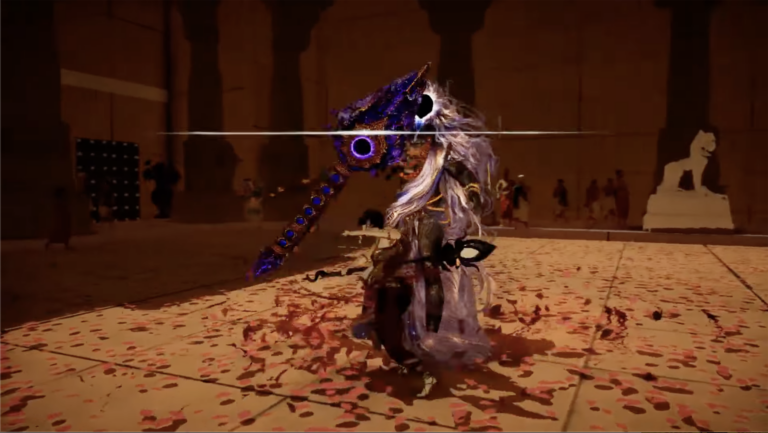
Indie studio Studio Yeoun has listed Mihira: The Eternal Arc on Steam as “Coming Soon”, a 3D third-person action RPG that fuses soulslike combat, Metroidvania-style exploration across two simultaneous timelines, and an Assassin’s Creed-derived crowd-blending stealth system — all set within a mythology-rich Indian palace where time itself has shattered. The Steam page was updated August 30, 2026, with the game listed as “Coming soon” and open for wishlists, placing it among a 2026 wave of Indian-developed PC and console titles targeting global genre audiences for the first time.

How Dual-Timeline Exploration Actually Works

The game’s central mechanical bet is a parallel-state world design: the palace map exists in two fully authored conditions — Past and Present — that the player toggles between at will. This is architecturally different from level transitions or simple environmental reskins. Every room, corridor, and courtyard must be authored twice — once for each timeline — while remaining spatially coherent enough for the player to reason about what exists where and what will change when they shift.

In two-dimensional Metroidvanias, the side-scrolling camera contains spatial complexity automatically: the player sees the entire vertical and horizontal cross-section of each area, so the brain maps both states easily. In a 3D third-person game like Mihira, there is no such constraint. The player can move in any direction, look anywhere, and the camera clips and occludes. Metroidvania design is so interconnected that changing one element inevitably affects the rest — and Mihira asks Studio Yeoun to maintain that coherence across two world-states simultaneously in full three-dimensional space.

Studio Yeoun’s answer, per the Steam listing, is visual and spatial: “The same world transforms across timelines, offering layered exploration and discovery.” This points to a strong visual-language differentiation between Past and Present states — presumably distinct lighting, color, geometry, and enemy population — as the primary way players stay oriented. Whether a debut studio can execute that legibility at a level that feels intuitive rather than confusing is the central design question Mihira will face at release.

Gargi, the Varunavarta, and What Mihira Is Actually About

Mihira: The Eternal Arc puts the player in the role of Gargi, a protagonist who awakens a hidden power bound to the Eternal Arc — the game’s term for a force where time bends, fractures, and spirals beyond human control — inside a palace where past and present have collided. The palace is not a backdrop; it is the story’s subject. Something has broken the flow of time, and Gargi exists at the fracture point.

The central dramatic tension is a choice the game will ultimately present: rewrite fate, or accept the truth of what happened to her timeline. Along the way, the game’s collectible progression mechanic — Varunavarta, fragments of lost time recovered through combat or stealth — ties narrative stakes directly to gameplay advancement. Each fragment recovered restores a piece of the palace’s history and opens new areas, making the game’s story currency and its mechanical currency the same thing.

The tone is atmospheric and deliberately paced in the way the better FromSoftware games are — not horror, not action-spectacle, but something closer to mythic weight. The Sanskrit-derived naming conventions (Varunavarta, the Eternal Arc itself) and the palace’s architectural setting suggest a development team with a specific cultural point of view rather than a generic fantasy veneer. The game’s mature content description — scripted combat, boss-related killings, execution-style decapitation, revived corpses — confirms it is aiming for the adult soulslike audience rather than a broader accessible market.

What Combat Demands From Players

The soulslike design philosophy that Studio Yeoun has adopted is worth understanding on its own terms, because it shapes everything about how Mihira will play. The genre, pioneered by FromSoftware beginning with Demon’s Souls (2009) and popularized through the Dark Souls series, is built on a specific pedagogical structure: enemies have fixed attack patterns that the player learns through repeated death, stamina pools constrain how many actions a player can chain before becoming vulnerable, and currency (experience, in-game resources) is lost on death and must be recovered from the point of dying.

What distinguishes good soulslike combat from merely difficult combat is that every encounter is designed to be winnable once the player understands it — death is information, not punishment. Mihira describes its combat as “skill-based” and requiring players to read enemy patterns and adapt as encounters evolve across shifting timelines. The timeline element adds a layer absent from most soulslike titles: some encounters, the Steam listing implies, will behave differently in Past versus Present, requiring players to understand not just enemy patterns but which timeline state the enemy belongs to.

Developer Kiron Ramdewar of Mortal Shell publisher Playstack has described what separates stronger soulslike titles: the better soulslikes prioritize atmosphere and loneliness alongside tight hitboxes and enemy design. Mihira‘s atmospheric palace setting is clearly designed to meet that bar. Whether its combat systems deliver the precision soulslike veterans demand is a question only hands-on play will answer.

Does India’s Indie Wave Have the Polish Problem Solved?

Mihira: The Eternal Arc arrives in the context of a coordinated, well-funded pivot in India’s gaming industry from mobile-first development toward premium PC and console titles targeting a global audience. India’s gaming market is valued at over $2.4 billion with more than 500 million players, but that market was built almost entirely on mobile, and the 2026 slate — titles including Unleash the Avatar (Aeos Games, Bengaluru), The Age of Bhaarat (Tara Gaming), Son of Thanjai (Ayelet Studio, Chennai), and Kaal Yoddha: Curse of the Mask (Treta Studios) — represents the first coordinated bid at the PC/console tier.

The recurring challenge for this wave has been what observers call the “jank” trust deficit: early alpha footage from multiple Indian titles drew community criticism about unpolished combat animations and physics — a problem that has plagued past Indian game development and established skepticism in the core PC gaming audience. Studio Yeoun has not yet shown gameplay footage publicly, which makes it impossible to evaluate whether Mihira‘s three-system ambition — dual-timeline, soulslike combat, crowd stealth, all in 3D — reflects a studio whose engineering capacity matches its design vision.

The system requirements give one signal. The minimum spec — an Intel i3-3220 processor, AMD Radeon R7 360 graphics card (2 GB VRAM), 12 GB RAM, and DirectX 11 — suggests Studio Yeoun is building on a legacy-compatible renderer for accessibility rather than requiring current-generation hardware. The recommended tier (Intel i7-6700K or AMD Ryzen 5 2600X, RX Vega 56 or GTX 1070 with 8 GB VRAM, DirectX 12) reflects a two-path rendering strategy: a DX11 fallback for accessibility, DX12 for the intended visual experience. This is a pragmatic accessibility-first choice for a debut indie — it expands the potential audience rather than demanding cutting-edge machines. It is also consistent with a studio that has not yet had the resources to optimize specifically for high-end hardware.

Crowd Stealth as Third Option

The stealth system is the detail in Mihira‘s feature list that most distinguishes it from both its soulslike and Metroidvania influences. In standard soulslike games, stealth is typically a positioning tool — hide in shadows, get a backstab. In Mihira, crowd blending is a parallel engagement mode: Gargi can disappear among NPCs, move through populated spaces, identify special enemies called Timekeepers, and execute them without direct combat to recover Varunavarta fragments.

Architecturally, this requires Studio Yeoun to run NPC crowd systems alongside combat encounter systems — a non-trivial engineering requirement for a debut studio. The Timekeepers must be identifiable within a crowd, the crowd must behave plausibly enough that blending into it reads as intentional stealth rather than the player simply standing near NPCs, and the stealth execution must reward players who take the extra cognitive load of tracking enemy type and crowd position simultaneously.

The lineage is clearly Assassin’s Creed — specifically the franchise’s early entries in which crowd blending was a primary mechanic — applied to a soulslike reward structure. Whether the implementation captures what made that mechanic feel satisfying, rather than feeling tacked on to a soulslike framework, will be one of the first things hands-on reviewers evaluate.

What the Steam Tag Count Reveals About the Competition

By early 2025, more than 2,200 games carried the Metroidvania tag on Steam, making it one of the most crowded genre categories on the platform. The soulslike tag occupies similar terrain: since Elden Ring mainstreamed the formula in 2022, the genre has attracted dozens of imitators with varying degrees of success. A game that identifies itself as both is operating in particularly saturated water.

Studio Yeoun’s three-part differentiation strategy — 3D (vs. the predominantly 2D Metroidvania field), Indian mythology palette (vs. the European and Japanese dark fantasy defaults), and crowd-blend stealth as a third engagement mode — is a coherent bet on distinction. The Metroidvania market’s indie renaissance produced genuinely excellent titles (Hollow Knight, 2017; Ori and the Blind Forest, 2015; Dead Cells, 2017) precisely because those studios found specific differentiation the field was not providing. Mihira is betting that its specific combination provides the same kind of specific thing.

The risk is execution. A soulslike demands precise combat feedback. A Metroidvania demands a world that rewards exploration with genuine discovery rather than just opened doors. A crowd-blend stealth system demands NPC simulation that makes the crowd feel real rather than decorative. Studio Yeoun is attempting all three simultaneously in a debut title in three-dimensional space.

Mihira: The Eternal Arc is available to wishlist on Steam now. No pricing or release window has been announced beyond “coming soon.”


Frequently Asked Questions

What exactly is the dual-timeline mechanic in Mihira: The Eternal Arc?

The game divides its palace setting into two simultaneous world-states — a Past and a Present — that the player toggles between at any time. The same corridors, courtyards, and rooms behave differently depending on which timeline is active: enemy placements change, hidden paths open, and puzzles require moving between states to solve. This is a parallel-state world design, meaning both versions of the map must be fully authored as distinct environments while remaining spatially coherent enough for players to navigate both. In 3D, this is significantly more architecturally complex than the same concept in 2D side-scrollers, where camera constraints simplify spatial reasoning.

How is this different from other Indian games in the 2026 indie wave?

India’s 2026 indie slate includes several soulslike and mythology-inspired titles — Unleash the Avatar (Aeos Games), Kaal Yoddha: Curse of the Mask (Treta Studios), and The Age of Bhaarat (Tara Gaming). What distinguishes Mihira is its specific three-system architecture: dual-timeline exploration (unusual even outside India), crowd-blend stealth targeting named enemy types called Timekeepers, and soulslike combat — all combined in a 3D third-person environment. Most competitors in the Indian wave are attempting one or two of these elements; Studio Yeoun is attempting all three simultaneously in a debut title.

What hardware do I need to run Mihira?

The minimum specification is an Intel i3-3220 processor (or AMD FX-6100 equivalent), an NVIDIA or AMD GPU equivalent to a GeForce GTX class with DirectX 11 support, and 12 GB of RAM running on 64-bit Windows 7, 8.1, or 10. The recommended specification rises to an Intel i7-6700K or AMD Ryzen 5 2600X, a GPU equivalent to the AMD Radeon RX Vega 56 (8 GB VRAM) or NVIDIA GeForce GTX 1070 (8 GB VRAM), 16 GB of RAM, and DirectX 12. Studio Yeoun has optimized for accessibility rather than requiring current-generation hardware, which is pragmatic for a debut indie seeking to maximize its potential player base.

Does Mihira have a release date yet?

No. As of September 2026, the Steam page lists the game as “Coming soon” with no confirmed release window, pricing, or console platform announcements. The page supports Steam Achievements and Steam Cloud and is confirmed for PC. Players can wishlist the game now to receive a notification when a release date is set.

Source link