September 2, 2026:


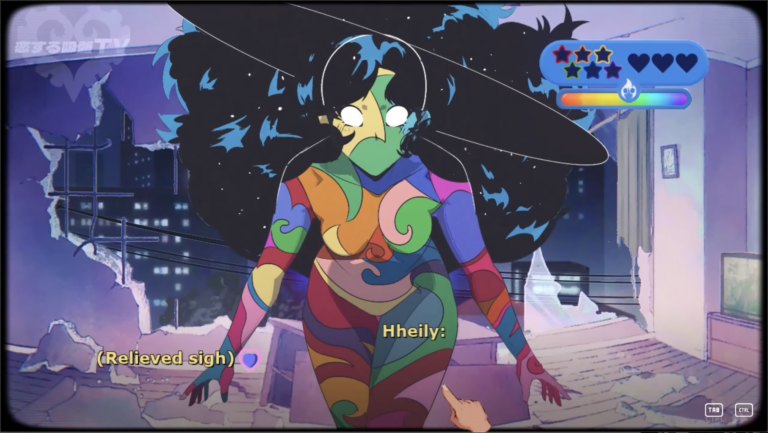
When a glowing comet crash-lands in your living room and turns out to be a cosmic entity who can shapeshift into a gorgeous woman, the sensible thing is probably to call someone. Instead, you feed her flame, fend off the parade of mutating plants and unwanted visitors her arrival attracts, and try to win a kiss from the hottest entity this side of the galaxy. That is the premise of Sucker for Love: Crush Landing, which launched on Steam on August 31, 2026 — one day before the game’s first wave of Steam reviews confirmed that the series’ loyal fanbase has complicated opinions about where this third entry lands.
The game arrives with a structural change that prior coverage has overlooked entirely: for the first time in the franchise’s history, Crush Landing is not published by DreadXP, the horror-focused label that brought the first two entries to Steam. The new publisher is Black Lantern Collective, and while developer Joseph “Akabaka” Hunter is sole developer on all three games, the shift marks a meaningful moment in a series Akabaka has said he plans to conclude after just one more entry, according to his May 2026 Newsweek interview.
Crush Landing is a standalone entry — Akabaka has been explicit that every game is designed as an entry point, with no required knowledge of the prior games. That said, players who have followed since the original 2021 game jam will find what Akabaka describes as callbacks and cameos from earlier characters.
The game’s protagonist is an unnamed male host — someone professionally paid to accompany women on dates — whose moral record, even by his own accounting, is not clean. When the comet Hheily crash-lands in his apartment, her presence immediately begins warping the environment: plants grow wild, colors around the apartment intensify, and animals start to mutate. She can shapeshift into human form, but she needs the player to feed her flame with colored offerings to survive. While he works to keep her alive, something more malevolent — an entity the game calls the Sentient Darkness, the antithesis of Hheily’s light — has followed her trail and lurks at the edges of his increasingly strange apartment, as described on the Steam game page.
The emotional register is comedic on the surface and grows genuinely unsettling underneath. “Apparently this one is winding up to be one of the scarier ones,” Akabaka said in a May 2026 interview at PAX East, conducted before launch. The game draws directly from two works of weird fiction: H.P. Lovecraft’s The Color Out of Space — the inspiration for Hheily’s cosmic, color-draining nature — and Clark Ashton Smith’s The City of the Singing Flame. Philosophically, Akabaka has framed the entire series as a chain of counter-arguments to Lovecraft’s stated beliefs, and Crush Landing specifically addresses the tension between discovery and its cost. “It’s like Little Shop of Horrors,” he explained, “in that you’ve got this alien entity here that needs to be fed, and as a result, things are going to start getting mutated around you.”
The largest mechanical change in Crush Landing is the navigation system. Where prior Sucker for Love games used static scene backgrounds, Crush Landing rebuilds the player’s apartment as a fully navigable 360-degree, hand-drawn 2D environment — the same apartment from the original game, now re-imagined as a space the player can actually explore, per the Steam store feature list. The shift transforms the visual novel’s standard “click to advance text” rhythm into something closer to point-and-click adventure — players move through rooms searching for colored items, solving puzzles, and managing what the game tracks as a timed resource.
The resource system is the other major innovation: feeding Hheily’s flame requires gathering colored offerings on a timer, with a color-coded inventory that does not simply reward loading everything available and waiting. Steam community discussions have surfaced a randomization element in when and how certain events trigger, which some players find adds replay challenge and others find leads to brute-forcing their way to endings to reach the game’s multiple conclusions.
Veteran fans have split on whether these mechanics improve on the series. One early reviewer, writing with 1.6 hours logged on release day, praised the shift away from what they called the “fetch quest” structure of Date to Die For, calling the puzzle approach an improvement. A longer and more critical review — the most-upvoted review on Steam at launch, with 59 players finding it helpful — offered a detailed negative verdict: short first-run completion times (around 80 minutes for a first playthrough), a male protagonist the reviewer found actively unsympathetic, and a lead romantic character, Hheily, they described as underdeveloped compared to the dateable characters in earlier games.
The division reflects the specific challenge of a third entry in a series where the second game — Sucker for Love: Date to Die For, released in April 2024 — raised the production bar considerably with a fully realized protagonist, horror set pieces, and five-plus hour completion times.
Akabaka has consistently described the Sucker for Love franchise not as a silly mash-up of genres but as a sequence of philosophical arguments directed at Lovecraft’s worldview. Each game targets a specific Lovecraftian premise and inverts it, as he explained at PAX East.
The original game argued against Lovecraft’s claim that fear is the strongest human emotion, proposing instead that lust and love consistently override it. Date to Die For engaged with Lovecraft’s vision of an external cosmos of pure cruelty and suffering, countering it with the idea that infinite volume implies infinite good alongside infinite evil. Crush Landing takes on the tension between dangerous discovery and its consequences — the existential question of what happens when the thing you wish on a shooting star starts making demands of you in return.
Underlying this is what Akabaka calls the “misattribution of arousal” — the scientific observation that fear and romantic attraction produce nearly identical physiological responses: elevated heartbeat, sweating, butterflies, anxiety. “Getting scared and being in love have very similar physiological effects,” he explained in the PAX East interview. “Something can be both scary and romantic.” It is this insight, grounded in the psychological literature on affect, that has made the franchise’s specific hybrid feel deliberate rather than accidental.
Akabaka has confirmed that one more Sucker for Love game is planned after Crush Landing: an OVA-style finale featuring all previous playable characters in what he describes as a “beach episode” tone — every Lovecraftian joke he has left to tell, in a deliberately celebratory farewell. “I’d like to see what else I’ve got in me,” he told Newsweek at PAX East.
That context matters for evaluating Crush Landing. This is not simply the third game in an ongoing series — it is the penultimate chapter of a four-part work, authored by a solo developer who waited four months after finding the premise before beginning full development because he needed to be certain the story was “worth telling” and would “measure up to the previous two.” The divided early reaction, then, lands in a specific creative moment: a developer who takes his own philosophical ambitions seriously, releasing a game that his most invested fans are actively debating.
Whether that debate resolves toward the series’ general goodwill or signals a step back from the heights of Date to Die For, the demo is free and available on Steam now for anyone who wants to settle it themselves.
Sucker for Love: Crush Landing is available now on Steam for $12.99, with a 10% introductory discount bringing it to $11.69 through September 7, 2026. The game is Windows-exclusive at launch and requires only 4 GB of RAM. It includes thousands of lines of fully voiced English dialogue, an original soundtrack, 19 Steam Achievements, and multiple endings with branching choices.
A free demo is available separately on Steam’s demo page (app ID 4371660), with 47 reviews at 93% positive — notably stronger than the full game’s launch reception, suggesting the demo may represent the game’s most polished section.
Bundle options on the Steam store page include the Eldritch Cuties Bundle (with Monster Prom 4: Monster Con), the Mesmalie x Sucker for Love: Crush Landing Bundle, and the Late Night Existentialism Bundle (with Endless Monday: Dreams and Deadlines).
The game is rated for mature audiences — adult themes and some comically disturbing body horror — but does not feature explicit content.
No. Akabaka has designed every entry in the series as a standalone story with a self-contained premise — you can pick up Crush Landing without playing the first two games and follow the story without confusion. Veteran fans will recognize callbacks and character cameos, but none are required for comprehension.
Crush Landing is the third of four planned entries. Akabaka has confirmed that one more game is in development — an OVA-style finale featuring all prior playable characters. After that, the developer intends to move on to other creative projects rather than continue the franchise indefinitely.
The first two Sucker for Love games were published by DreadXP, which retains rights to those titles. Crush Landing marks Akabaka’s first release under Black Lantern Collective. Akabaka acknowledged in a May 2026 interview that DreadXP owns the rights to the first two entries, and Crush Landing represents his first title outside that relationship.
Early Steam reviewers report first-run completion times of roughly 60–90 minutes for the main story path. The game features multiple endings, and completionists hunting all 19 Steam Achievements will likely spend significantly more time. If runtime is a concern relative to the $11.69 launch price, the free demo is a practical way to evaluate the pacing before buying.