HomeAuto Switch 2 Hits $499.99 Today: Japan’s 87% Sales Crash Warns What Comes Next
Switch 2 Hits $499.99 Today: Japan’s 87% Sales Crash Warns What Comes Next
September 1, 2026:
Nintendo.com
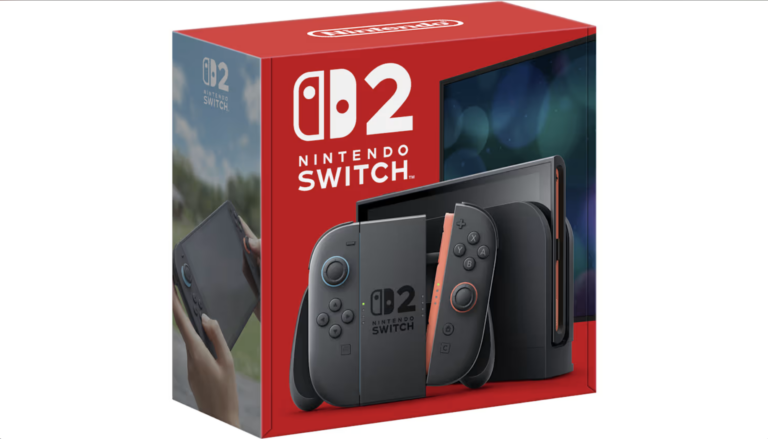
The Nintendo Switch 2’s US price rose from $449.99 to $499.99 today, September 1, 2026 — the moment Nintendo announced in May — and with it went the last mechanism that had softened the cost of buying the console. The “Choose Your Game” bundle, which packaged the hardware with a download for one of three major first-party titles, expired yesterday. Buyers who held out past August 31 now pay the same $499.99 for the console alone that previously bought them the console plus a game worth $60 to $80. When you count the $50 hardware increase on top of the lost game, the combined disadvantage of waiting amounts to $110 to $130, depending on which title they would have chosen.
Japan already ran this experiment. On May 25, the domestic-market Switch 2 rose from ¥49,980 (approximately $313 USD; exchange rate as of September 1, 2026: ¥159.86 per $1 USD; conversions are approximate) to ¥59,980 (approximately $375 USD) — a ¥10,000 (approximately $63 USD) increase. Weekly sales in Japan collapsed 87% in the following week, falling from 247,880 units in the final pre-hike week to 31,751 units, according to Famitsu hardware charts shared by Video Games Chronicle. That is not the “buy now” surge followed by a crash — prior weeks ran at 44,000 to 52,000 units, and the three pre-hike weeks spiked above 200,000 as buyers rushed to beat the increase. The post-hike trough was real. Western markets enter that same experiment starting today.
Why the New Price Is the Permanent Price
The root cause of every console price increase this year is the same engineering constraint: the three companies that produce more than 95% of the world’s DRAM supply — Samsung, SK Hynix, and Micron — have redirected significant cleanroom capacity toward High Bandwidth Memory for AI accelerators, removing that capacity from the consumer memory pool. Micron has noted a 3-to-1 conversion ratio: every wafer shifted to HBM production removes approximately three wafers of conventional consumer DRAM output from available supply. The Nintendo Switch 2 runs on 12GB of LPDDR5X DRAM — the same category of consumer memory that AI data centers began purchasing in unprecedented volumes beginning in 2025.
The results show in Nintendo’s own books. The company forecast in its fiscal year 2027 guidance that memory and component price increases, combined with tariff changes, would impose a cost impact of approximately ¥100 billion (approximately $625 million USD at today’s rate) on its finances this fiscal year. Bloomberg separately reported that Nintendo was paying approximately 41% more for its Switch 2 LPDDR5X modules than it had previously. Nintendo president Shuntaro Furukawa told shareholders the $50 increase does not fully cover those additional costs.
No analyst expects a price reversal anytime soon. Intel’s CEO has pointed to 2028 as the earliest window for conditions to normalize, according to memory market analysis. Silicon Motion has publicly warned of shortages across DRAM, NAND, and HBM persisting into 2028. Gartner coined the term “memflation” to describe the situation, forecasting 80% DRAM price inflation in 2026, with shortages persisting into the second half of 2027. The $499.99 price is not a temporary response to a cyclical crunch — it reflects a structural reallocation of the world’s silicon wafer capacity toward AI that, according to every major supply-side forecast, does not self-correct in the near term.
What Did the Bundle Window Actually Cost?
Until August 31, buyers could purchase a Switch 2 at $499.99 with a download code for one of three titles: Mario Kart World ($79.99), Donkey Kong Bananza ($69.99), or Pokémon Pokopia ($59.99). That was the “Choose Your Game” bundle announced alongside the price increase in May. The bundle was not an add-on at a premium — it was the console’s effective price for buyers who acted before the deadline.
As of today, $499.99 buys the console only. The bundle is gone. Depending on which game a buyer would have selected, the combined disadvantage of waiting — the $50 hardware increase plus the lost game value — runs from approximately $110 to $130 before taxes.
Nintendo announced two new fall bundles on August 25:
A refreshed Mario Kart World bundle launches in late September at $549.99 — $50 more than the expired “Choose Your Game” bundle was offering the same game — and includes a 90-day Nintendo Switch Online individual membership. That membership, normally priced at approximately $5 per 90 days against an annual rate of $19.99, is the only new component. Nintendo says the bundle saves $37.98 compared to buying each item separately at the new prices.
A new Nintendo Switch Sports Resort bundle arrives October 22 at $529.99, also including a 90-day NSO membership. Nintendo Switch Sports Resort, priced at $49.99 as a standalone title, represents a more modest addition than Mario Kart World. Nintendo says the bundle saves $27.98 compared to buying everything separately.
Neither replaces the value proposition of the outgoing offer. The closest comparison: the original “Choose Your Game” bundle delivered a $60-to-$80 game alongside the console at a price now $50 lower than today’s standalone hardware cost. The fall bundles deliver a single digital game plus 90 days of Switch Online at prices of $530 to $550.
Japan Crashed First — the West Starts Today
Japan’s May 25 price increase produced the clearest real-world controlled experiment available for what a console price hike does to Switch 2 demand in a mature market. In the three weeks before the hike, Japanese sales exceeded 200,000 units weekly as buyers rushed ahead of the change. The week of May 25 to 31, after the ¥49,980 to ¥59,980 increase took effect, weekly units fell to 31,751 — an 87% drop from the final pre-hike week, and roughly 40% below the 44,000-to-52,000 unit baseline that preceded the surge.
The Switch 2 remained the top-selling hardware platform in Japan even at that trough. But the scale of the correction was severe. Nintendo’s own FY2027 forecast projects global Switch 2 unit sales declining from 19.86 million in fiscal year 2026 to 16.5 million — a 17% drop the company attributed partly to the price increase and partly to front-loaded first-year demand. Kantan Games CEO Serkan Toto told CNBC analysts expect that standard lifecycle dynamics should produce sales growth in years two and three, not a decline — Nintendo is forecasting the opposite.
In the US, Circana data through July 2026 already showed the market contracting under pricing pressure before the September 1 Switch 2 increase even landed. Console hardware spending in July fell 29% year-on-year to $282 million, the worst July for hardware since the pandemic year of 2020, with console unit sales down 51% compared to the extraordinarily high baseline set by the Switch 2’s own launch period. Circana Senior Director Mat Piscatella warned that the September 1 Switch 2 price hike would present “a further headwind for the market heading into the second half of 2026.”
First Console Generation to Get More Expensive as It Ages
Today’s Switch 2 increase completes an industry-wide reversal that has no precedent in the 40-year history of home console gaming. Sony raised the PS5 disc edition from $549.99 to $649.99 in April 2026, while the PS5 Pro jumped to $899.99. Microsoft pushed the Xbox Series X to $799.99 effective August 1 — a $150 increase that followed an earlier hike, bringing the total increase over launch price to $300. Valve raised Steam Deck OLED prices by up to 46% earlier in the year, with the 512GB model moving from $549 to $789.
All four companies cited the same underlying cause. As Tom’s Hardware noted, this is the first console generation in tracked history to become more expensive as it ages. Every prior hardware generation followed the reverse pattern: manufacturing processes matured, chips shrank, mid-cycle “slim” revisions cut costs, and retail prices drifted downward. A PlayStation 4 buyer in 2016 paid roughly $100 less than a 2013 launch buyer. An Xbox Series X buyer today pays $300 more than a November 2020 launch buyer.
Nintendo’s 11% US increase is the smallest of 2026’s major console hikes in percentage terms. Against the alternatives — PS5 disc edition at $649.99 and Xbox Series X at $799.99 — the Switch 2 at $499.99 retains the largest gap it has held all year. Among all current-generation gaming platforms capable of playing on a television, the Switch 2 remains the least expensive. Among handheld and hybrid devices, it holds a $289 price advantage over the Steam Deck OLED at $789. That comparative affordability is real and will remain a selling point heading into the holiday season.
Where Switch 2 Stands Now
Nintendo’s cumulative Switch 2 shipments reached 23.68 million units globally as of June 30, 2026, surpassing the GameCube’s run of 21.74 million lifetime units. In the United States, Circana ranked it the second-fastest-selling video game system in its tracking history, reaching 5.9 million units in its first twelve months. In July 2026, it remained the top-selling console in the US by units even as year-over-year comparisons suffered against the extraordinary baseline of its own launch period.
Nintendo’s software slate is being positioned as the counterweight to sticker shock. The Legend of Zelda: Ocarina of Time remake is confirmed for holiday 2026, and Kingdom Hearts IV has been announced alongside it. Elden Ring: Tarnished Edition, bundling the base game and the Shadow of the Erdtree expansion with Switch 2-exclusive content, launched August 28. Whether a strong game lineup can maintain momentum at a permanently higher price floor — in a market where the Japan experiment already showed what a price hike does to weekly units — is the central question the industry will be watching this fall.
What the Japan data makes clear is that Western buyers should not expect an immediate reversion to pre-announcement demand levels. Even if pent-up demand from the fall game lineup drives holiday unit surges, the baseline weekly rate in Japan did not recover to pre-hike norms in the weeks following the May 25 increase. The Switch 2 is now a $499.99 product in every major Western market. That is the new reality, and there is no analyst forecast that changes it before late 2027 at the earliest.
Frequently Asked Questions
Why did Nintendo raise the Switch 2 price, and will it stay at $499.99?
Nintendo cited “various changes in market conditions” driven by a global DRAM shortage caused by AI data centers consuming an estimated 70% of high-end DRAM production. Samsung, SK Hynix, and Micron — who together produce more than 95% of global DRAM supply — have shifted cleanroom capacity toward High Bandwidth Memory for AI accelerators, compressing supply of the LPDDR5X memory that the Switch 2 uses. Nintendo’s president confirmed the $50 increase does not fully cover rising costs. Analysts including Gartner, Intel, and Silicon Motion have all said meaningful memory market relief will not arrive before late 2027 or 2028. The $499.99 price is the permanent floor for this console generation.
What happened to Switch 2 sales in Japan when prices rose there?
When Japan’s domestic Switch 2 price rose by ¥10,000 (approximately $63 USD) on May 25, 2026 — a proportionally larger increase than the US’s $50 hike — weekly hardware sales collapsed 87% in the following week, falling from 247,880 units to 31,751 units, according to Famitsu charts. The console remained the top-selling platform in Japan even at that trough, but the drop was severe and the baseline did not quickly recover to pre-surge levels. Nintendo has already baked a 17% global unit decline into its FY2027 forecast. Western markets, which begin the post-hike period today, should expect similar dynamics.
Is it worth buying a Switch 2 now, or waiting for a better deal?
The Switch 2 at $499.99 is the permanent price. No analyst forecast currently projects a price reduction before late 2027 at the earliest. The “Choose Your Game” bundle that offered a free game at the previous price point has expired. Two fall replacement bundles exist: the Mario Kart World bundle at $549.99 in late September and the Nintendo Switch Sports Resort bundle at $529.99 on October 22, both including a 90-day Switch Online membership. If you want the console with Mario Kart World included, the late-September bundle saves approximately $38 versus buying each item separately at new prices — but it costs $50 more than the same bundle would have cost before today. If a specific first-party title in the fall lineup is a decisive factor, waiting for the appropriate bundle makes financial sense. If you have no strong preference for a bundled game, the standalone console at $499.99 is now the cheapest entry point.
Will the AI memory shortage affect other gaming hardware and electronics?
Yes. The same DRAM shortage driving Switch 2, PS5, and Xbox price increases has hit PC memory, graphics cards, laptops, and smartphones. Gartner projects a 17% increase in PC prices and a 13% increase in smartphone prices by end of 2026 compared to 2025, according to chip tariff and memflation analysis. Microsoft’s own internal estimates indicated console storage and memory costs had already risen more than 2.5 times, with the potential to double again by fall 2027. The structural cause — AI infrastructure consuming a disproportionate share of global DRAM capacity — is expected to persist until new fab capacity comes online in late 2027 or 2028.