LET IT DIE Servers Go Dark Tomorrow: Free Game Becomes Paid to Keep Playing

August 31, 2026:

LET IT DIE Servers Go Dark Tomorrow: Free Game Becomes Paid to Keep Playing
Let. It. Die
Gunghoonline.com

Tonight, the free-to-play version of LET IT DIE disappears from download storefronts at 7pm ET — and tomorrow, August 31, the servers that have kept its 9-million-player community alive for nearly a decade will shut off permanently. What happens next is either a playbook for responsible live-service sunsets or an uncomfortable reminder that “free to play” never actually meant free: GungHo Online Entertainment and developer Supertrick Games are converting the cult survival roguelike into a paid standalone, and existing players will need to buy in again. Pricing for the Offline Edition has not been announced.

The shutdown is the end of an era for a game that launched on PlayStation 4 on December 3, 2016 — the same year that would eventually become the fictional setting for LET IT DIE’s in-game apocalypse — and arrived on PC via Steam in September 2018. By the time the Tower of Barbs goes silent tomorrow night, the game will have outlasted the vast majority of its live-service contemporaries, running for almost 10 years in an industry where most free-to-play titles collapse within two or three.

What Players Actually Lose — and What Transfers

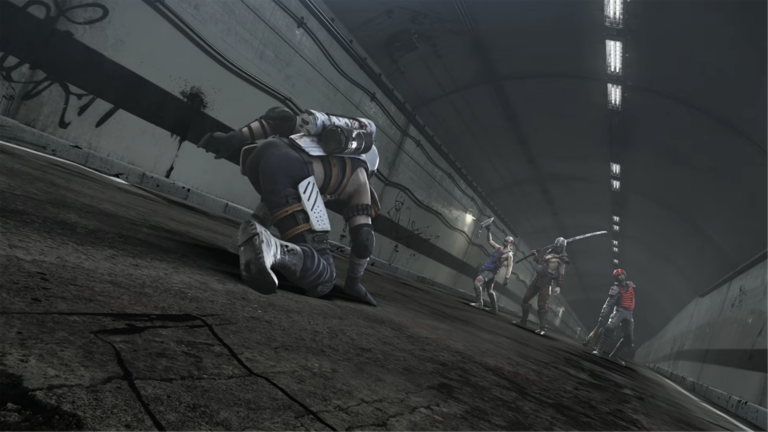
LET IT DIE was a genuinely strange proposition: a free-to-play survival action game where you climbed a grotesque skyscraper called the Tower of Barbs in a surreal, post-apocalyptic Tokyo, guided by a skateboarding grim reaper named Uncle Death. Players controlled nameless fighters scavenging for weapons and armor on each floor, dying repeatedly in a roguelike loop while the game’s narrator — voiced by Mark Hamill — commented on the carnage. The emotional register was dark comedy soaked in punk rock, scored by Silent Hill composer Akira Yamaoka — punishing and weird in ways that felt very specifically like something that would not exist if focus-tested to death. The game’s central tension: when your fighter died, their data — their gear, their level, their fighting style — got distributed into other players’ games as a hostile NPC called a “Hater,” turning your failures into living obstacles for strangers. It was an asynchronous multiplayer system that made dying feel consequential beyond your own run.

That system — called Tokyo Death Metro — is the most significant casualty of the offline conversion. Without a central server collecting and distributing death data from millions of players, GungHo and Supertrick will replace human-derived Haters with CPU-controlled opponents. The game already uses AI-generated “fixed Haters” as a fallback — so the offline version is architecturally feasible — but the emergent quality of fighting a stranger’s ghost, equipped with gear they actually used and at a level they actually earned, disappears. The seasonal “TDM Battle Rush” competitive mode is being discontinued entirely.

The premium currency economy is being unwound just as completely. Death Metal — the real-money currency that let players continue after death, expand storage, speed up research timers, and buy items from the Hernia vending machine — is being discontinued in the Offline Edition. In the Offline Edition, virtually every action that previously required Death Metal will instead cost Kill Coins, the earnable in-game currency. The R&D timer shortening and Hernia vending machine features are simply gone. Express Pass will be purchasable with Kill Coins rather than real money.

For players who already have an account: existing save data transfers within the same platform to the Offline Edition — PlayStation progress stays PlayStation, Steam progress stays Steam, with no cross-platform bridge. Existing players purchase the Offline Edition as additional DLC on the PlayStation Store or Steam, while new players buy it as a standalone title. Pricing has not been announced.

How the Architecture Actually Changes

The reason the offline conversion is technically possible — and the reason it is not simple to do for every live-service game — reveals something specific about how LET IT DIE was originally built.

The game’s server dependency fell into two distinct categories. The first was genuinely social: the Hater system required a live pool of players generating death events for the server to distribute. That pool is being replaced with a pre-baked AI opponent library. The second was purely economic: the Death Metal transaction layer required server-validated premium currency operations to prevent exploitation. Remove the premium currency, and the server-validation requirement goes away with it.

What LET IT DIE did not depend on servers for was its core gameplay loop — climbing, fighting, looting, dying. That loop was always client-side. The fundamental design of the Tower of Barbs, the weapon and armor systems, the enemy AI for everything except player-derived Haters: all local. This is the key technical insight the Offline Edition makes visible. The game’s reliance on servers was infrastructure for monetization and social features layered on top of what was always, at its mechanical core, a single-player experience.

The practical implication for players is that the Offline Edition is not a degraded version of the original — it is closer to what the game would have been if it had never been designed as a live service in the first place. Director Hideyuki Shin told TheGamer in March 2026 that removing microtransaction pressure may actually make the experience cleaner. Shin explained that when the game launched, the team always knew online service would eventually end — it was a distant concern at first, but the risk of servers shutting down and leaving the game unplayable pushed them to find a way to preserve it in a form players could actually keep.

The Tension: Free-to-Play Becoming Pay-to-Own

The goodwill in Shin’s statement is real. It is also fair to note that GungHo is not simply donating LET IT DIE to posterity.

The conversion from free-to-play to paid is a fundamental shift in the commercial relationship. Players who spent years in the Tower of Barbs without ever paying — and thousands who did pay, in real money, for Death Metal that accelerated their experience — will need to pay again for the same content. The refund offer for unused paid Death Metal balances is a reasonable mitigation; it does not restore the value of currency already spent. And the Offline Edition’s unannounced price makes it impossible to evaluate how consumer-friendly the actual ask will be — a $5 DLC for existing players is a very different gesture than a $30 standalone.

Community reception has leaned positive, with many players expressing relief that the game is not simply being deleted. But the structure reveals an uncomfortable truth the gaming industry has not fully reckoned with: “preservation” in this context means converting a previously free experience into a commercial transaction, behind a paywall the community never originally agreed to. Whether that is preferable to simple deletion — and it almost certainly is — does not make it uncomplicated.

What LET IT DIE’s Model Says to Every Other Live-Service Game in Decline

This shutdown arrives ten weeks after the European Commission formally declined to mandate game preservation on June 16, 2026. The Stop Killing Games campaign — launched in April 2024 after Ubisoft shut down The Crew and subsequently revoked licenses from buyers, removing the game from their libraries — gathered 1,294,188 verified EU signatures. That is more than enough to require the Commission to formally respond. The Commission’s response: a voluntary industry code of conduct, expected by the end of 2026, with no binding obligation to provide offline patches, community server tools, or any mechanism for continued play after shutdown.

The Ubisoft case remains the reference point for what the wrong approach looks like. When The Crew’s servers closed in March 2024, the game became immediately and permanently unplayable — even for owners of physical discs. Ubisoft then went further, revoking access licenses and moving the game to an inactive section of players’ Ubisoft Connect libraries. That incident, more than any other, crystallized what the gaming community now fears about live-service purchases: not that servers will eventually close, but that publishers will walk away without leaving the door unlocked behind them.

LET IT DIE is doing the opposite. The game will remain purchasable, playable, and progressed. The question the Stop Killing Games campaign now has to answer — pivoting to the EU Digital Fairness Act after the Commission declined to act — is whether a voluntary example like this one is sufficient, or whether legislation is the only way to make it industry standard. Stop Killing Games has announced it intends to push for game-preservation requirements in the Digital Fairness Act, a legislative vehicle in development targeting unfair digital practices. The campaign has also joined a Dutch lawsuit against Sony over PlayStation Store pricing practices, filed August 11, 2026. The legal and legislative fight is continuing on multiple fronts; LET IT DIE’s offline conversion is not a reason for it to stop.

Is the Sequel Worth Your Time While You Wait?

For players who want to stay in the LET IT DIE universe while waiting for the Offline Edition to arrive this fall, the 2025 sequel offers a different but related experience. LET IT DIE: INFERNO launched December 3, 2025 on PlayStation 5 and PC via Steam, with a standard edition priced at $24.99 USD. It’s a rogue-lite survival game set in Hell Gate — a vast, shifting chasm in the same fictional universe — where players take the role of Raiders in a rebel group racing against the tyrannical Yotsuyama Group to find the Eye of the Reaper, a legendary treasure. INFERNO leans harder into the structured roguelite format, with a cleaner solo-PvE progression loop and the Season 2 additions of a Duo Mode (co-op PvE with a friend), Solo Mode, a lock-on targeting feature, and new weapons and enemies. Season 2 additions launched March 10, 2026. Season 3 arrived from June through August 2026 with further content. INFERNO continues as a separate live-service title unaffected by the original’s shutdown.

For now, the Tower of Barbs has one more night. If you have saved data you want to carry forward, make sure it is in order before servers close tomorrow. When the Offline Edition arrives this fall, Uncle Death will ride again — and this time, you will actually own him.


Frequently Asked Questions

When exactly do LET IT DIE’s servers shut down, and what is the timeline?

App distribution ended tonight, August 30, at 7pm PT (10pm ET) — the game can no longer be downloaded. Servers shut down tomorrow, August 31, at 7pm PT (10pm ET / September 1 at 3am BST). Real-money purchases of Death Metal and Express Pass ended months ago; existing Death Metal balances became unusable on July 30. GungHo is offering refunds for unused paid currency after shutdown. The Offline Edition has no specific release date beyond “fall 2026,” and its price has not been announced.

What happens to my save data and progress?

Save data transfers from the online version to the Offline Edition, but only within the same platform. PlayStation progress cannot move to Steam, and Steam progress cannot move to PlayStation. Existing players will access the Offline Edition by purchasing an “Offline Patch” DLC through the PlayStation Store or Steam. Death Metal currency does not transfer — that economy is being discontinued. Kill Coins-based progression and your character data do carry forward.

What does LET IT DIE’s offline conversion mean for games I play now?

It means voluntary industry action can do something binding law has not. The EU Stop Killing Games campaign gathered over 1.29 million verified signatures demanding publishers preserve games after shutdowns — and the European Commission declined in June 2026 to make that mandatory, opting instead for a voluntary industry code of conduct by end of 2026. LET IT DIE’s offline edition is the kind of outcome that campaign was asking for, done voluntarily. The question for players is whether they should reward developers who do this and penalize those who don’t — and whether voluntary examples like this one are enough, or whether the legislative fight (now aimed at the EU Digital Fairness Act) needs to continue. Based on current law, there is nothing requiring any developer to provide an offline mode. Choosing which live-service games to invest in, knowing that, is a risk management decision you now have more context to make.

Can I play the Offline Edition for free since I played the original for free?

No. The Offline Edition is a paid product. Existing players purchase it as discounted DLC rather than a full standalone — the exact price has not been announced. The original game was free because it was supported by Death Metal premium currency sales; that revenue model is gone. The conversion from free-to-play to pay-to-own is the central commercial tension of this shutdown, and it is worth waiting for the price announcement before judging whether GungHo’s preservation gesture is also a consumer-friendly one.

Source link