HomeAuto Megan Park Casts Apple Mystery Around Cross-Cultural Perception Science
Megan Park Casts Apple Mystery Around Cross-Cultural Perception Science
August 30, 2026:
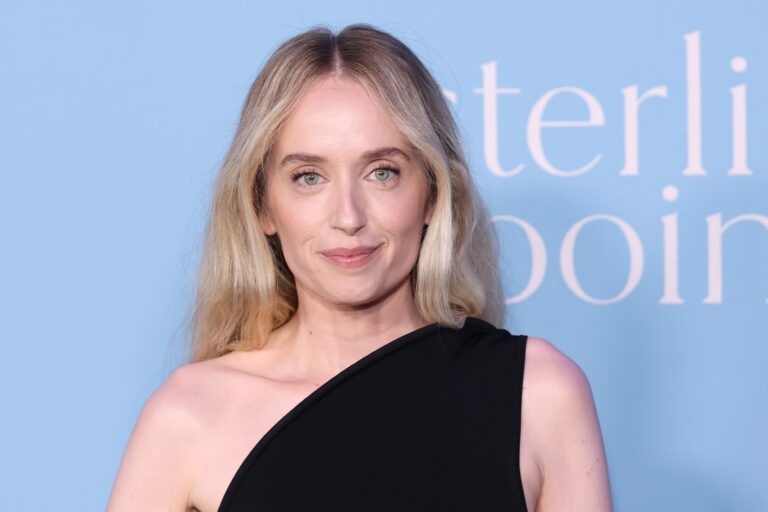
Director and creator Megan Park attends Prime Video’s “Sterling Point” World Premiere at Regal Union Square in New York City. Michael Loccisano/Getty Images
Jamie Dornan’s casting in Park’s Apple mystery — announced this week alongside Zoë Kravitz and Adèle Exarchopoulos — is not just a prestige package assembled for marquee value. Put it next to the research in cognitive science and personal-identity philosophy that runs beneath every project Park has made, and the ensemble starts to look like a controlled experiment: three actors, three national contexts, three systematically different architectures of memory and perception, all directed toward a single undisclosed secret. Park builds films around the premise that what you know and when you know it determines who you are. Casting this particular trio suggests she may be preparing to test that premise across cultures for the first time.
What Cognitive Science Predicts When Three National Minds Encounter One Secret
Signal Detection Theory, developed in the 1950s from WWII radar research and later applied to human psychology by Wilson P. Tanner and John A. Swets, provides a formal model for exactly this scenario. SDT describes how observers distinguish meaningful signals from background noise under uncertainty. Its central finding is that two observers with identical sensory data can reach opposite conclusions, because detection depends not just on the signal but on each observer’s prior expectations — what psychologists call priors — and on the threshold of evidence they require before committing to a judgment.
Kravitz (American), Exarchopoulos (French), and Dornan (Northern Irish) bring priors shaped by radically different cultural wiring. Research by Cornell psychologist Qi Wang, summarized in the Annual Review of Psychology in 2021, documents that autobiographical memory encoding differs systematically between cultures: individualist cultures embed personal memories with the self as protagonist; collectivist and relational traditions embed them in social and temporal context. French philosophical tradition — post-Sartrean existentialism, Lévinasian ethics centering the encounter with the Other as constitutive of selfhood — produces a genuinely different cognitive architecture for identity than American liberal individualism. Northern Irish culture carries the specific weight of the Good Friday Agreement’s institutionalized managed amnesia: a society that was formally asked to simultaneously remember and forget as a political technology. Three people in the same room facing the same mystery will, through their cultural wiring alone, generate three measurably different readings of the same ambiguous signal.
Park’s directorial DNA, evident across three productions, suggests she already understands this — and has been building toward it.
What Megan Park’s Films Are Actually Doing
Park’s three completed projects form a thematic sequence that is easier to read as a unified intellectual project than as a series of individual career steps.
The Fallout (2021), her SXSW Grand Jury Prize-winning debut, centers on a high schooler navigating identity after a school shooting. The central mechanism is what neuroscientists call an episodic discontinuity: the person who existed before the traumatic event and the person who exists after it share memories but not the same emotional relationship to the world. The self is fractured — not broken but reorganized along a new fault line.
My Old Ass (2024), acquired at Sundance for distribution by Amazon MGM Studios, literalizes this mechanism. An 18-year-old named Elliott, on a psilocybin mushroom trip on a lake island in Muskoka, Canada, encounters her 39-year-old self (played by Aubrey Plaza). Park has described the psilocybin mechanism as requiring only a “buy-in” rather than an explanation — she wanted the revelation technology to feel emotionally real, not scientifically justified. But the neuroscience she intuited maps onto real research with precision.
Contemporary neuroscience identifies the Default Mode Network (DMN) — a cluster of brain regions including the medial prefrontal cortex, posterior cingulate cortex, and angular gyrus — as the neural substrate of the sense of a continuous, bounded self. Studies led by Robin Carhart-Harris at UCSF (formerly Imperial College London) confirm that psilocybin suppresses DMN activity, causing what researchers call ego dissolution: the perceptual barrier between self and other temporarily collapses. A 2024 study published in Nature confirmed psilocybin causes threefold greater connectivity changes than methylphenidate, with the strongest effects in the DMN. The 18-year-old Elliott can perceive her 39-year-old self not as a stranger but as a continuous extension of her own psychological chain precisely because the neural machinery normally enforcing that boundary has been pharmacologically suspended.
Sterling Point series page (2026), Park’s first television series — streaming on Amazon Prime Video — deploys the same theme in genealogical register. Twins Annie and Connor Jacobson, raised in New York City by their adoptive father, inherit a lake island in Muskoka, Canada, from a grandfather they were never allowed to meet. The series unfolds as an excavation of inherited identity: what is passed down through biological lineage, what is constructed through adoption and chosen family, and what happens to a person’s self-narrative when both foundations are simultaneously destabilized.
Each of Park’s three completed projects is a different version of the same philosophical question: how continuous is the self across time, trauma, and inherited information? That question has a formal philosophical name. Derek Parfit, in Reasons and Persons (Oxford University Press, 1984), proposed that personal identity is not a fixed metaphysical fact but a matter of degree — constituted by overlapping chains of psychological connections, primarily memory. There is no single continuous “you” — only a chain of psychological states that together create what Antonio Damasio, in his neuroscience of selfhood, calls the autobiographical self: a neural construction the brain assembles from episodic memory, emotional memory, and predictive processing. Elliott’s younger and older versions in My Old Ass are not the same person in Parfit’s framework — they are psychologically continuous states, linked by overlapping memory chains that are about to diverge.
What an Apple Studios Mystery Does With This Architecture
The new film is designated a mystery, a genre word that in Park’s filmography carries specific epistemic weight. She has never made a conventional procedural. Her mysteries are perceptual — they concern what can be known, by whom, and at what cost.
The production configuration signals what kind of mystery this will be. Apple Studios provides the scale and prestige platform. LuckyChap Entertainment production company — Margot Robbie’s production company, which has also produced My Old Ass, Promising Young Woman, Saltburn, and Barbie — backs films where genre machinery is a delivery system for something more psychologically unsettling. FilmNation Entertainment official site, whose past productions include Denis Villeneuve’s Arrival (2016) and Emerald Fennell’s Promising Young Woman (2020), has a track record of selecting mysteries in which the story’s structure carries its own meaning — in which how the story is told is inseparable from what the story is about. Villeneuve’s Arrival uses the mystery of alien communication to dramatize the Sapir-Whorf hypothesis: the idea that the language you learn to perceive the world in restructures your cognition, altering your experience of time and causality.
Park, writing this script herself and serving as executive producer, appears to be working in a similar register.
Apophenia, Pattern Recognition, and What Mystery Narratives Do to Your Brain
Mystery films don’t just tell stories — they perform a specific cognitive operation on the viewer. The brain is not a passive receiver of information but a prediction machine, continuously generating hypotheses about the world and testing them against sensory data in what Karl Friston and Andy Clark have theorized as the predictive processing framework. The deep compulsion humans feel toward mystery narratives is grounded in this architecture: mysteries engage the prediction machinery at maximum intensity, generating hypotheses, testing them, experiencing surprise when they fail, and revising.
A related phenomenon — apophenia — describes the experience of seeing meaningful patterns in random or ambiguous data. German psychiatrist Klaus Conrad coined apophenia in 1958 to describe an early symptom of schizophrenia: a state in which the world seemed saturated with personal significance. Conrad defined it as “unmotivated seeing of connections accompanied by a specific feeling of abnormal meaningfulness.” Mystery narratives weaponize this tendency deliberately — seeding patterns that may or may not be real, holding the viewer in an epistemically unstable position. Park has already used this mechanism in My Old Ass, where the film never resolves whether the older Elliott is a psychedelic projection or an actual temporal contact. The ontological ambiguity is not a loose end; it is the point. The reality of a cause is less important than the reality of its effects.
The untitled Apple film, carrying the genre designation “mystery” in a Park screenplay, will almost certainly deploy apophenia in a similarly sophisticated way — planting signals for the audience while the three protagonists, each with different perceptual calibrations, disagree about which of those signals are real.
Why the Nationality Triangle Is Not Incidental
Kravitz, Exarchopoulos, and Dornan are not interchangeable prestige faces assigned to undefined roles. The specificity of their national and cultural contexts — American, French, Northern Irish — matters to the cognitive architecture of the mystery Park appears to be building.
Exarchopoulos, who became the youngest Palme d’Or recipient at Cannes (for Blue Is the Warmest Color in 2013), brings to the ensemble a specifically French philosophical inheritance. Her recently completed sci-fi film Planet B (Venice Critics’ Week, 2024) suggests she actively seeks roles that engage with political and perceptual disorientation. Kravitz, whose recent credits include Kimi (2022, directed by Steven Soderbergh), in which she played a voice-data analyst who uncovers a murder through audio analysis, has built a career playing characters defined by the architecture of perception itself — who sees what, and what information is hidden or withheld. Dornan, Northern Irish, trained in a society where the relationship between memory, violence, and political identity is a lived cultural inheritance rather than an abstraction.
Park, who is Canadian — from a country that occupies a specific liminal position between Old World European inheritance and New World self-invention — has always been attentive to geography as cognitive conditioning. Both My Old Ass and Sterling Point use Muskoka, Ontario’s lake country as a setting: neither Europe nor America, bounded water that hides what lies below. The Apple mystery, premiering on a platform that reaches over one billion screens in more than 100 countries, will extend that liminal geography into a genuinely international ensemble for the first time.
What SDT predicts, and what Park may be dramatizing, is that there is no single truth these three characters will agree on. There are only three sets of priors, three response criteria, and three culturally encoded memory systems encountering the same ambiguous signal — and arriving at three conclusions that are each, in their own terms, internally coherent.
What Comes Next for the Production
As of the date of this article, no production details have been released for the Apple mystery film — no production start date, shooting location, title, logline, or character details. The next expected public milestones are an official production announcement and a title reveal, neither of which has occurred. Dornan has several projects currently in production or post-production, including The Lord of the Rings: The Hunt for Gollum and 12 12 12, an Apple TV+ crime thriller opposite Anthony Mackie that premieres November 13. Kravitz is also attached to How to Rob a Bank.
Park, meanwhile, has just completed her first television run: Sterling Point earned strong critical notices and was renewed for a second season by Amazon Prime Video within weeks of its August 5 premiere. The Apple mystery will be her first feature-length film for a major streaming platform and her first project with an international ensemble at the lead level. Based on her filmography, the assembly of that ensemble is unlikely to be a coincidence.
Frequently Asked Questions
What cognitive science frameworks is Megan Park known for embedding in her films?
Park’s work consistently engages with three overlapping bodies of research. Her use of psilocybin in My Old Ass maps onto the Default Mode Network suppression documented in psychedelic neuroscience — the mechanism by which ego dissolution occurs. Her recurring interest in identity across time engages Derek Parfit’s philosophical theory of psychological continuity, which holds that personal identity is constituted by overlapping chains of memory rather than a fixed metaphysical self. And her new film’s three-nationality ensemble appears to engage cross-cultural cognitive science research showing that individualist and relational cultural traditions produce systematically different memory encoding and perceptual processing — the empirical basis for expecting three characters from three national contexts to read the same mystery differently.
Who are Zoë Kravitz, Adèle Exarchopoulos, and Jamie Dornan, and what does their casting together signal?
Kravitz is an American actress and filmmaker best known for The Batman (2022) and Kimi (2022); she was the first actor attached to this project in June 2026. Exarchopoulos is a French actress who received the Palme d’Or at Cannes in 2013 for Blue Is the Warmest Color — the youngest recipient in the festival’s history. Dornan is a Northern Irish actor nominated for a Golden Globe and a BAFTA for his work in Belfast and The Fall, respectively; his casting was announced by Deadline on August 27, 2026. Together, the three represent three distinct national and cultural contexts — American, French, Northern Irish — which, in the context of Park’s directorial preoccupations with perception and epistemic asymmetry, functions as more than prestige packaging.
What is FilmNation Entertainment’s significance here, and what does it predict about the film?
FilmNation is a prestige independent production and distribution company whose past slate includes Arrival (2016), Promising Young Woman (2020), Anora, and Conclave. FilmNation’s consistent editorial fingerprint is films where genre machinery carries philosophical argument — where how a story is told is inseparable from what it says. Arrival used alien-communication mystery to dramatize the Sapir-Whorf hypothesis about language and cognition. Promising Young Woman subverted thriller genre expectations to make an argument about complicity. Park’s film, backed by both FilmNation and LuckyChap (which produced My Old Ass and Saltburn), sits in a production lineage that strongly predicts a mystery designed to do something more than resolve a plot puzzle.
Where does Megan Park’s Sterling Point fit in her filmography, and why does the platform matter?
Sterling Point premiered on August 5, 2026 on Amazon Prime Video — not Apple TV+ — and has been renewed for a second season. It follows twins who inherit a Canadian lake island from an estranged grandfather, uncovering buried family secrets that destabilize their sense of inherited identity. The series is thematically continuous with Park’s feature work: inherited information restructuring identity is the same mechanism as the psilocybin encounter in My Old Ass and the post-trauma identity reorganization in The Fallout. The Apple mystery film is a separate project entirely, and the first time Park has brought this directorial DNA to a genuinely international ensemble at the feature level.