August 25, 2026:


Indie developer ASKES planned to bring Exit Ways — a zombie-apocalypse extraction shooter built around community-building rather than punishment — to Steam Early Access on August 24, 2026. The planned unlock window passed. As of August 25, the game is still unavailable for purchase, trapped in Steam’s moderation pipeline after the developer submitted three separate changes simultaneously, each triggering an independent review cycle that typically runs three to five business days per submission.
The delay is fixable and the developer owned the error immediately. But for players who had been counting down to the launch, the experience was a familiar one for indie Early Access: a “Coming Soon” banner where a buy button was supposed to be.
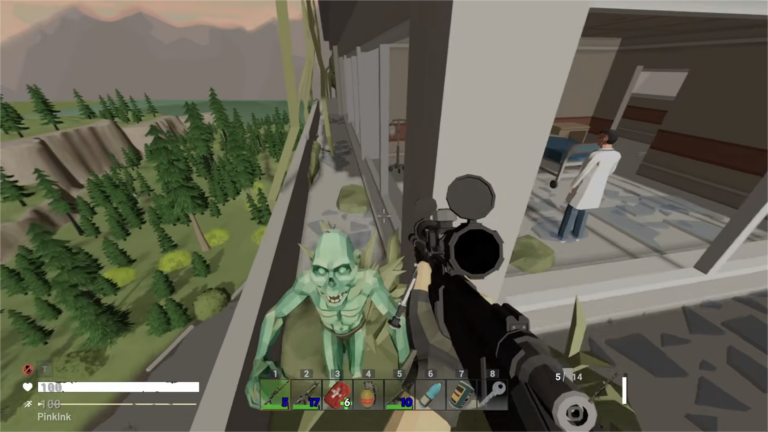
Exit Ways places players in the role of Reclaimers — immortal clones who, by design, cannot permanently die — and sends them into open, zombie-ravaged maps to scavenge loot, battle the undead, and contend with other players doing the same. The central tension is not simply survival but accumulation: what you recover goes toward building a freeform base back in a safe zone, where NPC survivors you recruit from the field can be installed as quest-givers and reputation sources. The more of them you bring back, the more the settlement grows, and the more quests and rewards flow from it. The game’s emotional register sits closer to a community-building adventure than to the grinding survival horror that defines Escape from Tarkov — warmer in tone, with the zombie apocalypse functioning as backdrop rather than source of existential dread.
The specific design commitment that distinguishes Exit Ways most clearly from the genre standard is accessibility. ASKES describes its ballistics and damage system as “more friendly” than Tarkov’s notoriously granular wound and armor simulation, and the experience system rewards player actions — looting, rescuing survivors, completing objectives — rather than tying progression exclusively to whether you made it out alive. In Tarkov and most extraction titles, a failed extraction means lost progress and gear. In Exit Ways, dying costs gear but not the XP earned during the run.
At Early Access entry, the game is launching — or was intended to — with 169 loot items, 25 quests, three maps, nine enemy types, and nine craftable buildings, spread across a base-building system that places no grid constraints on structure positioning. ASKES has also committed to a no-wipe policy, a meaningful promise in a genre where periodic server resets are a standard expectation that forces even engaged players to start from zero.
The delay was not a content issue, a build failure, or a platform rejection. It was a scheduling failure caused by how Steam’s Steamworks pipeline treats each submission as a separate review event.
According to Valve’s Steamworks review documentation, a game build submitted for review prior to release typically takes three to five business days to clear — and developers are advised to budget seven business days to account for potential issues. What ASKES submitted in the final stretch before launch was not one item but three: the Early Access label addition, the new build itself, and a price reduction. Each triggered its own independent moderation cycle, as described in the ASKES launch-day announcement.
In a candid Steam announcement posted the morning of the planned launch day, ASKES described what happened: “We added Early Access — moderation. We sent the build for review — moderation. We lowered the game’s prices — moderation.” The team described the delay as “entirely our fault for not thinking about this ahead of time” and announced it had reached out to Steam support to request an updated release date, per the same ASKES launch-day announcement.
The compounding effect is the key technical detail here: because each submission enters the moderation queue independently rather than as a bundle, a developer who submits three items in rapid succession does not get one three-to-five day review period — they get three overlapping or sequential ones, each with its own clock. The Steamworks documentation makes this clear in its per-submission framing, but it is a counterintuitive enough system that developers who have not experienced it before may not anticipate the aggregate delay. ASKES had not. The game remains available on Steam as “Coming Soon” as of August 25.
Steam has flagged Exit Ways as using generative AI in its development — a disclosure requirement that Valve formalized in January 2024 and updated in January 2026, per Valve’s content survey documentation, to cover player-facing AI content specifically. The Steam community discussions for Exit Ways include a thread asking for specifics on the AI usage, and a separate thread raised concerns about potential asset similarities to other games.
Neither allegation is confirmed. ASKES has not responded publicly to either concern in the threads visible at the time of publication. The AI disclosure flag places Exit Ways in company with more than 7,300 Steam games that had disclosed AI content as of March 2026. For players who treat AI disclosure as a purchasing signal — a growing segment of the Steam audience — the flag is relevant context. Valve’s 2026 policy update means the disclosure specifically indicates player-facing AI content, not merely AI-assisted coding or debugging tools.
The asset similarity claim in the community thread cited resemblance to SurrounDead and Motor Town. That allegation remains an unverified community observation, not a documented finding.
ASKES said it expects to announce the revised Early Access release date across the game’s Steam store page, a Steam news post, and its Discord server once Steam support processes the request. The developer has not named a specific date. The team’s original framing of the Early Access development timeline — “When it’s ready, it’s ready” — remains its position on the full release.
The game is aimed at extraction shooter fans who find the genre’s dominant player-versus-player tension too punishing or zero-sum. Exit Ways’ no-wipe policy and action-based XP system are structural design choices that speak to that audience specifically. Whether enough of them are waiting to sustain the early population that PvEvP extraction games require to function is the open question every game in this genre faces.
Exit Ways is developed and published by ASKES for PC (Windows) via Steam. A revised launch date will be posted to the game’s store page and Steam news feed when confirmed. The Early Access price is expected to rise before or at full release. The game supports 13 languages including English, Russian, French, German, Simplified Chinese, and Japanese, and the minimum system requirements call for an NVIDIA GeForce GTX 1060, 8 GB of RAM, and 2 GB of storage.
No new date has been confirmed as of August 25, 2026. ASKES posted a Steam announcement explaining the delay and stated it has contacted Steam support to request an updated release date. Once confirmed, the date will appear on the game’s Steam store page, in a Steam news announcement, and on the Exit Ways Discord server. The game currently shows “Coming Soon” and is not available for purchase.
ASKES submitted three separate items to Steam’s moderation pipeline in quick succession before the planned August 24 launch: the Early Access label, a new game build, and a price reduction. Each submission independently triggered Steam’s review process, which takes three to five business days per submission according to Valve’s Steamworks documentation. Because the submissions were not staggered, the team was caught waiting on multiple simultaneous review cycles. ASKES publicly described the error as “entirely our fault.”
Exit Ways is designed for players who find Tarkov’s mechanics prohibitively punishing. Its ballistics and damage system is described by the developer as more accessible, experience points are earned through in-game actions rather than successful extractions only, and there is no wipe policy — meaning progress is not periodically reset. The game also centers on recruiting NPC survivors from the field and building a freeform base with them, adding a community-management layer not present in Tarkov.
Steam’s 2026 AI disclosure policy, updated in January of that year, requires disclosure specifically for player-facing AI-generated content. A flag indicates the game contains AI-generated content that players will encounter, not merely that AI tools were used for coding or development workflow. ASKES has not publicly clarified what specifically the disclosure covers. Valve’s system does not prevent flagged games from being published; it informs players so they can decide whether AI disclosure affects their purchasing decision.