HomeAuto Karahantepe Yields First Sculpture of Human Atop Leopard, Rewriting Neolithic Iconography
Karahantepe Yields First Sculpture of Human Atop Leopard, Rewriting Neolithic Iconography
August 25, 2026:
Ktb.gov.tr
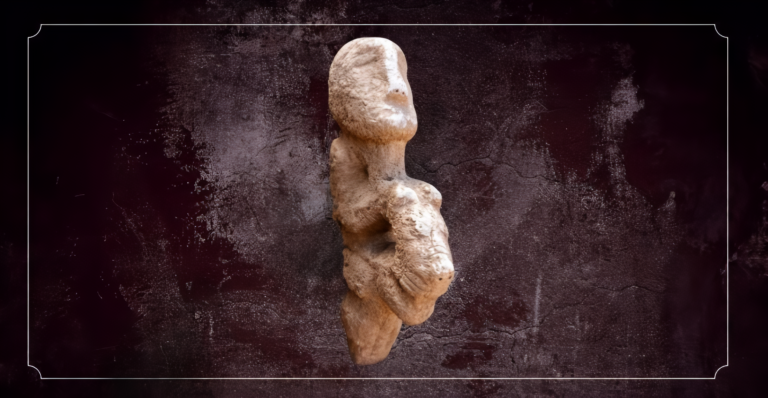
Archaeologists excavating Karahantepe in southeastern Türkiye have unearthed an 11,000-year-old composite stone sculpture depicting a human figure seated on the back of a leopard — the first time that compositional relationship, human mounted on apex predator, has appeared anywhere in the Pre-Pottery Neolithic archaeological record. The Turkish Culture and Tourism Ministry announced the find on Tuesday as part of the ongoing 2026 excavation season under the government’s Heritage to the Future program, and excavation director Prof. Dr. Necmi Karul of Istanbul University called it a form with no known parallel at the site or anywhere in contemporaneous Neolithic art.
The discovery matters not only for what it is — a 70-centimeter (28-inch) stone work of startling technical accomplishment — but for what it proves. Every prior human-animal composition found across the Taş Tepeler (“Stone Hills”) network of Neolithic sites had depicted humans beside, flanking, or in proximity to predators. At Sayburç, a carved bench relief showed a man standing between two low-relief leopards. At earlier Karahantepe seasons, a figure carried a leopard on its back. Those compositions describe encounter. This one describes something different: a human above, astride, and sovereign over the most dangerous animal in the region. That compositional leap — from proximity to elevation — represents a symbolic distinction that archaeology has not previously found documented at this scale of human prehistory, as confirmed by Özdoğan’s 2022 Antiquity study of those earlier Sayburç reliefs.
Where It Was Found
The sculpture was discovered resting on a stone bench running along the interior wall of a small circular structure approximately 3 meters (10 feet) in diameter, whose floor was paved with flat stones. Excavation director Prof. Dr. Karul confirmed the building served a special purpose rather than ordinary domestic use — the paved floor, bench, and small scale suggest a dedicated ceremonial or ritual space rather than the large communal gathering halls that dominate Karahantepe’s other excavated areas.
Turkish Culture and Tourism Minister Mehmet Nuri Ersoy described the work as a “composite sculpture” in a style not previously encountered at the site. He added that the discovery opens new questions about the earliest periods of human history and predicted the find would generate widespread discussion in the global scientific community. The 2026 excavation season runs through October and includes plans to open a stone-covered rectangular chamber whose contents remain entirely unknown.
What “Mounted on” Means
The symbolic difference between a human flanked by a leopard and a human seated on a leopard’s back is not merely compositional — it is cognitive. When researchers at Sayburç documented the 12-foot-long bench carving showing a man in high relief flanked by two low-relief leopards, they described it as the earliest known narrative scene in human prehistory, a representation of encounter and ritual power. The Karahantepe 2026 sculpture goes a step further. The mounted composition — human above, leopard below — encodes not encounter but hierarchy, not proximity but mastery or spiritual union.
This distinction maps onto a question that has animated cognitive archaeology for decades: when did humans develop the symbolic capacity to represent not what they observed but what they imagined, desired, or believed? A human beside a leopard is an event. A human riding a leopard is a concept, as explored in Göbekli Tepe animal symbolism research. Karahantepe’s 2026 find provides the oldest known evidence of that conceptual leap in the art of the Fertile Crescent.
Prof. Karul, who has led Karahantepe excavations since they launched in 2019, has noted that human-animal relationships at Karahantepe differ fundamentally from modern conceptions of human-wildlife relations. His earlier observation — that these ancient people understood human-animal relations as “a very peaceful one” — now gains additional nuance. A peaceable relationship does not preclude one of symbolic authority; what the 2026 sculpture suggests is that Karahantepe’s symbolic vocabulary had evolved to encode both the intimacy of that relationship and the spiritual elevation it could imply.
“We are sure that animals have different meanings for different societies,” Karul told TheCollector in a November 2025 interview about Karahantepe’s discoveries. “These animals depicted in Karahantepe certainly held meanings to the people that created them.” He has argued that the mythological narratives encoded in Karahantepe’s carvings “helped keep the societies together” — functioning as shared narrative infrastructure for communities that were, for the first time in human history, choosing to live in permanent settlements numbering in the hundreds rather than nomadic bands of twenty or twenty-five.
Leopard and Leopard’s Tale: Continuity Across Three Millennia
The leopard is not a casual choice of animal in Anatolian prehistory. At Karahantepe, archaeologists had already documented a standalone leopard sculpture in earlier seasons — its intricately carved jaws and teeth preserving the animal’s threat in stone. At Sayburç, leopards flank the central male figure. At Sefertepe, ornaments depicting leopards were recovered alongside vulture and human figures from contexts dating to approximately 10,000 years ago.
Most strikingly, at Çatalhöyük — the large Neolithic proto-city in central Türkiye occupied from roughly 7500 BCE, some 3,000 years after Karahantepe — leopard imagery remains so culturally central that Ian Hodder, the Cambridge archaeologist who led its excavation from 1993 to 2018, named his definitive work on the site The Leopard’s Tale: Revealing the Mysteries of Çatalhöyük. Relief figures of felines facing each other appear on Çatalhöyük walls. The so-called “Seated Woman of Çatalhöyük,” the famous Neolithic goddess figurine, sits flanked by two felines on her throne.
What that 3,000-year continuity — from the Pre-Pottery Neolithic Taş Tepeler sites to the settled proto-city of Çatalhöyük — suggests is that leopard symbolism was not incidental to Anatolian Neolithic culture. It was structural. The 2026 Karahantepe sculpture now extends the range of known compositional relationships between humans and leopards in that tradition: from flanking (Sayburç), to carrying (earlier Karahantepe figure), to mounting (2026 discovery). Each form is symbolically distinct. Together, they sketch the outlines of a symbolic vocabulary whose full grammar remains buried in the 95% of Karahantepe’s site that has not yet been excavated.
Karahantepe and Its Neighbors
Karahantepe lies approximately 46 kilometers (29 miles) from Göbekli Tepe, the UNESCO World Heritage Site whose T-shaped stone pillars and intricate animal carvings rewrote assumptions about the origins of complex civilization when systematic excavations began there in the 1990s. First identified by archaeologist Bahattin Çelik in 1997, Karahantepe began yielding its secrets only when excavations launched in 2019 under the Taş Tepeler framework. In the years since, it has proved to be far more than a regional echo of Göbekli Tepe.
More than 250 T-shaped stone pillars have been documented at Karahantepe — comparable in scale to its more famous neighbor. But Karahantepe has developed its own distinct artistic identity. Where Göbekli Tepe’s iconography leans heavily on foxes, vultures, and abstract forms, Karahantepe favors serpents and leopards, with feline imagery appearing repeatedly in contexts suggesting protective or spiritual roles. The site also contains more three-dimensional human portraiture than Göbekli Tepe has yet produced — including the 2.3-meter-tall “Ribbed Man” statue from 2023, a seated anthropomorphic figure with deeply incised ribs and a V-shaped collar, alongside a vulture sculpture found in the same season. In 2025, excavators found three tiny stone animal figurines (fox, vulture, boar) deliberately arranged inside a nested vessel system — what Prof. Karul described as “the earliest three-dimensional storytelling” ever documented.
The broader Taş Tepeler network — a collective of more than a dozen prehistoric sites funded under Turkish government initiative — spans the critical Pre-Pottery Neolithic transition period of roughly 9600 to 7000 BCE, when hunter-gatherer communities in the Fertile Crescent were building permanent settlements and producing monumental architecture long before the emergence of pottery, cities, or writing. Prof. Karul has emphasized that these sites challenge the once-standard textbook assumption that settled life and symbolic complexity required agriculture as a prerequisite. The people of Karahantepe were still primarily hunter-gatherers — evidenced by the site’s zooarchaeological record showing intensive reliance on gazelle — yet they were carving sculptures of humans riding leopards.
How Does an 11,000-Year-Old Site Keep Surprising Researchers?
The answer lies in how little of Karahantepe has actually been uncovered. As of 2023, approximately 5% was excavated, out of nearly 10 hectares (24.7 acres) in total. Each season adds new structures, new sculpture types, and new symbolic forms to the picture. The 2026 season has already yielded the mounted leopard sculpture and is planning to open the stone-sealed rectangular chamber whose contents are entirely unknown to researchers. The excavation season runs through October.
The pace of discovery reflects both the richness of the site and the scale of the research effort. Roughly 220 people — archaeologists, specialists, students, and field workers — operate across approximately 10 sites in the Taş Tepeler network at any given time, drawn from 36 academic institutions worldwide. They work in summer temperatures exceeding 50°C (122°F), beginning before dawn. “The works will continue here for at least 50, maybe 100 years,” Karul has said. “I have less time.”
Finds from Karahantepe are on display at the Şanlıurfa Archaeology Museum in southeastern Türkiye, which holds sculptures, reliefs, and pillar fragments from across the Taş Tepeler region.
Does This Change What We Know About Neolithic Symbolic Thought?
The short answer is yes. The longer answer is that it extends what we know in a specific and previously undocumented direction. Prior research on Pre-Pottery Neolithic symbolism — from Klaus Schmidt’s foundational work at Göbekli Tepe to the Taş Tepeler excavations of the past decade — established that these communities had sophisticated artistic and narrative vocabularies. What remained unclear was how far that vocabulary extended into the representation of relationships rather than just entities.
Depicting a leopard is difficult. Depicting a human and a leopard as a compositional unit — one seated on the other’s back — requires not just technical skill but a conceptual framework in which such a relationship is imaginable, meaningful, and worth encoding permanently in stone. That framework is what the 2026 sculpture puts on the table. Its implications will take years to work out against the full body of evidence from Karahantepe, Göbekli Tepe, Sayburç, and the rest of the Taş Tepeler network.
For now, the sculpture sits on a bench in a small paved chamber, waiting for the rest of the site to catch up.
Frequently Asked Questions
How is the 2026 Karahantepe sculpture different from other Neolithic human-animal artworks?
Every previously known human-leopard composition from this period — including the Sayburç bench relief and earlier Karahantepe figures — shows humans in proximity to, flanked by, or carrying leopards. The 2026 sculpture is the first known case of a human mounted on top of a leopard, encoding a hierarchical or spiritually elevated relationship rather than simple co-presence. That compositional distinction is why researchers consider it unprecedented.
What is Karahantepe and how does it compare to Göbekli Tepe?
Karahantepe is a Pre-Pottery Neolithic site in Şanlıurfa Province, southeastern Türkiye, located about 46 kilometers (29 miles) from Göbekli Tepe. Both sites are approximately 11,000 years old, both feature more than 250 T-shaped stone pillars, and both are part of the Taş Tepeler network of related Neolithic sites. Karahantepe is generally considered to have a stronger tradition of three-dimensional human portraiture and a distinct symbolic vocabulary that emphasizes serpents and leopards where Göbekli Tepe favors foxes and vultures.
Why does leopard imagery appear so consistently in ancient Anatolian sites?
Scholars do not have a definitive answer, but the evidence suggests leopards held a structurally important role in the symbolic and possibly religious systems of Neolithic Anatolia. Leopard imagery appears at Karahantepe, Sayburç, Sefertepe, and — nearly 3,000 years later — at Çatalhöyük, where Ian Hodder named his definitive excavation account “The Leopard’s Tale.” The consistent presence of leopard symbolism across this span of time and geography suggests it encoded something durable about the communities’ relationship to power, danger, or the sacred — though the specific mythology is irretrievably lost.
Can visitors see Karahantepe finds in person?
Yes. Sculptures, reliefs, and pillar fragments from Karahantepe and the wider Taş Tepeler region are on display at the Şanlıurfa Archaeology Museum in southeastern Türkiye. The Karahantepe site itself has not yet fully opened to public tourism, though excavations are ongoing and the Turkish Ministry of Culture and Tourism has indicated plans for phased public access as work progresses.