Canada to Match Trump’s 50% Tariffs, Dollar for Dollar

August 22, 2026:

Canada to Match Trump’s 50% Tariffs, Dollar for Dollar

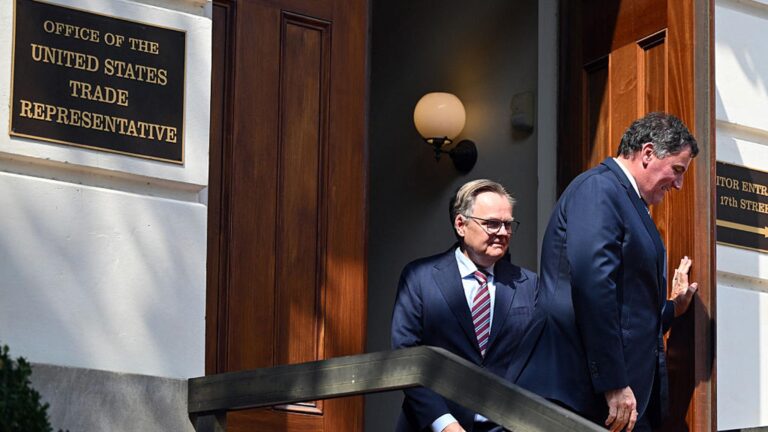
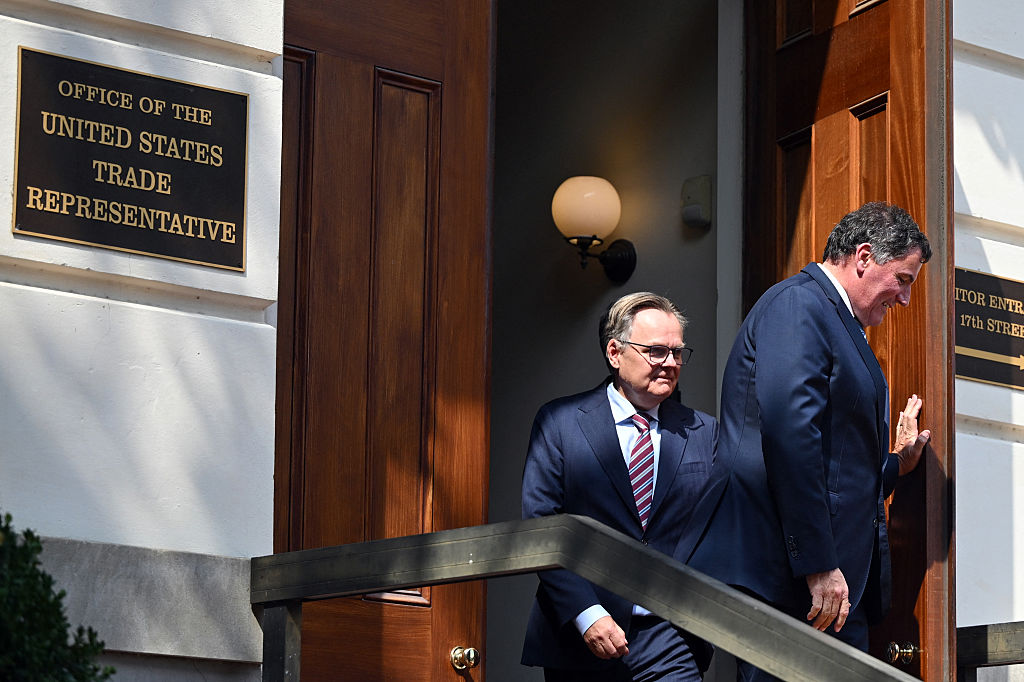
Dominic LeBlanc, Canada’s minister in charge of trade with the United States, exits the office of U.S. Trade Representative Jamieson Greer after a meeting in Washington, D.C., on Aug. 20, 2026. —Mandel NGAN—AFP

Trade talks between the United States and Canada collapsed Friday. With President Donald Trump’s 50% tariffs taking effect the following day, Prime Minister Mark Carney quickly responded with retaliatory measures that go into effect in September.

U.S. Customs and Border Protection sent out guidance for importers saying that the tariffs, which Trump first announced last month, would go into effect Saturday. They impact about $20 billion of Canadian goods, including hockey sticks, building materials, clothing, beer, and cheese. 

Negotiators from both countries had worked for weeks to reach a trade deal, leading up to a three-day extension of the original tariff deadline. At the time, Trump suggested that an agreement had been reached, writing on Truth Social on Tuesday that he had “paused” the tariffs because the two countries “have a DEAL!”

But in a statement just before midnight on Friday, Carney said that “progress has not been enough to meet our objectives for Canadians.”

Read more: Trump Imposes 50% Tariff Hike on Canadian Goods

“As a result, this evening, I have decided to suspend trade negotiations with the U.S. and have directed Canada’s negotiators to return to Ottawa,” the Prime Minister said. He accused the Trump Administration of introducing last-minute changes to the deal that he said were “unfair, uneconomic, and called into question the reliability of any deal.” 

U.S. Trade Representative Jamieson Greer, however, said on social media on Saturday that Canada had “declined to finalize the trade deal under the terms agreed earlier this week.”

“New demands and walk backs of other commitments by Canada have upended the careful balance reached in the past days,” Greer said. “This is a missed opportunity for Canada to partner with the United States.”

Carney vowed that the tariffs would not go unanswered. Speaking at a news conference Saturday, he announced dollar-for-dollar tariffs on U.S. goods.

“We ⁠cannot ​accept what they have offered, and ​we will not give what they have asked,” he said.

The retaliatory tariffs will touch U.S. sectors including steel, dairy, appliances, agricultural equipment, pulp and paper, and electronics, and they will go into effect Sept. 8.

The growing rift between the U.S. and Canada

Polling conducted before the talks collapsed suggests that most Canadians supported taking a hard line in negotiations with the U.S.

An Angus Reid Institute poll from July found that 65% of Canadians say that their government should approach the U.S. either cautiously, as a potential threat, or as an enemy.

Reflecting similar sentiments, a Léger poll from this month showed that 56% of Canadian respondents want the federal government to make no further concessions to Washington in ongoing trade and tariff negotiations—compared to 31% who favor flexibility.

While the new import taxes will only apply to about 5% of what Canada ships to the U.S. each year, the breakdown in negotiations further fractures an already strained relationship between the two countries and their leaders.
Trump and Carney have taken swipes at each other since the U.S. President returned to office last January. 

After an article claimed that the country was in a “technical recession” this summer, Trump revived his call to make Canada the 51st state in the U.S.

Carney then mocked Trump at a housing policy event in Toronto on Aug. 5 when his teleprompter stopped working.

“Unlike a certain world leader, I do not view this as a conspiracy,” Carney told reporters, referencing Trump’s claims of “sabotage” after a teleprompter malfunctioned during his address at the United Nations General Assembly last September.

Later that day, Trump called Canada’s leadership “nasty” during an event at Red Rock Casino Resort in Las Vegas as trade negotiations were ongoing.

“Yes, it’s a tough negotiation,” Carney said in response. “You can change the adjective and say ‘nasty,’ but for ​Canada it’s ​a question ⁠of Canadian jobs, it’s a question of the future of Canadian enterprises.”

With negotiations suspended and matching tariffs on the way, the rift has moved beyond rhetoric into a widening trade war.

Source link