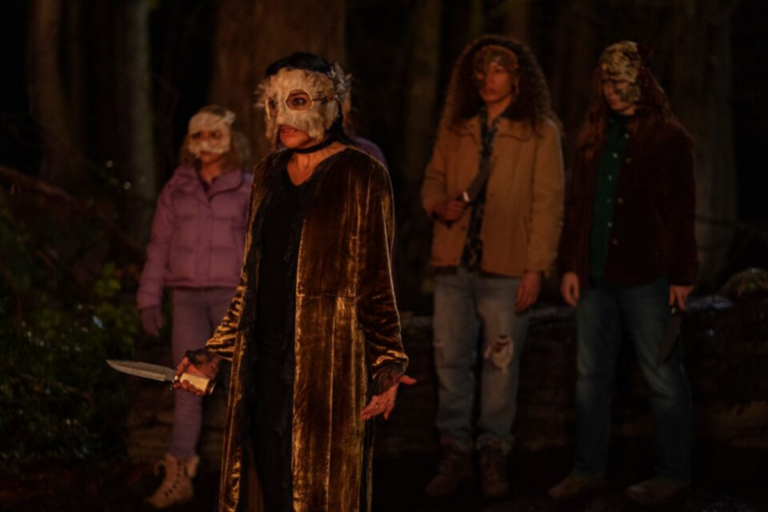
HomeAuto Yellowjackets Season 4 Finale Decoded: Mercury Poisoning and C-PTSD Behind Wilderness Horror
Yellowjackets Season 4 Finale Decoded: Mercury Poisoning and C-PTSD Behind Wilderness Horror
August 22, 2026:
Paramountplus.com
Paramount+ announced Thursday that Yellowjackets will close out its five-season run with a 10-episode final chapter premiering November 20, 2026 — and the sciences that have silently organized the show’s most disturbing imagery deserve a full airing before the survivors go home. What the wilderness did to these teenagers was not magic, not punishment, and not metaphor. It was, according to the most grounded fan scholarship and a surprisingly robust body of clinical literature, one or more of the following: neurotoxicological exposure, complex post-traumatic stress disorder with its structurally distinctive memory architecture, and the particular moral territory that opens when human survival collides with human flesh. Season 4’s tagline — “the survivors race to bury their sins before rescue arrives” — is a clinically precise description of the single behavioral pattern that trauma researchers consistently identify as the primary driver of long-term pathology: avoidance.
Understanding what that means, and what the relevant science actually predicts, makes the show’s final chapter considerably richer than any standard horror drama.
Paramount+ Sets November 20 Finale for Yellowjackets’ Final Season
Paramount+ confirmed the Season 4 premiere alongside the release of a teaser trailer and premiere date assembled from footage spanning all three prior seasons. The teaser ends on a news broadcast announcing that the Wiskayok Yellowjackets — the fictional soccer team, missing in-universe for 19 months — have been found. “The final reckoning,” text declares. Season 4 will air Fridays on Paramount+ with the Premium Plan, with episodes also premiering on Showtime the following Sunday.
The cast returning for the final chapter includes Melanie Lynskey, Tawny Cypress, Christina Ricci, Sophie Nélisse, Jasmin Savoy Brown, Sophie Thatcher, Samantha Hanratty, Courtney Eaton, Liv Hewson, Warren Kole, Kevin Alves, Sarah Desjardins, Nia Sondaya (promoted to series regular), Jenna Burgess, and Hilary Swank. New additions confirmed for the final season are Molly Ringwald, who plays Vicky — Van’s mother, a recently recovered alcoholic trying to make amends — and 97-year-old Academy Award nominee June Squibb in an as-yet-undisclosed role, with both Ringwald and Squibb casting confirmed by Deadline. Creators Ashley Lyle and Bart Nickerson serve as showrunners, with Lionsgate Television producing.
Season 3 set viewer records for the series when it premiered in February 2025, reaching 2.03 million global viewers across platforms in its first three days. The Season 3 finale hit 3 million viewers in seven days. Season 4 renewal May 2025 was announced on May 20, 2025.
Mad Hatter in the Wilderness: What Cinnabar and Erethism Actually Do to a Human Brain
The most scientifically grounded fan theory about Yellowjackets — originating in the show’s Reddit community and later analyzed in depth by entertainment outlets including Inverse — proposes that the wilderness crash site sits above an abandoned cinnabar mine. Cinnabar is mercury(II) sulfide: a scarlet-to-brick-red mineral, one of the most vividly colored ores in nature, and the primary commercial source of elemental mercury. When heated or weathered, cinnabar mercury sulfide properties include the release of elemental mercury vapor — a colorless, odorless gas that is lipid-soluble and crosses the blood-brain barrier with relative ease.
What follows has a clinical name: erethism (erethismus mercurialis), also called Mad Hatter disease after the 18th-century hat-making trade, where workers who used mercuric nitrate to stiffen felt developed a characteristic constellation of erethism Mad Hatter disease symptoms. Those symptoms include restlessness, irritability, insomnia, emotional lability, difficulty concentrating, impaired memory, extreme shyness, and depression — and at higher doses or longer exposure, delirium, hallucinations, personality changes, and in severe cases, seizures. Mercury is toxic to the central nervous system specifically: it preferentially deposits in neural tissue and can produce mercury neurotoxicity and lasting brain changes even after the original exposure has ceased.
The theory’s explanatory power rests on two observations about the show’s visual language. First, a red river appears in Season 1 — consistent with cinnabar (or mercury oxide) deposits coloring groundwater. Second, the survivors drink from local water sources, eat local fish, and build fires in an enclosed cabin — each a plausible exposure vector if cinnabar deposits exist nearby. Ontario does have a documented history of mercury-related neurological disease: in 1970, severe mercury poisoning affected two First Nation communities in Northwestern Ontario, producing what became known as Ontario Minamata disease 1970 — a neurological syndrome that had first appeared in Minamata Bay, Japan, in 1956.
The crucial feature of the cinnabar hypothesis is that mercury poisoning neuropsychiatric symptoms would be clinically indistinguishable from the trauma response that anyone would expect in survivors of a plane crash. Every “supernatural” event Yellowjackets depicts — Lottie’s visions, Taissa’s sleepwalking violence, the group’s escalating ritualism, the Antler Queen’s emergence — falls within the documented clinical picture of chronic sub-acute mercury poisoning in an adolescent population with no medical care, no outside reference frame, and no knowledge that they might be being poisoned.
The show has preserved strict ambiguity on this question across three seasons and has confirmed only that the symbol’s origins are “very dark.” This article presents the cinnabar hypothesis as exactly what it is: a scientifically rigorous fan theory, not the show’s confirmed answer. Season 4 may resolve it; it may not. Either outcome is dramatically valid. The point is that the theory is grounded.
Can Mercury Poisoning Really Cause Hallucinations and Personality Change?
Yes. Chronic exposure to elemental mercury vapor — particularly through inhalation, which is the most efficient exposure route — produces erethism mercurialis, the clinical syndrome of mercury’s neuropsychiatric effects. Documented symptoms include restlessness, irritability, insomnia, emotional lability (rapid mood shifts), impaired memory, delirium, and hallucinations. The Mad Hatter disease hat-maker history extends as far back as the 18th century, with industrial workers throughout the 20th century documenting the same constellation of effects. Mercury deposits preferentially in neural tissue, and neuropsychiatric effects can persist or worsen after the initial exposure period ends — making the adult timeline’s continued pathologies consistent with the theory.
Yellowjackets’ Non-Linear Story Structure IS the Trauma: What C-PTSD Research Reveals
Judith Herman, a professor of clinical psychiatry at Harvard Medical School, published “Trauma and Recovery” in 1992 and coined the term “complex PTSD” — a diagnosis designed specifically to describe what happens to people who experience prolonged, repeated, and inescapable trauma. Her foundational paper, Herman complex PTSD 1992 research, published in the Journal of Traumatic Stress, distinguished this condition from single-event PTSD in ways that remain clinically definitive. Where single-event PTSD produces intrusion, avoidance, and hyperarousal, Complex PTSD (C-PTSD) produces something more architecturally distinctive: lasting reorganization of identity, emotional regulation, interpersonal relationships, and self-perception.
The World Health Organization formally included C-PTSD in the ICD-11 CPTSD diagnosis 2018 WHO, with six symptom clusters. Three are the standard PTSD clusters (re-experiencing, avoidance, sense of threat). Three are additional: affect dysregulation (heightened emotional reactivity to minor stressors, or emotional numbing), negative self-concept (shame, guilt, feelings of worthlessness), and disturbances in relationships (difficulty forming or maintaining them, isolation). The condition is not in the DSM-5, which is why American psychiatrists diagnosing survivors might work within PTSD frameworks that don’t fully capture what Herman’s framework describes.
The Yellowjackets adult timeline is a portrait of C-PTSD with unusual clinical accuracy. Shauna’s capacity for impulsive lethal violence; Taissa’s dissociative episodes (sleepwalking that she cannot remember); Lottie’s tendency toward cult formation as a structure for managing an internal world with no other organizational framework; Misty’s hypercompetent need for control — these are not character quirks. They map onto the specific symptom clusters Herman identified: affect dysregulation, interpersonal disturbance, and the particular reorganization of identity that follows prolonged exposure to inescapable harm.
But the series’ most analytically significant insight is structural: Yellowjackets’ dual-timeline narrative format is not a storytelling convention. It is a formal enactment of how traumatic memory actually functions. Traumatic memory and C-PTSD research consistently identifies non-linearity as a core feature of traumatic memory: the past does not stay in the past, it intrudes into the present without warning, collapses temporal distance, and makes “then” and “now” feel simultaneous. The show’s writers chose a format that performs this clinically, in the viewer’s experience, not just in the characters’ behavior.
A reader or viewer who understands this goes into Season 4 knowing something the horror framing obscures: Shauna in 2026 is not haunted by metaphors. She is experiencing a specific, clinically documented syndrome in which the boundary between a traumatic past and a managed present is structurally permeable. Season 4’s tagline — “racing to bury their sins before rescue arrives” — describes, with precise clinical accuracy, the primary maladaptive response Herman documented: avoidance. When trauma disclosure predicts recovery outcomes and disclosure is systematically suppressed, research consistently finds, recovery becomes clinically unreachable.
Social Collapse in Real-World Research: What Happens When Institutions Disappear
Yellowjackets was conceived in 2017 when its creators saw all-female Lord of the Flies remake proposals dismissed online — the internet’s consensus being that girls would not devolve into tribalism and violence the way William Golding’s male schoolboys did. That dismissal was the show’s provocation: its premise is that under equivalent conditions, the outcome would not be meaningfully different, but it would take a different shape.
Golding’s Lord of the Flies social analysis (1954) presents social collapse as a binary: civilized Ralph versus violent Jack, with barbarism as the default state of human nature when institutional controls are removed. Contemporary social psychology has produced a more complicated picture. The institutional collapse Golding depicts does reliably occur — field research on disaster communities, studies of POW camps, and documented survival scenarios all confirm that when external authority structures disappear, new hierarchies form rapidly. But the form those hierarchies take is mediated by pre-existing relationships, group composition, the presence or absence of perceived legitimate leadership, and the group’s collective understanding of its situation.
Yellowjackets is more sociologically accurate than Golding precisely because it shows a replacement hierarchy emerging organically rather than through a single villain’s ambition. The Antler Queen is not a dictator; she is the group’s focal point for legitimating violence — a role that shifts across seasons, contested and renegotiated. The card-draw lottery system the survivors develop represents a specific social technology: randomized selection as a mechanism for distributing moral responsibility. Historical shipwreck accounts and survival narratives document similar lot-casting practices in desperate collective situations, where the group protects itself from the psychological burden of direct individual choice by distributing it through chance.
The show’s academic treatment has noted that Yellowjackets positions its survivors as “disruptive ‘others’ with the potential to unravel regulatory systems” while refusing the binary Golding imposed — the show does not offer two clean options. That refusal makes it a more accurate depiction of what actual social collapse research shows.
Survival Cannibalism, the Andes Crash, and the Specific Line the Survivors Crossed
Uruguayan Air Force Flight 571 crashed in the Andes on October 13, 1972, carrying 45 people aboard including members of a Montevideo rugby team. Thirty-three survived the initial crash; only 16 were rescued 72 days later on December 22, 1972, after Andes crash and survivors 1972 trekked out on foot. The survivors’ decision to consume the flesh of already-dead passengers has become the most documented modern case of survival cannibalism — and the psychological aftermath has been studied across decades.
The primary philosophical literature on survival cannibalism distinguishes consistently between passive or “pure” cannibalism — consuming the already-dead, without killing — and active cannibalism, where someone is killed for food. Ethicists including J. Jeremy Wisnewski and John Shand have argued that standard consequentialist and deontological moral frameworks struggle to categorically condemn passive survival cannibalism, because when murder is removed from the equation, the available moral arguments rest on dignity considerations and disgust responses that resist formalization. The ethics of survival cannibalism philosophy literature supports this view. Experimental research adds a further dimension: one study asked participants to consider a hypothetical in which a man consented before death to having his body eaten by a friend, in a culture permitting the practice, with no risk of disease — and found that roughly half still considered the act invariably wrong. The moral prohibition on consuming human flesh is largely deontic — rule-based rather than consequences-based — and largely impervious to counter-argument.
The Andes survivors largely built stable, integrated lives after rescue. Survivor Roberto Canessa, now a cardiologist, described the ordeal to National Geographic, and as reported there and elsewhere, the Canessa Andes survivor no regrets extended to his assessment that the collective decision, while agonizing, was not the cause of lasting psychological harm. Several speak publicly about the experience and report that the act itself — passive, necessity-driven, consensually anticipated by the pact the group had made — did not produce lasting psychiatric collapse.
Yellowjackets diverges from the Andes case at exactly this point: the show’s survivors eventually hold ritual hunts in which selected individuals are killed for consumption — a crossing from passive to active cannibalism that the Andes survivors never made. The adult timeline’s comprehensive psychological destruction maps onto that crossing, not onto the passive consumption that preceded it. The show’s moral architecture is built on this specific distinction, even if it never names it.
What Will ‘Yellowjackets’ Season 4 Actually Resolve?
Season 4’s 10-episode run will premiere November 20 on Paramount+, with episodes expected to address the show’s most consequential open questions: what happened in the final months before rescue that the adult survivors have never disclosed, who among the present-day cast participated in which specific acts in the wilderness, and whether the wilderness force is ultimately supernatural, toxicological, or something the show refuses to resolve.
The casting of Molly Ringwald as Van’s mother — a recently recovered alcoholic seeking to remedy her past — arrives with obvious dramatic weight given that Van’s adult storyline ended with her death in Season 3. June Squibb joins in a role not yet disclosed by Paramount+. Hilary Swank, whose adult Melissa killed Van in the Season 3 finale, returns alongside the full ensemble. Nia Sondaya, who plays Akilah, has been promoted to series regular for the final season.
The show has consistently cast former teen stars from the 1980s and 1990s in its adult ensemble — Christina Ricci, Juliette Lewis, Melanie Lynskey, Lauren Ambrose, Hilary Swank — and Ringwald’s addition continues that pattern with perhaps the most on-brand possible casting: the actress whose entire early career was built on the specific emotional territory of young women navigating complicated group dynamics and the consequences of choices made under pressure.
What Real Trauma Experts Say About Survivors Who Never Speak of What Happened
Herman’s central research finding, consistent across her clinical work on prolonged captivity, chronic domestic violence, torture, and extreme survival, is that trauma disclosure and recovery research establishes disclosure of traumatic experience as a primary predictor of recovery. When survivors are unable to share what happened with trusted others, the symptoms of C-PTSD — dissociation, affect dysregulation, relational disruption — persist and often worsen. The mutual silence pact at the center of Yellowjackets’ adult timeline is not merely a dramatic device; it is a clinical guarantee of the pathology the show depicts.
Research on post-conflict and post-extreme-survival populations has documented this consistently: both reactive aggression (violence arising from threat) and appetitive aggression (violence driven by pleasure or habit) can persist after the survival context ends, and both can hinder successful treatment and integration into civil society, as clinical trauma literature describes. The adult survivors are not simply struggling with guilt. They are experiencing the precisely predicted clinical consequences of a trauma structure — prolonged, repeated, inescapable — followed by enforced silence enforced by mutual social coercion. Season 4’s tagline about “burying sins before rescue” is not a metaphor about moral shame. It is a description of active avoidance behavior in a C-PTSD population, and the research predicts that exposure of the buried material — the rescue itself — will produce a crisis, not a resolution.
That is what Season 4 is about.
Frequently Asked Questions
What is the cinnabar/mercury theory in Yellowjackets, and is it scientifically plausible?
The cinnabar hypothesis — originating in the show’s fan community and examined in detail by outlets including Inverse — proposes that the wilderness crash site sits above an abandoned mercury mine. Cinnabar (mercury sulfide) is a scarlet-red ore that releases mercury vapor when heated or weathered; vapor inhaled chronically produces erethism, a neuropsychiatric syndrome characterized by hallucinations, personality change, delirium, paranoia, and mood destabilization. The clinical profile of chronic sub-acute mercury poisoning covers every “supernatural” symptom the show depicts across its three seasons. The theory is scientifically grounded, has a documented Canadian precedent (Ontario Minamata disease, 1970), and is entirely consistent with the show’s visual evidence: a red river visible in Season 1, local water consumption, and an enclosed fire-heated cabin. It is, however, still a fan theory — Paramount+ has confirmed only that the symbol’s origins are “very dark.” Whether Season 4 resolves this ambiguity remains to be seen.
What psychological disorder do the Yellowjackets survivors have, and what does research predict for them?
The most clinically accurate framework for the adult survivors is complex PTSD (C-PTSD), a diagnostic category formalized in the ICD-11 (2018) based on Judith Herman’s foundational 1992 work at Harvard. C-PTSD follows prolonged, repeated, inescapable trauma and produces affect dysregulation, negative self-concept (shame, guilt), and interpersonal disruption as its core features — distinct from single-event PTSD. The Yellowjackets adult ensemble displays these features with unusual clinical accuracy. Critically, research consistently finds that disclosure of traumatic experience is a primary predictor of recovery — and that enforced silence makes long-term recovery functionally unreachable. The survivors’ mutual silence pact is not simply a dramatic tension; it is the clinical mechanism that explains why none of them are well 30 years later.
Did the real Andes crash survivors develop lasting psychological damage from survival cannibalism?
Most did not, by their own accounts and by the accounts of researchers who have followed the 1972 survivors across decades. Survivor Roberto Canessa has said he has “no regrets” about the decision, which the group made as a collective necessity pact. Several survivors have spoken publicly about the experience and report integrated, functional lives. The philosophical literature distinguishes between passive survival cannibalism — consuming the already-dead — and active cannibalism involving killing, and notes that standard moral frameworks struggle to categorically condemn the former when murder is not involved. The Yellowjackets survivors’ situation is materially different: the show depicts an eventual escalation from passive consumption to ritual hunting. The psychological research, and the show itself, suggests that escalation is the source of the adult timeline’s persistent damage — not the earlier, necessity-driven acts.
How does Yellowjackets’ two-timeline structure relate to how trauma actually works?
The show’s non-linear dual-timeline format — cutting between 1996 and the present day without warning, collapsing temporal distance, making “then” intrude on “now” — mirrors the precise memory architecture that trauma researchers document in C-PTSD. Non-linear, intrusive, context-collapsing memory is not a symptom alongside C-PTSD; it is a defining structural feature of it. The show’s form performs the clinical picture in the viewer’s experience, not merely in the characters’ behavior. A viewer who understands this is watching not just a horror drama but a structurally rigorous depiction of how prolonged inescapable trauma reorganizes the human mind’s relationship with time.