HomeAuto STALKER 2: Cost of Hope Outscores Base Game on Metacritic as Steam Reviews Open
STALKER 2: Cost of Hope Outscores Base Game on Metacritic as Steam Reviews Open
August 22, 2026:
Gsc-game.com
Cost of Hope, the first paid story expansion for S.T.A.L.K.E.R. 2: Heart of Chornobyl, launched yesterday and earned 85 on Metacritic from critics — outscoring the base game’s 77 — while Steam user reviews opened today with a Mixed rating of approximately 60 percent positive from 152 submissions, a gap that frames the central question every hesitating buyer now faces: has GSC Game World finally delivered the Zone that was promised in November 2024? The expansion arrived August 20 alongside the free Update 2.0 for every Heart of Chornobyl owner — a package that upgrades the game from Unreal Engine 5.1 to 5.5.4 and completes the most substantial A-Life AI restoration yet, at no additional cost to the 6 million-plus players who already own the base game. The expansion landed in OpenCritic’s top four percent of all reviewed games, with an 87 average score and 88 percent of critics recommending it.
Critics Rate Cost of Hope Higher Than the Game It Expands
Eighty-five on Metacritic does not tell the full story by itself. The base game’s 77 on the same scale at its November 2024 launch does. When a DLC outscores its parent game by eight points, critics are not saying the expansion is good in the context of DLC — they are saying it is better than the thing you had to buy to play it. OpenCritic’s aggregate tells a similar story: an 87 average score with 88 percent of critics recommending it, placing Cost of Hope in the top four percent of games reviewed on the platform. That figure comes from egw.news’s score roundup, which aggregated reviews from 13 critic outlets.
The critical language points to something specific. Reviewers across outlets described Cost of Hope as restoring the faction warfare — the Duty-versus-Freedom conflict that defined the original S.T.A.L.K.E.R. trilogy — that was largely absent from the base game’s launch version. One reviewer compared the expansion’s effect on Heart of Chornobyl to what Phantom Liberty did for Cyberpunk 2077: a paid expansion that made the whole package feel like the game the studio originally intended to ship. The DayOne Cost of Hope review called it a “Phantom Liberty-style improvement” to the overall game, with genuinely scary moments and gunplay that felt better than ever. OpenCritic’s critics noted that the Iron Forest and Lymansk rank among the best environments GSC has ever built, and that the Chornobyl Nuclear Power Plant — the franchise’s mythological center, locked off to players throughout all of Heart of Chornobyl — finally delivers the atmospheric weight the series has been building toward since 2007. The full OpenCritic review collection reflects this consensus across all 13 publications.
The reviewers who pushed back focused on persistent friction. Quests still ask players to walk long distances without proportionate reward, a complaint that has followed the franchise since the original 2007 Shadow of Chernobyl. Occasional bugs and erratic enemy behavior remain. And the AltChar reviewer called the total “a genuinely commendable feat” for a DLC while noting a weak final boss as a structural disappointment — the AltChar Cost of Hope review logged 21 hours completing only the main story.
Steam’s Mixed Rating and What the Franchise Pattern Predicts
The Steam Mixed verdict — roughly 60 percent positive from 152 reviews on launch day — is not surprising for anyone who has tracked STALKER 2‘s history. Heart of Chornobyl itself launched to significant criticism over bugs and the broken A-Life simulation. The franchise’s documented pattern is a rough launch followed by a long sustained improvement arc, with each major patch closing the gap between what the game promised and what players actually experienced.
Steam user reviews skew toward players who encounter the game on day one, when technical problems are most visible and patch coverage is thinnest. The critics who gave Cost of Hope its 85 on Metacritic were playing on review builds after spending extended time with the expansion; the Steam users reviewing it today are playing on day two of a product that ships alongside a 160 GB engine overhaul. The gap between those numbers is likely to narrow as patches land and players move deeper into the campaign.
The franchise comparison most worth noting: when Heart of Chornobyl launched in November 2024, it received what one community member described as 81 percent positive reviews in its first month — a number that drifted down to 64 percent as players who bought it later encountered different expectations. The Pure Xbox review roundup noted that the game “has grown on us since we originally reviewed it,” underscoring how substantially critic and player sentiment shifted during the base game’s patch cycle. Cost of Hope’s opening position at 60 percent, arriving on top of an 85 critical consensus, suggests the critic-versus-user gap here reflects timing and technical friction more than fundamental disagreement about quality.
Into the Zone’s Forbidden Heart: What Cost of Hope Is
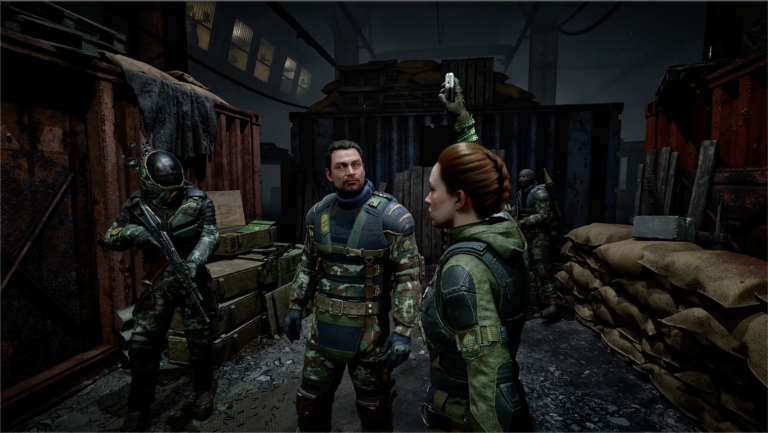
Protagonist Skif receives a PDA signal that pulls him back into the Zone while Heart of Chornobyl‘s main campaign is still in motion — the expansion unfolds in parallel with the base game’s events rather than after them. The story centers on the collapse of the D4 Treaty, a fragile truce between two of the Zone’s oldest and most ideologically opposed factions. Duty holds that the Zone is a contaminated threat requiring total containment and destruction. Freedom holds that it is a frontier to be explored and exploited for humanity’s benefit. The treaty held them apart. Now it has not, and Skif is standing in the middle.
Two characters carry the story. Zulu is a Duty veteran returning from S.T.A.L.K.E.R.: Call of Pripyat (2009), depicted in the expansion’s trailer as weary and disillusioned — a soldier who has come to question whether his own faction’s ideology is the real danger in the Zone. Mavka is a Freedom operative who has been referenced in earlier games but never appeared on-screen; she carries her own agenda through the expansion’s nonlinear storyline alongside Skif’s. The dramatic question the expansion builds toward is not which faction wins the ideological war — it is whether anyone survives the answer. The emotional register is the franchise’s signature: oppressive dread and moral ambiguity under a survival horror framework, now with the weight of a real nuclear plant’s silhouette pressing down from above.
Cost of Hope opens two regions that were locked off throughout the base campaign: the Chornobyl Nuclear Power Plant — the real-world site around which the franchise has orbited since 2007 without letting players enter — and the Iron Forest, a labyrinthine zone where gravity-warping anomalies force a fundamentally different approach to navigation and combat. Both regions include their own hubs, side quests, new weapons, new enemy types, and mutants whose appearance varies based on habitat. According to GSC Game World’s official materials, the campaign runs 10 to 15 hours; the AltChar reviewer finished the main story in 21 hours without touching the side content.
Four new weapons arrive with the expansion — confirmed in the release trailer — and new gear, optics, and armor expand loadout options. A silenced submachine gun variant appears among the new arsenal. Faction choices made during Cost of Hope carry consequences that GSC describes as shaping not just the Zone’s political landscape but something “far beyond it,” signaling that the third and final planned expansion will widen the stakes beyond the Exclusion Zone’s borders.
How Update 2.0 Works — and Why the A-Life Fix Matters More Than the Engine Number
Every owner of S.T.A.L.K.E.R. 2: Heart of Chornobyl received Update 2.0 for free on August 20, whether or not they purchased Cost of Hope.
The headline technical change is the engine upgrade. Heart of Chornobyl shipped in November 2024 on Unreal Engine 5.1 — one of the earliest production-ready iterations of Epic’s fifth-generation engine — which delivered the Zone’s visual character but carried documented instability problems common to early UE5 releases: CPU overhead in large open-world environments, variable frame rates, and performance demands that pushed lower-end PC hardware toward the margins. Prior TechTimes engine upgrade coverage covered this transition in detail when it was announced.
Update 2.0 moves the game to Unreal Engine 5.5.4, skipping three full major iterative releases. Each intermediate version addressed specific problems. UE5.2 introduced the Substrate material system and improved Nanite support for character geometry. UE5.3 added multi-bounce hardware ray-traced reflections — meaning light entering a dark tunnel now bounces realistically off surfaces rather than dying at the first wall — which directly improves the quality of lighting in Heart of Chornobyl‘s underground environments, bunkers, and interiors. UE5.4 introduced Nanite tessellation, which renders fine terrain detail (surface cracks, variation in rubble) at runtime without modifying underlying geometry, and Software Variable Rate Shading via Nanite compute materials, which delivers significant GPU performance gains in geometrically complex outdoor scenes. UE5.5.4 incorporates improvements from Epic’s Great Hitch Hunt initiative — a July 2025 engineering effort targeting the frame-time spikes that occur when players move quickly through dense UE5 environments. The cumulative effect of four versions of Nanite and Lumen improvements applied to a game built on UE5.1 is not cosmetic — it targets the specific visual and performance weaknesses that reviewers documented at Heart of Chornobyl‘s launch.
The more structurally significant change in Update 2.0 is what it does to the Zone’s simulation. A-Life 2.0 — the system designed to govern faction migration, territorial control, and creature behavior across the entire Zone map regardless of where the player is standing — was broken at launch. GSC publicly acknowledged it, citing “aggressive optimization.” The PCGamer A-Life report from November 2024 confirmed the studio’s statements, including the original STALKER programmer Dmitriy Iassenev’s description of the A-Life concept from 2008: that “the characters in the game live their own lives and exist all the time, not only when they are in the player’s field of view.” At launch, the opposite was largely true: NPCs spawned near the player, the world felt scripted and static, and the emergent faction encounters that defined the original trilogy — walking into a firefight between a Duty patrol and a mutant pack you did not trigger — were largely absent.
Patch 1.1 in December 2024 made initial corrections. Patch 1.5 in June 2025 delivered the largest A-Life restoration, with GSC claiming A-Life was “more-or-less back in action.” Update 2.0 extends A-Life further: more locations across the map — campfires, bus stops, points of interest — now host active faction and mutant encounters regardless of player proximity. Stalkers independently loot fallen bodies, meaning the Zone’s economy of weapons and supplies shifts over time without the player’s involvement. Fog now degrades NPC visibility and hearing, making weather conditions alter tactical behavior across the whole Zone rather than only in the player’s vicinity. The persistent bug allowing enemies to shoot through walls has been fixed.
Additional free content in Update 2.0 includes three binocular variants, four new weapons available to all base-game owners (the Arev assault rifle, the GP3A and SKP designated marksman rifles, and the Fora-230 submachine gun), expanded optics, a Custom Rules difficulty system for adjusting individual challenge parameters, a PDA Statistics page tracking cumulative activity, and new Zone Kit modding tools covering narrative scripting, audio, and localization. All of this is confirmed in Sixth Axis Update 2.0 patch notes.
Who Gets Cost of Hope Free, and What It Costs Everyone Else
Cost of Hope is priced at $29.99 as a standalone purchase on PC (Steam, Epic Games Store, and GOG), Xbox Series X|S, and PlayStation 5. In European markets, the expansion is priced at €29.99 (approximately $35 USD at current exchange rates; exchange rate as of August 21, 2026 — conversions are approximate). That pricing is confirmed in WCCFtech’s DLC pricing report.
Players who purchased the Ultimate Edition ($109.99) or a Season Pass receive Cost of Hope at no additional cost. A Season Pass covering both planned story expansions is separately available for players who want to bundle the third expansion as well. GSC is offering an Ultimate Edition bundle at 30 percent off through August 31, per GSC’s own materials — bringing the bundle price to $76.99. (This discount detail is from GSC’s own materials and has not been independently corroborated.)
This is the first S.T.A.L.K.E.R. 2 release to ship simultaneously on all three platforms. The base game launched on PC and Xbox Series X|S in November 2024 before coming to PlayStation 5 a full year later. Cost of Hope breaks that pattern — PS5 owners received it the same day as everyone else.
Practical note for PC players: GSC warns that active mods must be disabled before installing Update 2.0. Players with active mods risk save file corruption. The total install with the expansion and engine update can reach approximately 160 GB; an SSD is mandatory as Heart of Chornobyl does not support installation on a mechanical hard drive. Full storage requirements are detailed in allthings.how’s release date and requirements guide.
Getting Into the Expansion: Save Access and the Two Skip Options
For players with existing saves, Cost of Hope integrates through a PDA signal that arrives during a normal playthrough. The content is divided into two stages: the first activates shortly after leaving the Lesser Zone early in the game, and the second unlocks upon completing the main story mission “A Minor Incident.” Players who have already passed that point will find both stages available immediately, though GSC has built in a four-in-game-hour wait between completing the first stage and accessing the second (this detail appears in GSC’s materials and has not been independently corroborated).
For players who want to reach the new content without replaying the full campaign, a new game menu offers two options. Early Start drops players at the point where the first DLC stage activates, bypassing the opening. Advanced Start skips further — to a point where both stages are immediately available — but requires players to choose a faction alignment (Spark or Ward) to account for the major choices skipped.
Frequently Asked Questions
Is Cost of Hope worth buying now, or should I wait for patches?
Critics say yes — the 85 Metacritic score (13 reviews) and 87 OpenCritic average (88 percent recommending) put Cost of Hope well above the base game’s 77 at launch, and reviewers broadly called it the closest the franchise has felt to its roots in years. The mixed Steam user score (approximately 60 percent positive from 152 day-two reviews) likely reflects technical friction from the simultaneous engine upgrade rather than a fundamental quality issue. The pattern for STALKER 2 is consistent: rocky early reception followed by gradual improvement. Players who tolerate a few rough edges at launch should find the expansion worth the $29.99; those who prefer a polished experience may benefit from waiting through the first patch cycle.
What does Update 2.0 include if I don’t buy Cost of Hope?
The free update delivers a jump from Unreal Engine 5.1 to 5.5.4 — four versions of Nanite virtualized geometry and Lumen global illumination improvements applied in a single update — along with the expanded A-Life AI simulation (more active faction encounters across the full Zone map, NPC body looting, fog affecting enemy vision and hearing), four new weapons added to the base game, three binocular types, a Custom Rules difficulty system, a PDA Statistics page, and the fix for the persistent bug that let enemies shoot through walls. All of this downloads automatically for every owner of Heart of Chornobyl at no additional cost.
Why does Cost of Hope score higher with critics than the base game did?
Critics credit the expansion specifically with restoring the Duty-versus-Freedom faction conflict that was central to the original STALKER trilogy but largely absent from Heart of Chornobyl at launch. The two new regions — the Chornobyl Nuclear Power Plant and the Iron Forest — provide environments reviewers called among the best GSC has ever built. Combined with Update 2.0’s engine improvements and A-Life restoration, the expansion delivers a version of the game closer to what the studio originally promised in 2024. The 85 versus 77 comparison reflects what nearly two years of patches plus a major DLC do to a game that launched with a strong atmospheric foundation but significant technical and simulation shortcomings.
Do I need to finish Heart of Chornobyl to play Cost of Hope?
The expansion requires the base game and integrates into existing saves. The first DLC stage becomes available early in the campaign — shortly after leaving the Lesser Zone — so players do not need to complete the main game to access it. The second stage unlocks after completing the main mission “A Minor Incident,” which is near the end of the base campaign. For players starting fresh, the Early Start and Advanced Start skip options in the new game menu allow direct access to the expansion content without replaying the full campaign, though Advanced Start requires choosing a faction alignment to account for skipped decisions.