Apple’s most consequential iPhone launch in years will arrive on an event stage that belongs, for the first time, to a mechanical engineer. John Ternus — who spent 25 years building every major piece of Apple hardware before succeeding Tim Cook as CEO on September 1 — is expected to introduce the iPhone 18 Pro, iPhone 18 Pro Max, and the company’s first foldable iPhone at a keynote analysts have converged on September 9. Pre-orders are expected to open Saturday, September 12, with devices going on sale Friday, September 18.
But before the event arrives, two developments that Apple’s marketing has not foregrounded deserve to be understood clearly. First, the iPhone 18 Pro’s most significant new hardware — a mechanical camera aperture, a 2-nanometer chip with a completely redesigned transistor architecture, and a confirmed battery capacity increase — is real and substantial. Second, the lineup’s most consequential structural change is not a feature: it is the discovery, confirmed at WWDC 2026, that iOS 27’s most advanced on-device AI capabilities require a minimum of 12 gigabytes of unified memory to run — a threshold that only the Pro, Pro Max, and foldable Ultra will clear this calendar year. Every other iPhone, including the standard iPhone 18 that will not arrive until spring 2027, will ship below that threshold.
Here is what the September lineup actually delivers, and what it does not.
Apple’s First CEO Who Built the Phones He Is Presenting
The September 9 keynote will be the first Apple has delivered under a CEO who is a hardware engineer by training. Ternus graduated from the University of Pennsylvania in 1997 with a degree in mechanical engineering, joined Apple in 2001 as a product designer, and over 25 years oversaw hardware development for every major Apple product line — iPhone, iPad, Mac, Apple Watch, AirPods, and Apple Vision Pro. He led the Apple Silicon transition that moved Macs from Intel processors to Apple’s own chip architecture. He oversaw the development of the A20 Pro chip, the variable aperture camera system, and the iPhone Ultra that he will present from stage in September.
Cook, who announced the transition in April, characterized the choice as a natural continuation of Apple’s internal-promotion tradition. What it signals more concretely is that the hardware era Apple is entering — where on-device AI performance is determined by memory configuration and chip architecture — is being led by someone whose career has been shaped by exactly those engineering decisions.
Apple’s September event falls consistently in the first half of the month, with the announcement typically issued two weeks in advance. The event invitation is therefore expected around August 26.
What the iPhone 18 Pro Actually Delivers
A Camera That Changes How Light Is Controlled, Not Just Processed
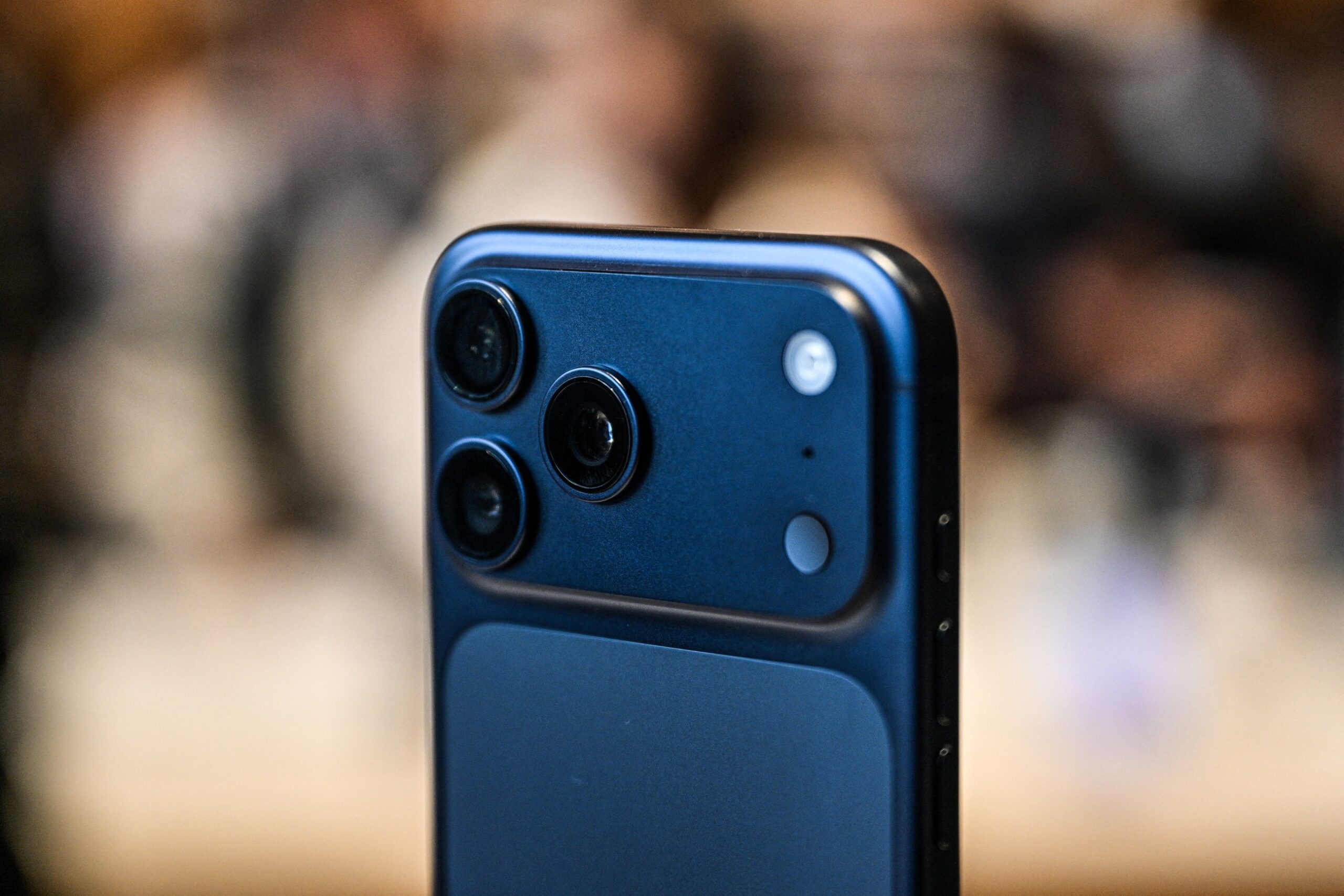
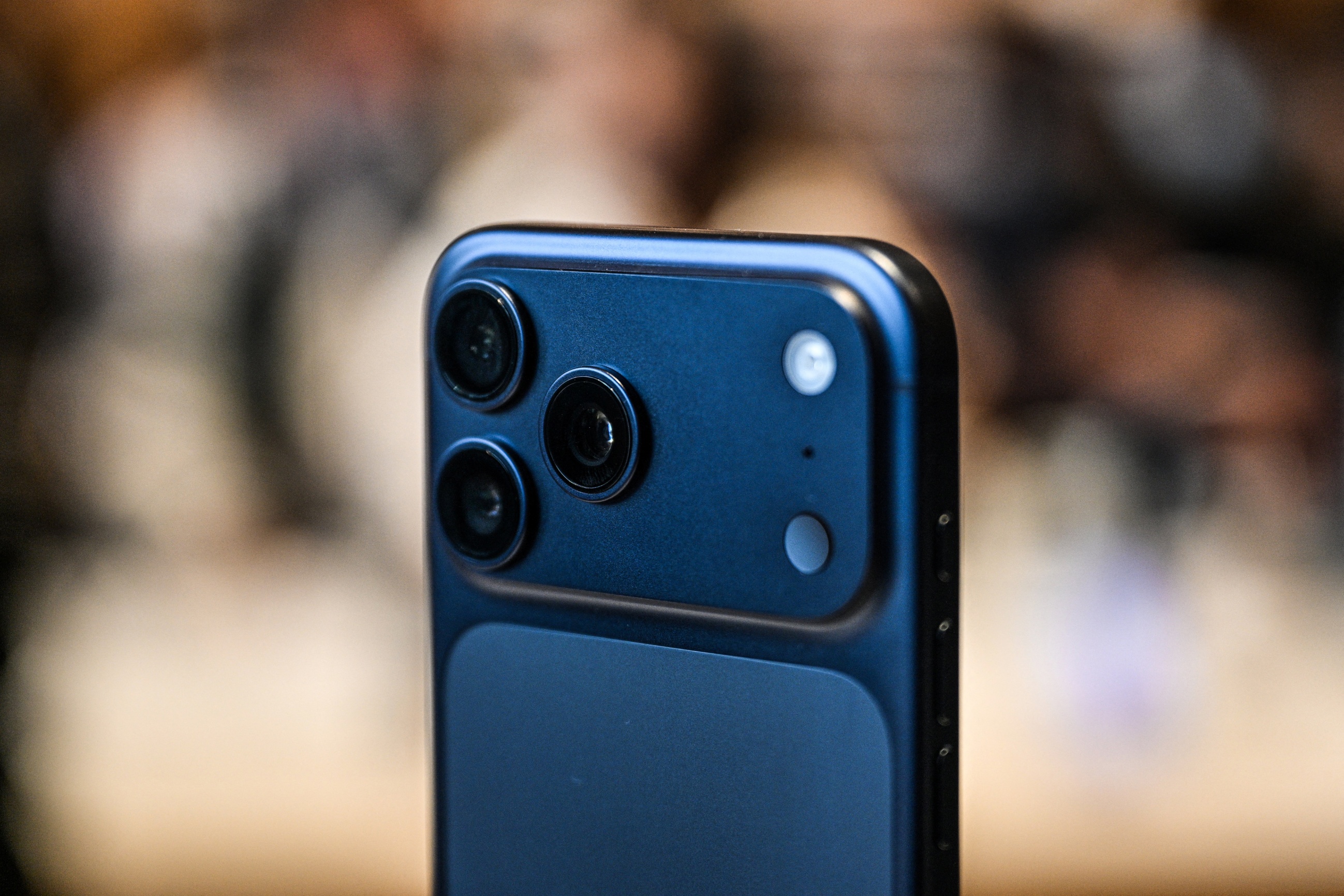
For the first time in iPhone history, the iPhone 18 Pro is expected to ship with a mechanical variable aperture on its main 48-megapixel Fusion camera. Every iPhone Pro model from the iPhone 14 Pro through the iPhone 17 Pro Max has shipped with a fixed f/1.78 lens opening — a single exposure setting that cannot change regardless of lighting conditions. Bright scenes require computational processing to avoid overexposure; shallow depth of field in portrait shots is simulated in software rather than produced optically.
The iPhone 18 Pro’s variable aperture is a multi-blade mechanical iris that physically adjusts the lens opening across a range of approximately f/1.4 to f/2.8 — continuously, not in two discrete steps. Variable aperture has appeared in Android smartphones before: Samsung debuted a two-stop implementation (f/1.5 and f/2.4) on the Galaxy S9 in 2018 but discontinued it by the Galaxy S20 lineup. Huawei’s Mate 50 Pro later offered a broader f/1.4 to f/4 range. Apple’s implementation is expected to offer continuous adjustment, with the primary engineering benefit falling on video rather than still photography: a mechanical iris allows the camera to slow its shutter speed without overexposing the frame, producing natural motion blur for a cinematic look without neutral-density filters or digital workarounds.
The aperture components are manufactured by LG Innotek and Foxconn; actuator mechanisms are supplied by Luxshare ICT and Sunny Optical, per supply chain reporting. Earlier reports suggested this feature might debut exclusively on the Pro Max before rolling out to the full Pro range. More recent supply chain analysis indicates both the Pro and Pro Max are expected to receive the variable aperture at launch, though Apple has not confirmed the configuration.
Additional camera improvements include upgraded telephoto lenses with wider apertures for improved low-light zoom performance, a Sony IMX-905 stacked sensor (replacing the IMX-903 in the iPhone 17 Pro) for improved dynamic range and reduced noise, and an upgraded 24-megapixel front-facing camera, up from 18 megapixels.
The A20 Pro Chip: A New Transistor Architecture and Integrated Memory
The A20 Pro chip powers the iPhone 18 Pro and represents a genuine architectural shift rather than an incremental node shrink. Every Apple processor from the A14 through the A19 Pro used FinFET transistors — a three-dimensional fin-shaped silicon structure with a gate electrode contacting the channel on three sides. At TSMC’s 3-nanometer node, FinFET was approaching its physical limits: fins narrow enough that gates could no longer fully prevent electrical leakage when the transistor is supposed to be switched off.
The A20 Pro is Apple’s first chip built on TSMC’s 2-nanometer N2 process, which replaces FinFET with Gate-All-Around (GAA) nanosheet transistors. Instead of a single fin, GAA nanosheet architecture stacks three to four horizontally oriented silicon ribbons, each only a few atoms thick, with the gate electrode wrapping around all four sides of each ribbon. The additional control surface eliminates the leakage problem that was limiting FinFET at 3nm and significantly reduces standby power drain. TSMC’s N2 process delivers approximately 10–15% faster CPU performance at equal power, or 25–30% more power efficiency at equal speed, compared to the 3nm process. Apple has secured more than half of TSMC’s total 2nm production capacity, making the iPhone 18 Pro the primary commercial deployment of this architecture.
The A20 Pro also uses TSMC’s Wafer-Level Multi-Chip Module (WMCM) packaging, which integrates the processor and its 12 gigabytes of LPDDR5X memory at the wafer level in a single simultaneous fabrication step. Under Apple’s prior packaging approach, memory was attached to a finished chip die in a separate later step. WMCM eliminates that separation, reducing the energy cost of data transfers between processor and memory and increasing bandwidth — the specific properties Apple’s on-device AI models require to run at speed without a cloud connection. The tradeoff is structural: because the DRAM is co-fabricated with the processor, a memory supply shortage now directly gates chip completion rather than only delaying final assembly.
The A20 Pro also introduces Apple’s C2 modem for improved 5G connectivity and expanded satellite capabilities — with an important exception discussed below.
Pro Max battery capacity is confirmed at 5,567 mAh, up from 5,088 mAh on the iPhone 17 Pro Max — an approximately 9.4% increase that compounds with the GAA chip’s efficiency gains. China’s 3C certification database filings have confirmed this figure independently.
What American Buyers Get: A Different Chip
A detail that has appeared in multiple reports as a footnote deserves explicit framing for US readers: the US iPhone 18 Pro is expected to use a Qualcomm modem rather than Apple’s own C2 chip.
The reason is a spectrum compatibility gap. Apple’s C2 modem does not support mmWave 5G — the ultra-high-frequency 5G band (operating at 24–39 GHz) that Verizon (5G UWB) and AT&T (5G+) deploy in dense urban environments for maximum-speed 5G service. Because mmWave is a US carrier standard not deployed internationally, Apple retains Qualcomm’s modem for American models while shipping its own chip everywhere else. The practical consequences for US Pro buyers are two: they will not receive the power-efficiency improvement that comes from Apple’s integrated C2 architecture, where the modem and processor communicate on the same chip stack rather than across a separate data bus; and they are not expected to receive 3GPP Non-Terrestrial Networks (NR-NTN) direct satellite 5G — a capability Apple’s C2 is expected to support for international variants, enabling device-to-satellite broadband connections in areas without carrier coverage. Neither of these differences appears on the product’s retail spec sheet in a way that distinguishes the US model from its international counterpart.
The Apple Intelligence Tier Wall
The most structurally significant fact about the iPhone 18 lineup is not in any spec sheet, and it was not announced as a feature. At WWDC 2026, Apple confirmed that iOS 27’s most advanced on-device AI capabilities — customizable Siri voice expressiveness and significantly improved dictation accuracy — require a minimum of 12 gigabytes of unified memory to run. These features run on-device only; Private Cloud Compute cannot substitute for the missing memory on devices below the threshold.
This creates a permanent split within the iPhone lineup:
The iPhone 18 Pro, iPhone 18 Pro Max, and iPhone Ultra will each ship with 12 gigabytes of RAM — the only new iPhones in 2026 that qualify for the advanced Apple Intelligence tier. Base iPhone 18 models delayed until spring 2027 are expected to ship with 9 gigabytes of RAM, according to supply chain analyst Ming-Chi Kuo. Nine gigabytes is more than the 8 gigabytes in the iPhone 17, and enough for standard Apple Intelligence to run smoothly — but still below the 12-gigabyte floor for the advanced tier.
The consequence for iPhone 17 owners: the iPhone 17 (non-Pro) shipped with 8 gigabytes of RAM, the same capacity standard in iPhones since 2024. That phone qualifies for standard Apple Intelligence — the rebuilt Siri interface, new photo-editing features, and cross-app automation — but not the advanced tier. If you purchased an iPhone 17 expecting to receive Apple’s most capable on-device AI features when iOS 27 shipped, the 12-gigabyte threshold means your phone already misses that bar, and that will not change when iOS 27 releases this fall.
The consequence for buyers deciding whether to wait for the base iPhone 18: that device, when it arrives in spring 2027, will also miss the advanced Apple Intelligence threshold. The only current-year path to 12 gigabytes is a Pro model — and Pro models start at approximately $1,299 this September.
Why the iPhone 18 Pro Costs More
The DRAM Shortage Behind the Price Increase
The iPhone 18 Pro’s expected price increase of $200–$270 over the iPhone 17 Pro’s $1,099 starting price traces to a structural shift in how the semiconductor industry allocates manufacturing capacity. Samsung, SK Hynix, and Micron — three companies that together control more than 90% of global DRAM production — have systematically redirected their manufacturing capacity toward high-bandwidth memory (HBM), the specialized stacked memory chips at the core of every Nvidia AI accelerator. HBM generates three to five times more revenue per manufacturing wafer than the LPDDR5X memory that goes into an iPhone. Every wafer shifted toward HBM removes approximately three conventional DRAM packages from the consumer market.
The scale of the AI investment driving this shift is substantial: Meta, Microsoft, Google, and Amazon combined are spending an estimated $650 billion on data center infrastructure in 2026 alone — nearly triple their combined 2024 figure. The result: 12 gigabytes cost Apple approximately $39 for the iPhone 17 Pro but now costs approximately $145 for the same capacity in the iPhone 18 Pro — a 272% increase for the same quantity of the same chip type, according to TechInsights analysis. Memory costs rose sharply five to seven times since the beginning of 2025, per TrendForce data.
On his July 30 earnings call — his last as CEO — Tim Cook described Apple’s position as being in a “100-year flood on memory pricing.” Intel CEO Lip-Bu Tan told analysts in February 2026 there would be no relief until 2028. No analyst projects meaningful DRAM price relief before 2027 at the earliest, and most major forecasts point to 2028 or later.
IDC’s Nabila Popal projects a $200 increase for the Pro tier, placing the iPhone 18 Pro at approximately $1,299. TechInsights’ margin-preservation model points to approximately $270 more — roughly $1,369. Apple launched Klarna-backed leasing on July 28 starting at $17.99 per month for a 12- or 24-month term. A $200 price increase spread over 24 months adds approximately $8 per month to the monthly payment.
A supply-chain analysis by TrendForce published August 10 found that memory now comprises 34% of the 256-gigabyte iPhone 18 Pro’s total bill of materials — the first time memory costs have exceeded processor costs in iPhone history. A hidden corollary: Apple’s 1TB and 2TB iPhone 18 Pro models are expected to use slower QLC (quad-level cell) NAND flash storage — a cost-reduction measure that brings a real-world performance penalty — while costing significantly more than the 256-gigabyte base configuration.
A class-action lawsuit filed June 25, 2026 in the US District Court for the Northern District of California alleges Samsung, SK Hynix, Micron — which together control roughly 90% of global DRAM supply — coordinated a supply restriction that drove conventional memory prices up approximately 700% over four years, invoking Section 1 of the Sherman Act. Samsung and SK Hynix each pleaded guilty to DRAM price-fixing in 2005, paying fines of $300 million and $185 million respectively. All three companies have denied coordination in the current case, characterizing the HBM shift as an organic market response to genuine AI demand.
Tomorrow’s Senate Deadline and What It Changes
Apple faces a bipartisan Senate deadline tomorrow, August 21, to commit in writing to excluding chips from two Pentagon-designated Chinese military companies — ChangXin Memory Technologies (CXMT) and Yangtze Memory Technologies Co. (YMTC) — from all Apple products worldwide. The letter was signed by senators Banks, Schumer and colleagues Mike Crapo, Jeanne Shaheen, Andy Kim, James Risch, and Pete Ricketts, and sent July 30, after reports Apple tested CXMT DRAM for potential use in iPhones and MacBooks sold in China.
The engineering reality is that whatever Apple tells the senators will not change the shortage affecting September launch supply. CXMT chips cannot meet the performance specifications Apple’s A20 Pro chip requires, and the company declined to offer Apple a pricing discount when approached in summer 2026 — a consequence of a 30%-plus manufacturing cost disadvantage that results from US export controls prohibiting CXMT from purchasing ASML’s extreme-ultraviolet lithography equipment. YMTC is on the Commerce Department’s Entity List, meaning Apple would require an export license to work with it. The senators’ letter raises an additional concern: that component qualification testing may already involve transfer of controlled technical information requiring Commerce Department approval.
Will iPhone 18 Pro Supply Be Tight at Launch?
The WMCM packaging architecture that integrates the A20 Pro’s processor and memory at the wafer level has created an unusual supply situation. Because the DRAM is co-fabricated with the processor, a shortage of LPDDR5X supply directly stalls chip completion — not just final assembly. TSMC holds approximately $1 billion worth of fully fabricated A20 Pro silicon that cannot proceed to packaging because the required LPDDR5X supply has not arrived, according to reporting by Taipei-based journalist Tim Culpan. Ming-Chi Kuo estimated in late June that Apple’s pre-launch chip pull-in volumes for the A20 and A20 Pro would be 10–20% below original targets.
Apple’s assembly partners — primarily BYD and Foxconn — expect to meet initial launch-day demand. But supply sources flagged concern that online pre-order wait times could extend rapidly and that retail store inventory could deplete quickly if the LPDDR5X shortage persists through the weeks after the September announcement. Buyers who want the iPhone 18 Pro on or near launch day should place their pre-orders promptly when they open.
Note: the iPhone 18 Pro Max uses the older InFO chip packaging rather than WMCM, and supply sources suggest it will be more readily available.
iPhone Ultra: Apple’s Foldable, and What It Gives Up
Years of leaks are expected to become a product in September. Apple’s first foldable phone — expected to be named the iPhone Ultra — has been confirmed via internal device identifier (V68) in the battery driver files of iOS 27 beta 5, released August 10. The same identifier appeared in a leaked internal iOS 26 build from December 2025, indicating eight months of stable, concurrent software development.
The device is expected to feature a 5.5-inch (14.0 cm) outer display when closed and a 7.8-inch (19.8 cm) inner display with a 4:3 aspect ratio when unfolded — proportions closer to an iPad than to the tall, narrow format of most Android book-style foldables, optimizing the unfolded screen for productivity and media. iOS 27 beta confirmed dual-battery architecture required by the form factor: two separate cells — one in each chassis half — with capacities of approximately 1,921 mAh and 2,962 mAh, combining to roughly 4,883 mAh total, managed by a power management integrated circuit that balances charge between them.
The iPhone Ultra’s 4.5-millimeter (0.18-inch) unfolded chassis — thinner than any current iPhone — imposes hardware constraints that matter before purchase. At 4.5 mm (0.18 in.) there is insufficient depth for the TrueDepth camera array that Face ID requires (an infrared dot projector, flood illuminator, and IR camera), and a device with two screens would technically require two complete Face ID modules. The result is Touch ID in the power button — the first time Apple’s highest-priced flagship has used fingerprint rather than facial authentication since 2017. The rear camera system includes two 48-megapixel sensors (main and ultrawide), with no telephoto lens. There is no optical zoom beyond digital processing. The A20 Pro chip is expected with 12 gigabytes of LPDDR5X memory, qualifying the Ultra for the advanced Apple Intelligence tier. The chassis uses titanium and aluminum, with liquid metal hinge internally.
Kuo projects 500,000 to 1 million foldable units available in the third quarter of 2026, with broader availability expected in early 2027. Whether the Ultra ships simultaneously with the Pro models or follows weeks later — as the original iPhone X did in 2017 — will be answered at the September 9 keynote.
Bloomberg’s Mark Gurman has reported the iPhone Ultra will exceed a $2,000 starting price. For context, Samsung’s Galaxy Z Fold 8 starts at $1,899, and Google’s Pixel 10 Pro Fold at $1,799.
Design and Colors: What Changes on the Outside
Four years after its debut on the iPhone 14 Pro, the Dynamic Island notch is expected to shrink by approximately 35% on the iPhone 18 Pro and Pro Max, from roughly 20.76 mm (0.82 in.) to approximately 13.5 mm (0.53 in.) in width. Face ID flood illuminator moves beneath the display to enable the reduction, though Apple stops short of a full under-display implementation.
Dark Cherry is the signature color expected for the iPhone 18 Pro — described across multiple supply chain sources as a blend of burgundy, coffee, and deep purple — the successor to Cosmic Orange. Additional options include Light Blue, Dark Gray, and Silver. Cosmic Orange and Deep Blue are expected to be discontinued.
The Camera Control button introduced on the iPhone 16 series will remain on the iPhone 18 Pro, but touch sensitivity and haptic feedback are expected to be removed, leaving only pressure sensitivity. Storage is expected to start at 256 gigabytes, consistent with the iPhone 17 Pro.
The rear glass has been redesigned to reduce the color difference between the glass panel and the aluminum frame — addressing a design criticism of the iPhone 17 Pro’s two-tone appearance.
Spring 2027: What Budget Buyers Are Actually Waiting For
The standard iPhone 18, iPhone 18e, and second-generation iPhone Air 2 are not launching in September. All three push to spring 2027, with March the most commonly cited target from supply chain sources. This is the first time in iPhone history that Apple’s entire base and budget tier has been absent from the fall event.
The practical consequences for buyers on a budget or yearly upgrade cycle: every new iPhone available this holiday season is expected to start at $999 or above. Anyone whose upgrade budget falls below that number has no new iPhone option in 2026 and will need to either purchase a discounted iPhone 17 or wait until spring.
When the standard iPhone 18 does arrive in spring 2027, it will carry 9 gigabytes of RAM — below the 12-gigabyte Apple Intelligence threshold — along with an A20 chip (not A20 Pro), and is expected to be priced in the $799 range. Memory prices are not projected to decline meaningfully before 2027, so the base iPhone 18 will likely carry a higher starting price than the equivalent iPhone 17 at its launch, though the increase will probably be smaller than what Pro models absorb.
The iPhone Air 2, the second generation of Apple’s ultra-thin model, is expected to address the two most criticized omissions from the original: the single rear camera and the short battery life. Bloomberg’s Mark Gurman has reported that the Air 2 will gain a second rear camera for ultrawide photography, along with an upgraded chip, improved battery capacity, and potentially a vapor chamber for better thermal management.
Upgrade Decision Guide
If you own an iPhone 14 Pro or older: The compound advance across three hardware generations — the variable aperture camera, the GAA chip’s efficiency at AI workloads, and the 12-gigabyte memory qualifying for full Apple Intelligence — represents genuine generational progress. The upgrade case is strong.
If you own an iPhone 17 non-Pro (8 gigabytes RAM): Your phone supports standard Apple Intelligence but not the advanced dictation and Siri customization features that require 12 gigabytes. If those specific capabilities matter to your workflow, the only current-year path to them is the iPhone 18 Pro. There is no lower-cost new iPhone this fall that meets the threshold.
If you own an iPhone 15 Pro or 16 Pro (12 gigabytes RAM): You already qualify for the advanced Apple Intelligence tier when iOS 27 ships this fall. The variable aperture camera is the primary new hardware advance unavailable on your current device. Whether it justifies the price increase depends on how frequently you shoot video in conditions where optical exposure control matters.
If you own an iPhone 17 Pro or 17 Pro Max (12 gigabytes RAM): Your phone already meets the advanced Apple Intelligence threshold. The variable aperture camera is the only architectural advance not available via a software update. The Dynamic Island will shrink by approximately 35%, and the color palette changes with Dark Cherry replacing Cosmic Orange. These are incremental improvements rather than architectural shifts.
If you plan to wait for the base iPhone 18 in spring 2027: You will receive a capable phone with a competent A20 chip and 9 gigabytes of RAM — enough for standard Apple Intelligence — at a lower price than any Pro model. You will not receive advanced Apple Intelligence, the variable aperture camera, or the A20 Pro’s co-packaged memory architecture.
Looking Ahead
Beyond the iPhone 18 cycle, Gurman reports camera AirPods are in development — not for capturing photos but for feeding visual context to Siri — expected in late 2027. An upgraded iPad Pro lineup with four models is expected in spring 2027, alongside a redesigned entry-level MacBook Pro. And a special 20th-anniversary iPhone is in development for 2027, reportedly featuring a near-edge-to-edge display with curved glass wrapping around the sides.
Apple has not confirmed any specifications, pricing, or release dates for the iPhone 18 Pro, iPhone 18 Pro Max, or iPhone Ultra. Everything in this article is based on supply chain analyst reports, iOS software code analysis, regulatory filings, earnings call disclosures, and industry analysis — all subject to revision until Apple’s official announcement.
Frequently Asked Questions
Does the iPhone 18 Pro support all Apple Intelligence features that iOS 27 offers?
No — and this is the most important thing to understand before buying. iOS 27’s most advanced on-device AI tier — which includes customizable Siri voice expressiveness and significantly improved dictation accuracy — requires a minimum of 12 gigabytes of unified memory. Only the iPhone 18 Pro, Pro Max, and Ultra ship with 12 gigabytes this calendar year. The standard iPhone 18, arriving spring 2027, is expected to ship with 9 gigabytes — below the threshold. The iPhone 17 (non-Pro) shipped with 8 gigabytes, also below the threshold. Standard Apple Intelligence — the rebuilt Siri interface, photo-editing tools, and cross-app automation — runs on all devices with at least the A17 Pro chip. The advanced tier runs on-device only, and Private Cloud Compute cannot substitute for the missing memory.
What is different between the iPhone 18 Pro sold in the US and the version sold internationally?
US buyers receive a Qualcomm modem rather than Apple’s in-house C2 chip. The C2 does not support the mmWave 5G band Verizon (5G UWB) and AT&T (5G+) deploy in US cities for maximum-speed 5G service, which operates at 24–39 gigahertz and is not used internationally. As a result, US buyers miss the power-efficiency improvement from Apple’s integrated modem-processor architecture, and they are not expected to receive the C2 modem’s satellite capability that international models are expected to receive. This distinction does not appear on the retail spec sheet. Apple has not officially confirmed which modem ships in which market.
Why is the iPhone 18 Pro expected to cost $200 to $270 more than the iPhone 17 Pro?
The price increase traces to a structural reallocation of semiconductor manufacturing capacity. Samsung, SK Hynix, and Micron — which control more than 90% of global DRAM production — have shifted their fabrication lines toward high-bandwidth memory for AI accelerators, which earns three to five times more revenue per manufacturing wafer than the LPDDR5X memory used in smartphones. 12 GB of DRAM cost Apple approximately $39 for the iPhone 17 Pro but now costs approximately $145 — a 272% increase for the same quantity of the same chip. Intel’s CEO put relief at 2028; most analyst forecasts point to 2028 or later. The iPhone 18 Pro will not be the last Apple product affected — the next several generations of iPhones will carry structurally elevated memory costs compared to the pre-AI-buildout era. Chipmakers’ antitrust lawsuit alleges coordinated supply restrictions, though all three companies deny the allegations.
What is the iPhone Ultra’s biggest trade-off compared to an iPhone 18 Pro Max?
Three specific concessions come with the Ultra’s form factor. First, Face ID is absent — the 4.5-millimeter (0.18-inch) unfolded chassis cannot accommodate the TrueDepth camera array, and the device uses a Touch ID power button instead. Second, there is no telephoto camera — the dual-cell battery and engineering constraints of the chassis leave room for only two rear cameras (main and ultrawide), with no optical zoom. Third, supply will be significantly more constrained at launch: Kuo projects 500,000 to 1 million units available in the third quarter of 2026. The Ultra’s advantages are its 7.8-inch (19.8 cm) inner display with 4:3 iPad-like proportions, the dual-battery configuration targeting approximately 4,883 mAh total capacity, and the liquid metal hinge designed for durability. At $2,000 or above, it is a premium over a Pro Max that trades camera versatility and face authentication for a fundamentally different form factor.
Apple has not confirmed specifications, pricing, or release dates for the iPhone 18 Pro, iPhone 18 Pro Max, or iPhone Ultra. All specifications, estimates, and dates in this article are based on supply chain analyst reports, regulatory filings, iOS software analysis, earnings call disclosures, and informed industry reporting — all subject to revision until an official announcement.