August 20, 2026:


The railway that once held the world record for the longest 2-foot narrow-gauge network — built in 1899 for a princely Gwalior maharaja and closed six years ago for conversion — reached another milestone Tuesday when India inaugurated 56 km (35 miles) of new broad-gauge track and extended electric MEMU commuter service all the way to Birpur, placing rail access within reach of more than 100 villages in Madhya Pradesh’s Gwalior-Chambal region for the first time, the Associated News International wire reported.
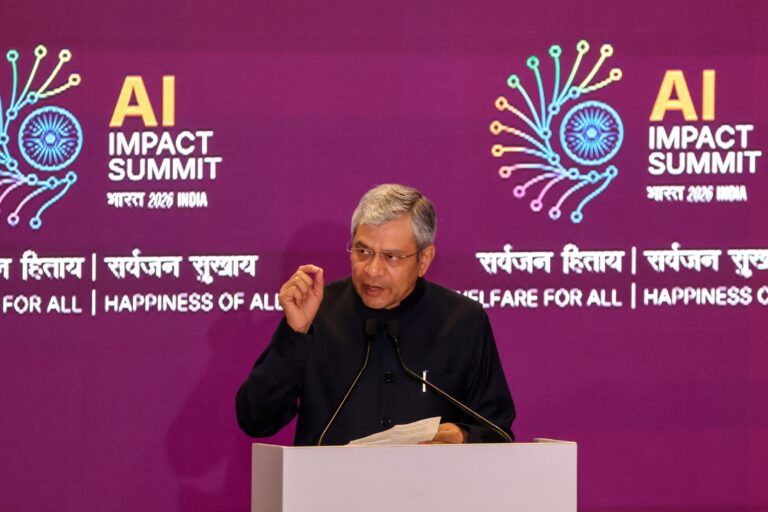
Railway Minister Ashwini Vaishnaw, Union Communications Minister Jyotiraditya Scindia, and Madhya Pradesh Chief Minister Mohan Yadav jointly presided over Tuesday’s virtual ceremony via video conferencing, inaugurating the gauge-converted section under North Central Railway’s Jhansi Division — the Kailaras–Sabalgarh–Birpur stretch — and simultaneously flagging off the extension of the Gwalior–Kailaras Mainline Electric Multiple Unit (MEMU) passenger service all the way to Birpur.
The inauguration completes the most consequential portion of the 117 km (73 miles) Birlanagar–Birpur gauge conversion project. Two remaining sections — Birpur to Seroni Road (37 km / 23 miles) and Seroni Road to Sheopur Kalan (33 km / 21 miles) — are nearing completion, and Vaishnaw expressed confidence that the full Gwalior–Sheopur Kalan line will open for public use within months. Beyond Sheopur Kalan, Indian Railways plans to eventually extend the corridor to Kota, Rajasthan, threading this once-isolated tribal belt into one of Rajasthan’s densest rail networks.
The track that Vaishnaw inaugurated Tuesday traces virtually the same route that Lord Curzon, then Viceroy of India, opened on December 2, 1899, on behalf of Maharaja Madho Rao Scindia of Gwalior State. The Gwalior Light Railway — later renamed the Scindia State Railway in 1942, then absorbed into the Central Railway in 1951 — was a 2-foot (610 mm) narrow-gauge network originally conceived as a low-cost solution to move supplies during famine relief and connect the principality’s districts. By the time it reached Birpur in November 1908 and Sheopur Kalan in June 1909, the GLR stretched 199 km (124 miles) — making it the longest railway of its gauge anywhere on earth, a distinction it held until closure in 2020.
Narrow gauge of 610 mm — roughly 24 inches between the rails — was chosen because it was dramatically cheaper to build than India’s standard 5-foot-6-inch broad gauge. The cost saving came at a permanent operational price: narrow-gauge trains could not interchange with the national broad-gauge network. Passengers traveling beyond the line’s terminals faced a “break of gauge” — they had to physically leave one train, cross a platform, and board another. The GLR remained an operational island disconnected from national rail traffic. Freight moved no faster.
That island status drove India’s gauge unification program Project Unigauge, announced formally in the 1992-93 Railway Budget, which committed Indian Railways to converting all metre-gauge and narrow-gauge lines to the national 1,676 mm (5 ft 6 in) broad-gauge standard. By 2026, 99.6% of India’s broad-gauge network has been electrified, placing the country second globally behind Switzerland and ahead of the United Kingdom, Russia, and China in electrification coverage.
The Gwalior–Sheopur Kalan section was one of the last surviving 2-foot-gauge corridors in India to be converted under this mandate. The GLR’s Gwalior–Bhind and Gwalior–Shivpuri branches were converted to broad gauge in the early 2010s; the final section — Gwalior to Sheopur Kalan — was shut for conversion in 2020.
Work on the Birlanagar–Birpur corridor has proceeded in staged sections since May 2023. The conversion timeline reported at Tuesday’s ceremony:
| Section | Length | Opened |
|---|---|---|
|
Birlanagar – Rayaru |
11 km (7 miles) |
May 2023 |
|
Rayaru – Sumaoli |
22 km (14 miles) |
August 2023 |
|
Sumaoli – Joura |
14 km (9 miles) |
November 2023 |
|
Joura – Kailaras |
14 km (9 miles) |
February 2024 |
|
Kailaras – Sabalgarh |
29 km (18 miles) |
2025 |
|
Sabalgarh – Birpur |
27 km (17 miles) |
August 2026 |
The two sections inaugurated Tuesday — Kailaras to Sabalgarh (29 km / 18 miles) and Sabalgarh to Birpur (27 km / 17 miles) — together add up to the 56 km (35 miles) celebrated at the ceremony.
The practical significance of switching from 610 mm narrow gauge to 1,676 mm broad gauge is not only that wider trains can now run on the track. The broader gauge is the engineering prerequisite for electrifying the line and deploying MEMU rolling stock — and MEMU is what transforms this from a slow rural passenger service into a viable commuter corridor.
MEMU — Mainline Electric Multiple Unit — is Indian Railways’ workhorse for medium-distance routes between 50 and 200 km (31 to 124 miles), introduced in 1993 to serve semi-urban and rural areas that suburban EMU networks do not reach. Each rake draws 25 kV alternating current from overhead catenary wires through a roof-mounted pantograph, routes it through a vacuum circuit breaker and transformer, and converts it via IGBT-based inverters into power for three-phase induction traction motors distributed across the train’s motor coaches — a distributed-power architecture that eliminates the need for a dedicated locomotive. The system brakes regeneratively: when slowing, the traction motors act as generators, feeding energy back into the overhead wire and recovering approximately 28% of traction energy that would otherwise be lost as heat.
Modern MEMUs carry 76 passengers in each motor coach and 108 in each trailer coach, operate at a top speed of 110 km/h (68 mph), and are equipped with GPS-based passenger information systems, CCTV, and smoke detection in roof-mounted HVAC units. None of this was possible on the former narrow-gauge line, which used diesel or steam traction at lower speeds and could not be electrified to Indian Railways’ 25 kV AC standard.
The gauge conversion required far more than replacing rails. Wider track required new sleepers, new ballast work, and widened or rebuilt bridges. Stations had to have their platforms raised and extended for MEMU door heights and train lengths. Then, crucially, the 25 kV overhead catenary infrastructure had to be installed from scratch — absent on the former narrow-gauge route — because without electrification, MEMU cannot run.
Vaishnaw described the 56 km opening as a significant milestone for the Gwalior-Chambal region. He said residents of more than 100 villages across Bamor, Joura, Kailaras, and Sabalgarh tehsils of Morena district, as well as Birpur, Sheopur, and Karahal tehsils of Sheopur district, will benefit directly from the new broad-gauge connectivity.
Scindia — whose ministerial role now covers Communications and North Eastern Region development, and whose family name is inseparable from the railway’s origin (the GLR was built by his ancestor Maharaja Madho Rao Scindia) — called the extension a “historic milestone” and noted that the existing Kailaras section had already been serving approximately 10,000 passengers daily. The Birpur extension substantially widens that reach, connecting towns including Birpur, Vijaypur, and Sabalgarh directly to Gwalior for work, healthcare, and education trips that previously required road travel.
Mohan Yadav pointed to the Gwalior-Chambal region’s emerging economic sectors — battery energy storage, footwear manufacturing, hydrogen production, and tourism — as industries that improved rail connectivity will help scale up. He also highlighted the Indore-Manmad new railway line as a complementary project that will strengthen connections between Gwalior-Chambal and the Malwa plateau.
Vaishnaw cited a figure that captures the acceleration in railway investment across the state: Madhya Pradesh’s railway budget rose 24-fold nominally, from ₹632 crore (approximately $66 million USD) during the 2009–14 period to ₹15,188 crore (approximately $1.59 billion USD) in the 2026–27 financial year. Projects worth ₹1.55 lakh crore (approximately $16.2 billion USD) are currently underway across the state. Eighty stations are under redevelopment, five Vande Bharat train sets and seven Amrit Bharat train sets are operational.
The Gwalior–Birpur route itself is illustrative: it took roughly three years of staged section openings (May 2023 through August 2026) to convert 117 km (73 miles) from 2-foot narrow gauge to electrified broad gauge — a pace of around 35–40 km (21–25 miles) per year, consistent with the accelerated project delivery Indian Railways has cited in recent budget documents.
Two final sections remain before the Gwalior–Sheopur Kalan line is complete: the 37 km (23 miles) segment from Birpur to Seroni Road, and the 33 km (21 miles) segment from Seroni Road to Sheopur Kalan. Vaishnaw said both are nearing completion and expressed hope that the full corridor will open within months. Once complete, Sheopur Kalan — a district headquarter in the tribal belt — will have direct MEMU service to Gwalior for the first time since the narrow-gauge line was shuttered in 2020. The long-term vision, extending the line to Kota in Rajasthan, remains a planning-stage goal that would ultimately give this corridor a through-route connecting the Chambal region to major educational and industrial centers in Rajasthan.
Exchange rate as of August 19, 2026; conversions are approximate.
The Gwalior Light Railway (GLR), built in 1899 for the princely Gwalior State by Maharaja Madho Rao Scindia, was a 2-foot (610 mm) narrow-gauge railway network that eventually reached 199 km (124 miles) in total length — making it the world’s longest railway of its gauge until it was closed for conversion in 2020. Because its track was far narrower than India’s national broad-gauge standard, passengers and freight could not travel directly through to national rail stations; they had to change trains at the gauge break. The conversion now under way eliminates that barrier entirely.
MEMU stands for Mainline Electric Multiple Unit — Indian Railways’ standard electric train for medium-distance rural and semi-urban routes. MEMUs draw 25,000-volt alternating current from overhead wires and use IGBT-based three-phase traction motors distributed across each coach, meaning no separate locomotive is needed. Because the system runs on 25 kV AC overhead catenary, it requires an electrified broad-gauge (1,676 mm) track — the same standard used across India’s national network. The narrow-gauge (610 mm) track of the former Gwalior Light Railway could not carry this overhead infrastructure or accommodate MEMU rolling stock, which is why gauge conversion was the necessary prerequisite before MEMU service could begin on the Gwalior–Birpur corridor.
Yes, in the sense that the physical narrow-gauge track no longer exists on the converted sections. The railway’s cultural and historical significance — including its princely-state origins and its world-record gauge status — is preserved only in documentation and memory, not in active operations. India retains a handful of narrow-gauge heritage railways (Darjeeling Himalayan Railway, Nilgiri Mountain Railway, Matheran Hill Railway) that are protected as UNESCO World Heritage sites or tourist attractions, but the Gwalior Light Railway’s closure and conversion means it will not be preserved in that way. The trade-off Indian Railways made is that broad-gauge connectivity and MEMU service for over 100 villages outweighs preservation of the gauge itself.
Railway Minister Vaishnaw, speaking at Tuesday’s inauguration, said the two remaining sections — Birpur to Seroni Road (37 km / 23 miles) and Seroni Road to Sheopur Kalan (33 km / 21 miles) — are nearing completion, and he expressed hope that the full Gwalior–Sheopur Kalan corridor will open within the coming months. No specific date was announced. Beyond Sheopur Kalan, an eventual extension to Kota, Rajasthan, remains a longer-term planning goal without a committed timeline.