HomeAuto Sekiro No Defeat Reveals Its Bioethics Core: One Child Survived What Killed All Others
Sekiro No Defeat Reveals Its Bioethics Core: One Child Survived What Killed All Others
August 19, 2026:
Crunchyroll.com
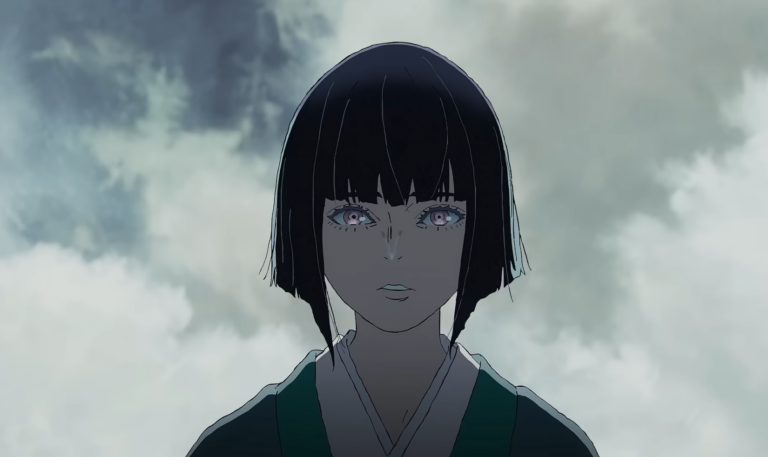
The Sekiro: No Defeat production committee released a character promo today spotlighting The Divine Child of Rejuvenation — voiced by Risa Shimizu, reprising her role from the original 2019 FromSoftware game, as The Fandom Post confirmed August 18. That promo, brief as character reveals before a theatrical premiere tend to be, announces something specific: seventeen days before the anime’s September 4, 2026, Japanese theatrical debut, studio Qzil.la has surfaced the character whose existence is the most morally and scientifically loaded in the entire story. Kajo — also known as the Divine Child of Rejuvenation (変若の御子, Henjakuno Miko) — is not simply one of Sekiro’s central figures. She is the sole documented “success” of a research program that killed an unknown number of children, and everything the anime does with her story will be measured against whether it confronts that origin honestly.
The scholars and scientists who debate the ethics of longevity research in 2026 have not played Sekiro: Shadows Die Twice. They would recognize the Senpou Temple experiments regardless.
What Kajo Actually Is, and Why Her Origin Is the Story’s Hardest Fact
The monks of Senpou Temple on Mount Kongō began as practitioners of Shogyo Mujo (諸行無常), the foundational Buddhist doctrine that all phenomena are impermanent and that clinging to the permanent produces suffering. As the Routledge Encyclopedia of Philosophy explains, the doctrine is one of Buddhism’s Three Dharma Seals, articulated as early as the Kamakura period’s The Tale of the Heike — the epic whose famous opening passage established mujo as a defining aesthetic principle of Japanese literature. As the New World Encyclopedia records, that opening passage reads: “The sound of the Gion Shoja bells echoes the impermanence of all things; the color of the sala flowers reveals the truth that the prosperous must decline.”
The monks abandoned this doctrine when they discovered the Rejuvenating Waters: a diluted form of the Dragon’s Heritage, the blood-carried resurrection capacity of the Divine Dragon, pooling in the lower reaches of Ashina. They chose permanence over impermanence. The lore analysis source Allmind Lore confirms what the game encodes in item descriptions and environmental detail: the monks then subjected an unspecified number of children to water-based immortality experiments, attempting to create an “artificial divine vessel” that would carry true Dragon’s Heritage without the underlying biological lineage. As Allmind Lore’s analysis of Memory 10 documents, most children died or were transformed into grotesque forms. The red and white pinwheels lining the temple path are a memorial — the red representing blood, the white representing innocence — to children who left no other record.
Kajo is the one who did not die. She is the successful outcome.
That framing — “successful outcome” — is precisely where contemporary bioethics researchers locate the hardest problem in longevity science. A 2026 Springer chapter on applied bioethics in longevity medicine notes that the field faces urgent ethical tensions including “research inequities” and what it terms fatal regulatory arbitrage in medical tourism, calling for “chrono-equity” — prioritizing marginalized populations in public funding for life extension research rather than concentrating benefits in those who can already afford them. The AMA Journal of Ethics has separately examined how life extension research forces reconsideration of who absorbs the cost when clinical programs produce one usable result atop a documented trail of failures. The Senpou Temple experiments are not metaphorical on this axis. They are structurally identical: one beneficiary, uncounted failures, the beneficiary’s survival presented as proof of concept.
Does “False Dragon’s Heritage” Map onto Real Epigenetic Science?
The game’s lore describes Kajo not as a true bearer of the Dragon’s Heritage but as an “artificial divine vessel” — a body that carries heritage-like properties without the underlying genetic lineage that produces them naturally in Kuro, the Divine Heir. This is an unusual precision for a FromSoftware game, and it maps with surprising accuracy onto one of the most active research areas in cell biology: epigenetic reprogramming.
In 2006, Takahashi and Yamanaka demonstrated that introducing four transcription factors — Oct4, Sox2, Klf4, and c-Myc, collectively known as OSKM — into adult cells could reset their epigenetic state, generating induced pluripotent stem cells that behaved as if they were embryonic. The discovery won the Nobel Prize in Physiology or Medicine in 2012. Its practical implication for aging research came later: a 2016 paper by Juan Carlos Izpisua Belmonte’s laboratory at what is now the Altos Lab showed that cyclic, partial expression of OSKM — turning the factors on and off in controlled cycles rather than holding them permanently active — could reverse aging hallmarks in mice without triggering the catastrophic dedifferentiation (and tumor formation) that permanent OSKM expression causes. Partial reprogramming reduces epigenetic age without altering the cell’s underlying DNA sequence.
This is the “false heritage” problem made biological. Kajo’s body carries epigenetically reset properties — the cellular behavior of a true Divine Heir — without the foundational genomic sequence that Kuro carries from birth. OSKM-treated cells behave younger than their genomes; a cell that has been partially reprogrammed carries the functional signature of youth without having been born with it. The Senpou monks engineered exactly this: induced heritage-like properties in a child who lacked the underlying lineage. Current research consistently observes that imperfect partial reprogramming generates genomic instability; the game’s Infested — immortal entities whose bodies cannot die but cannot function — are unstable partial reprogramming failures given a monster’s body and a centipede.
Why Do the Monks Become Centipede-Bearing Monsters? Cellular Senescence Made Visible
The Senpou monks who consumed the Rejuvenating Waters without restraint did not simply fail to achieve immortality. They achieved immortality and became catastrophic — bodies that cannot die, secreting parasitic centipedes that emerge from their wounds and infest others.
This is cellular senescence given flesh. According to Wikipedia on cellular senescence, this is the biological state in which cells stop dividing but do not undergo apoptosis (programmed cell death). Instead, they remain in tissue and secrete what researchers call the Senescence-Associated Secretory Phenotype (SASP): pro-inflammatory cytokines including Interleukin-6 and Interleukin-8, chemokines, and growth factors that chronically damage the surrounding tissue. A 2026 Mayo Clinic explainer on senescent zombie cells describes how these cells linger and release inflammatory molecules that compromise nearby healthy tissue — a dynamic where biological immortality becomes a mechanism of slow, ambient destruction. Senescent cells are functionally immortal — they resist apoptosis, they do not divide, they remain — and they poison what surrounds them.
The Allmind Lore analysis of Sekiro’s lore confirms this framing explicitly: the game identifies the Infested state as “a physical stagnation (putrefaction) unaccompanied by the salvation of the soul” — a descent into what Buddhism identifies as the Hungry Ghost Realm (餓鬼道, Gakidō): beings with distended bellies and tiny mouths, driven by insatiable greed, unable to be satisfied by anything they consume, eternally persistent and eternally tormented. As the Stanford Encyclopedia on Buddhist ethics explains, hungry ghosts pursue sustenance endlessly but find that whatever they manage to swallow turns to filth or fire. The monks who became the Infested are senescent cells given the shape of men: alive, persistent, corrupting, and incapable of the satisfaction that would make their existence livable.
The ecological dimension completes the model. The Rejuvenating Waters grant life and renewal when they flow fresh from Fountainhead Palace. When they pool and stagnate in the lower reaches of Ashina, they corrupt every organism that consumes them. This is eutrophication made mythological: the same nutrients that support life in a flowing system become toxins when the system stagnates — an overabundance that chokes what it was supposed to feed.
What the Senpou Temple Experiments Tell Real Scientists About Longevity Research Ethics
The bioethics of longevity research is a live scholarly debate, not a settled question. Transhumanist scholars, most prominently Nick Bostrom, argue that life extension is morally imperative — that failing to pursue it is allowing preventable deaths. Opposing this position, scholars focused on global health equity argue that life extension research concentrates benefits in wealthy populations while ignoring the health crises affecting the majority of the world — what Paul Farmer has called bioethics from below versus the dominant “first-world bioethics.”
The Senpou Temple experiments occupy the same structural position as the experiments that these debates concern. The monks achieved one successful outcome (Kajo) at an uncounted cost (the unnamed children who died). The successful outcome was isolated, maintained in a controlled environment (the Inner Sanctum), and made custodian of the tool that can sever immortality (the Mortal Blade). She is, in bioethical terms, the beneficiary of a trial whose participants had no meaningful consent, who were selected by vulnerability rather than by informed agreement, and whose failures were memorialized only by pinwheels rather than by documentation. The game does not argue that Kajo is morally responsible for her origin. It argues that her existence requires confronting what produced it.
The monks’ failure was doubly philosophical: they abandoned Shogyo Mujo — the doctrine that impermanence is the condition of all existence — in pursuit of permanence, and they achieved permanent bodies that are themselves impermanent in the only way that matters, because biological immortality without its associated soul is the Hungry Ghost Realm. The Routledge Encyclopedia of Philosophy’s entry on mujo observes that by clinging to what is transient and mutable in pursuit of lasting satisfaction, human beings produce suffering — the unsatisfactory nature of ordinary, unenlightened existence. The monks secured the bodies. They lost everything else.
Director Hidetaka Miyazaki noted in pre-release interviews for the 2019 game that Japanese mythology functions as a structural shadow behind the game’s world — that his central concern was with how the Japanese tradition of physical immortality arises from and ultimately violates Buddhist cosmological order. The anime adaptation, directed by Kenichi Kutsuna at studio Qzil.la (which formally committed on August 22, 2025, that no AI would be used in the series), now carries this thematic architecture to a theatrical audience seventeen days from the September 4 premiere.
How Does the Anime Tell Kajo’s Story Without Telling It?
The Divine Child’s role in Sekiro’s possible endings is documented in the game’s publicly available lore — her participation in the “Return” (Dragon’s Homecoming) ending is the game’s most narratively complete resolution, though which ending the anime will adapt remains genuinely unknown until the production airs. The anime’s marketing has been careful: the character promo released today confirms her presence and Shimizu’s performance without specifying her narrative arc. That restraint is appropriate. Kajo’s most significant function in the story is not what she does in any particular ending but what she represents in any telling of this world: the evidence that the experiment was conducted, the proof that it failed in a way that one person survived.
For a theatrical production — particularly one selected for Annecy International Animated Film Festival’s Midnight Specials program, which the festival describes as reserved for more radical and experimental animation that blends satire, experimentation, and high-octane thrills — the question is whether the production can hold the moral weight of her origin without either sentimentalizing it or avoiding it. The Genichiro Ashina character promo released August 4 showed a production committed to inhabiting emotional territory the game could not reach. The Kajo promo asks the same question from the other direction: not what a villain chose but what a survivor is owed.
When Will Sekiro: No Defeat Be Available on Crunchyroll?
Sekiro: No Defeat will open in Japanese theaters on September 4, 2026, for a limited three-week theatrical run. After the theatrical window closes, Crunchyroll’s worldwide exclusive streaming rights cover global distribution — excluding Japan, China, Korea, Russia, and Belarus — with no specific streaming date yet announced per Anime News Network. Based on the three-week theatrical window, the earliest plausible international streaming date is late September to early October 2026. The Crunchyroll exclusive was announced at Gamescom Opening Night Live in August 2025.
Frequently Asked Questions
Who is Risa Shimizu, and what is her role in Sekiro: No Defeat?
Risa Shimizu voiced The Divine Child of Rejuvenation (変若の御子, Kajo) in FromSoftware’s 2019 game Sekiro: Shadows Die Twice and is confirmed to be reprising the role in the anime adaptation, as The Fandom Post reported August 18. Kajo is the sole survivor of human experimentation conducted by the monks of Senpou Temple, who attempted to artificially replicate the Dragon’s Heritage bloodline’s resurrection capacity by subjecting children to the Rejuvenating Waters. She is the custodian of the Mortal Blade and a central figure in the game’s most complete ending.
What is the Divine Child of Rejuvenation’s connection to real cell biology?
Kajo’s biological situation maps closely onto the concept of epigenetic reprogramming with OSKM (Yamanaka) factors — a real research area in which cells have their epigenetic state reset without their underlying DNA sequence being altered, creating “induced” youthful properties that mimic but do not replace genuine developmental genetics. The landmark study establishing cyclic partial OSKM reprogramming was published in Cell in 2016 by the Belmonte laboratory. The monks induced heritage-like properties in a child without her carrying the foundational genomic lineage — precisely what partial OSKM reprogramming does in the laboratory, and precisely what makes it unstable: the game’s Infested monks correspond to cells whose partial reprogramming failed catastrophically, generating immortal but dysfunctional biological entities that damage their environment by secreting inflammatory signals, which is exactly what senescent zombie cells do through the Senescence-Associated Secretory Phenotype (SASP).
Why does the anime include Buddhist philosophy in a story about immortality?
The Senpou monks in Sekiro were originally devoted to Shogyo Mujo (諸行無常), the Buddhist doctrine that all phenomena are impermanent and that clinging to permanence produces suffering — one of Buddhism’s Three Dharma Seals, as documented by the Routledge Encyclopedia of Philosophy. Their corruption began when they abandoned this doctrine in pursuit of bodily immortality. The game frames their resulting state — grotesque immortal bodies housing parasitic centipedes, unable to die and unable to find peace — as a descent into the Hungry Ghost Realm (餓鬼道), the Buddhist cosmological state of insatiable beings driven by greed who cannot be satisfied by anything they consume, as described in the Stanford Encyclopedia of Philosophy’s entry on Indian Buddhist ethics. By framing physical immortality as spiritual failure using the monks’ own philosophical tradition as the standard, the story avoids a generic “immortality is bad” moral and produces something more specific: immortality pursued at the cost of the doctrine that gave your existence meaning is its own punishment.
Is the Sekiro anime using AI in its production?
No, according to the formal statement issued by Qzil.la and the production committee on August 22, 2025, as Siliconera reported at the time. The statement confirmed the adaptation is produced entirely through hand-drawn 2D animation with no AI involvement at any stage. The statement was specifically significant because Qzil.la had previously described itself publicly as an AI-forward studio and had used AI-generated animation in at least one prior production. The “fully hand-drawn” commitment for Sekiro: No Defeat was made explicit as a distinct stance, and the studio subsequently removed direct AI references from its website.