


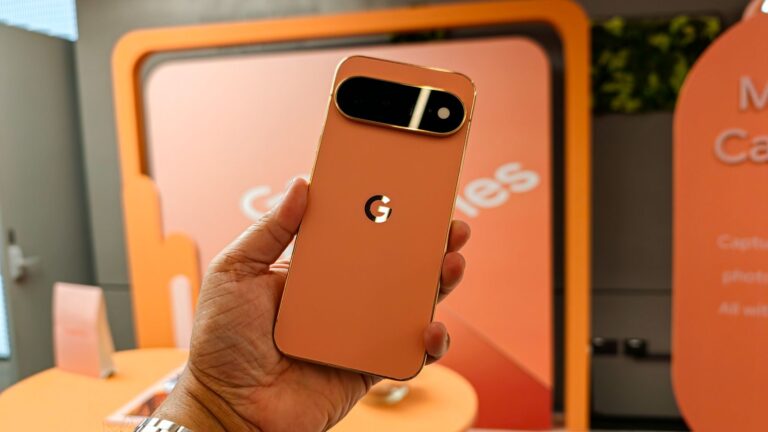
Google’s Tensor designs have been underwhelming to say the least. Unlike Qualcomm and MediaTek, Google prioritizes the TPU, so you don’t quite get the same level of performance as other high-end mobile platforms. This has been a constant source of annoyance over the last four years, and while Pixels aren’t necessarily slow by any measure, they don’t handle extended gaming or any sustained intensive workload — like shooting a 30-minute 4K video — all that well.
Thankfully, there’s a lot to like in the Tensor G6 that’s powering the Pixel 11, Pixel 11 Pro, 11 Pro XL, and the 11 Pro Fold; it addresses a lot of the lingering issues with Google’s hardware efforts. I’ll share detailed benchmarks of the Tensor G6 in a little while, but ahead of that, I want to talk about what’s new with the underlying hardware this year, and why the G6 is a better choice than previous generations.
The Tensor G6 does a much better job in everyday tasks

There are two things with the Tensor G6 that make it stand out: a switch to Arm’s latest mobile cores, and a new MediaTek modem. I’ll start with the latter; if you’ve used a Pixel in the past, you would’ve noticed intermittent connectivity issues.
Latest Videos FromAndroid Central
Google went with a Samsung modem in previous years, and the kindest thing I can say about it is that it didn’t consume too much power. It wasn’t anywhere close to what Qualcomm and MediaTek were offering when it came to connectivity, so I’m glad to see Google making the move to a MediaTek modem this year — this in itself should resolve a lot of the hardware bugbears that plagued Pixels. Google doesn’t mention the MediaTek modem, only stating that Pixel 11 devices include “the most power-efficient modem ever on a Google Pixel, delivering a reliable connection and strong signal reception.”
The other part is the new cores; Google went with Arm’s latest C1-Ultra and C1-Pro this generation. But unlike the traditional eight-core design, Google is using seven cores in total, and that’s something we usually only see with foldables. It could be that the additional space is utilized by the TPU.
Still, Google says the Tensor G6 is 25% faster at browsing and delivers up to 20% better power efficiency against last year’s G5. That’s encouraging, and it should mean the Pixel 11 models have increased fluidity in daily use. I’ll share findings after testing the phones, but it’s good to see the G6 isn’t hobbled in this area.
|
Category |
Google Tensor G6 |
Google Tensor G5 |
|
CPU |
1x Arm C1-Ultra |
1x Arm Cortex-X4 (3.78GHz) |
|
GPU |
PowerVR CXTP-48-1536 |
PowerVR DXT-48-1536 |
|
Memory |
LPDDR5X |
LPDDR5X |
|
TPU |
5th-gen Tensor Processing Unit |
4th-gen Tensor Processing Unit |
|
Security Co-processor |
Titan M3 |
Titan M2 |
|
Modem |
MediaTek M90 |
Samsung Exynos 5400 |
|
Process Node |
TSMC 3nm |
TSMC 3nm |
Other positives include a dedicated Titan M3 security module, and a new vapor chamber that should ensure the phones don’t overheat. The only annoyance is that this cooling tech is limited to Pro models, so the standard Pixel 11 misses out in this regard.
While earlier leaks pointed to Google using a new 2nm node — which would drive efficiency gains — that isn’t the case. The Tensor G6 is still using the same 3nm node as the rest of the industry, so there isn’t anything different in how it is fabricated.
But it still isn’t ideal for gaming
Now, where things get interesting is with the GPU. Google is using a PowerVR CXTP this year, and it isn’t likely to deliver much in the way of gains over the Tensor G5. This is annoying, as it means another year where Pixels don’t quite measure up when it comes to high-end gaming.
There are plenty of high-quality ports available on Android, and Play Pass has a decent selection of titles you can install and play. The biggest issue with Pixels is sustained gaming; with aggressive throttling and thermal limits, you’ll notice jitter a lot sooner than other phones, and this was the case on the Pixel 10 Pro XL even with a new thermal management system. I will be testing the G6 to see if there’s a difference on the Pixel 11 Pro XL, but based on the hardware at least, it’s unlikely that things have changed this year.
Google built one of the best AI-focused mobile platforms

Where the Tensor G6 has its best gains is the TPU. Google notes that it has a 50% more powerful TPU, and it’s able to drive everything from Gemini Intelligence, the new Instant Night Sight camera mode and 120x zoom on the Pro models, and Live Translate.
Google is all-in on AI, and its phones reflect that. The new Gemini Nano model combined with the extensive suite of software features make the Pixel 11 models stand out when it comes to on-device AI, and it’s clear that this is where the brand sees real differentiation.
I really wanted Google to use a 2nm node and deliver better sustained gaming, but it looks like we’ll need to wait another generation before we get the same. As it stands, the Tensor G6 does enough against its predecessors, and while it may not be quite as powerful as Qualcomm and MediaTek rivals, it is a better sight than the G5 and G4.

Of the four new models, the Pixel 11 Pro XL is the one I’d buy. The new Canyon color looks exquisite, it takes better photos and videos, and the Tensor G6 is at its best in the device.