What to Know About the E.U.’s New Biometric Entry System That’s Caused Chaos at Airports

August 12, 2026:

What to Know About the E.U.’s New Biometric Entry System That’s Caused Chaos at Airports

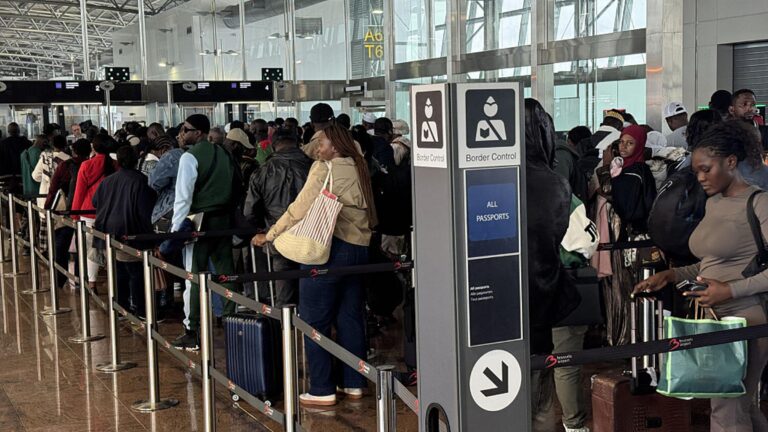
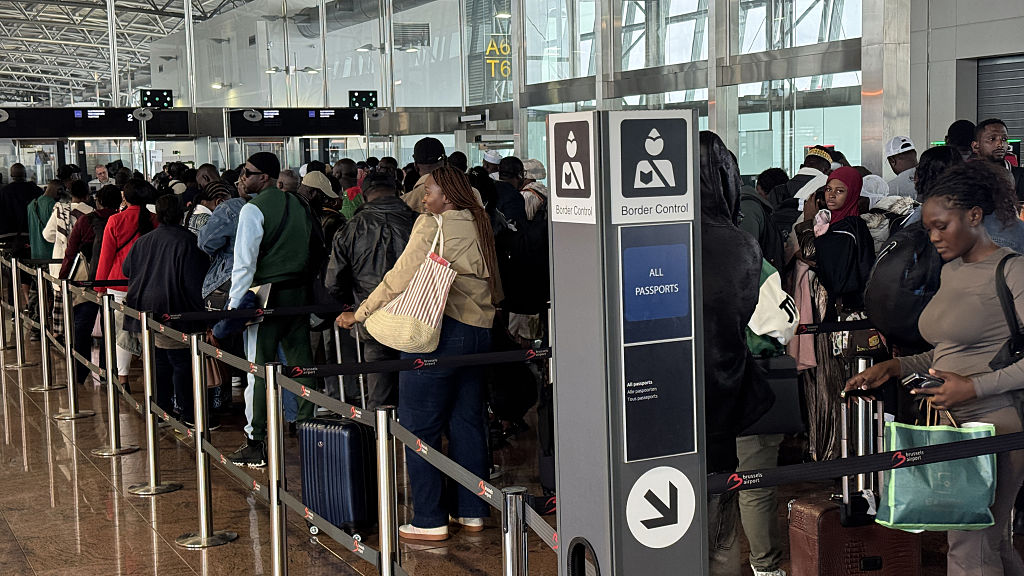
Passengers face long queues at passport control in Brussels Airport, Belgium, on May 20, 2026. —Dursun Aydemir—Anadolu/Getty Images

The European Union’s new mandatory digital entry system could complicate your “Euro Summer” plans.

Twenty-nine European countries, including France, Spain, and Greece, have implemented the entry-exit system (EES) that replaces manual passport stamping with biometric checks. The system was intended to speed up immigration processes for non-E.U. travelers entering the Schengen Area for short stays.

But the system, which began a phased rollout in October before taking full effect on April 10, has led to long queues and delays, especially in high-tourist destinations. Some border authorities have even opted to turn off the system entirely and return to manual passport checks during peak processing times.

The E.U. said such growing pains are expected in the beginning, but promised that over time, the system should reduce wait times and allow for more accurate tracking of traveler data. The EES was first adopted in 2017, but was repeatedly delayed because of the COVID-19 pandemic and technical challenges in implementing a central E.U. database with national border systems.

Here’s what to know about the system.

What is the new system?

Manual passport stamps are no longer necessary as part of the EES. Instead, biometric data and passport details will be collected at border crossings.

Upon their first visit into the Schengen Area since the EES rollout, non-E.U. short-stay travelers will typically have to undergo a fingerprint scan, facial image capture, and the collection of passport data.

For returning travelers, border guards can verify their stored biometrics, which would theoretically allow for faster processing.

Some airports may also have automated kiosks and mobile apps allowing travelers to pre-register their details. Travelers with biometric passports may also be able to use self-service systems for verification.

Traveler data will typically be stored for three years after their last entry or exit. The EES automatically calculates a traveler’s stay duration. Non E.U. travelers, including those from visa-exempt countries like the U.S. and those on short-stay visas, are allowed to visit Schengen Area countries for a maximum of 90 days per 180-day period. The system keeps track of whether travelers exceed that limit.

Travelers who exceed their authorized stay will automatically be flagged to immigration authorities. Overstayers could face penalties under national law, including warnings, fines, detention, and future entry restrictions. Traveler data will be stored for five years for those who overstay.

Travelers that refuse to provide biometric data will be denied entry, according to the E.U.

The EES is meant to work in conjunction with ETIAS, a pre-authorization system that has yet to be rolled out. ETIAS works similarly to the U.S. ESTA program. People from visa-free countries intending to travel to the Schengen Area would need to submit information including passport details and travel plans online before entering. ETIAS was meant to go into effect in 2024 but has been delayed. No launch date has been announced.

Why has it been changed?

The E.U. introduced the EES to “modernize” the management of its borders and keep a more accurate record of travel by non-E.U. visitors, the bloc said. The electronic record system is meant to help border authorities identify people who overstay.

The system is also meant to enhance security. The E.U. said it has made it easier to detect identity fraud by checking travelers’ fingerprints and facial images against stored biometrics. As of mid-April, more than 32,000 people were refused entry through the system and nearly 800 people were identified as posing a security risk, the bloc said.

The E.U. has also touted the system as improving efficiency and reducing border wait times by reducing the need for manual passport stamping, although its introduction has created initial delays. More than 160 million border crossings have been registered using the system so far, the Financial Times reported. 

How does this compare with other entry systems?

Many countries around the world have transitioned to similar electronic entry systems. The U.S. electronically records foreign visitors’ arrivals and departures through its I-94 system. It also uses facial recognition technology at many border crossings.

Several countries in Asia also have robust biometric checks at their borders. Singapore enrolls first-time visitors’ facial, iris, and fingerprint biometrics. On subsequent entries and departures, visitors can use automated biometric clearance. The country also maintains electronic immigration records and has eliminated passport stamps.

Australia, New Zealand, Japan, South Korea, and the U.K. also use both electronic travel records and biometric checks at passport control. 

But the EES is unusual in its scale. The system shares its records across 29 European countries. A traveler who enters through France and leaves through Italy, for example, has both movements recorded in one system.

What’s with the hold up?

Despite its goal of making border control more efficient, the initial rollout of the new system has led to delays at a number of European airports.

Days after the full implementation of the EES in April, airport lobby ACI Europe told Politico that queues at airports in 15 countries averaged two to three hours or longer during peak periods. As travel to Europe has increased over the summer months, travelers have seen persistent and at times worsened delays in many of the most heavily touristed countries. In an open letter published July 1, ACI Europe and two other associations said waiting times reached five hours during peak periods. Some airlines and passengers have even reported missed flights as a result of EES delays.

Critics have argued that many airports were not sufficiently prepared for the switch in systems. The E.U. previously said registration in the system should take 70 seconds. But reports suggest initial enrollment takes longer, and has been slowed down by malfunctioning equipment, technical bugs, insufficient personnel, and inconsistent implementation across crossings.

Several airports including in Paris and Amsterdam have temporarily switched off biometric collection and resorted to manual processing as a result of queues. The European Commission allowed border authorities at congested crossings to temporarily suspend otherwise mandatory biometric collection until Sept. 6. Nine European countries—Belgium, France, Germany, Greece, Italy, Malta, the Netherlands, Portugal, and Switzerland—have called for the waiver to continue beyond then. Airports and airlines have also called for more flexibility to suspend checks, as well as for staffing and technology issues to be addressed.

Some airport executives have called for the system to be redesigned, arguing that a border system that must be suspended during peak periods is not operationally ready.

The E.U. has rejected calls to suspend the system entirely, arguing that it could create incomplete entry and exit records. The Commission said it is working with national authorities to address technical problems and provide more border personnel where needed.

Source link