


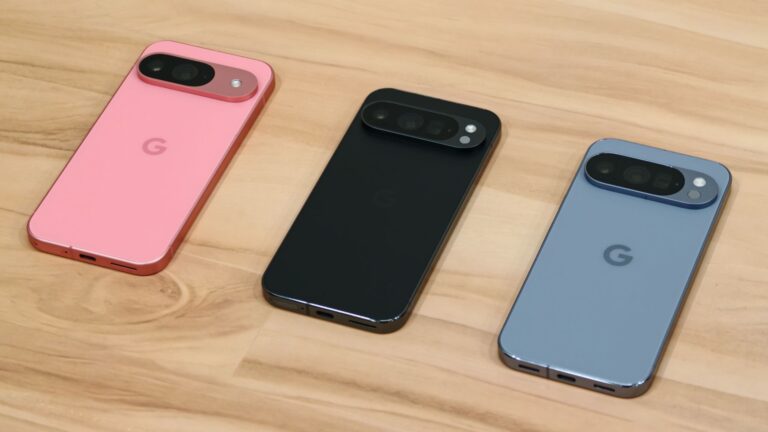
The Google Pixel 11 series is almost here, and while this year’s lineup isn’t expected to bring any groundbreaking upgrades over the Pixel 10 series, there are still a few notable improvements on the way, including a new MediaTek modem and Google’s first 2nm Tensor G6 chipset.
But new smartphone launches aren’t just about what’s coming next. They’re also a good opportunity to look back at the phones we already own and ask an important question: Is it actually worth upgrading?
For many people, that decision comes down to one thing more than anything else: battery life. A phone can still be fast, take great photos, and receive software updates, but once the battery starts struggling to last through the day, it’s much easier to justify buying something new.
Google’s Pixel phones haven’t exactly built a reputation for class-leading battery life, but the company has steadily increased battery capacities over the past few generations while introducing new battery health features designed to preserve long-term battery performance.
So ahead of the Pixel 11 launch, I wanted to see how well recent Pixel batteries have actually held up.
How I set up my battery test

To find out, I picked up three different Pixel phones: the Pixel 9, the Pixel 9 Pro, and the Pixel 10 Pro.
The Pixel 9 and Pixel 9 Pro both feature a 4,700mAh battery alongside Google’s Tensor G4 processor, while the Pixel 10 Pro packs a slightly larger 4,870mAh cell and the newer Tensor G5, built on a more efficient 3nm process. On paper, the Pixel 10 Pro should have the advantage. It has the newest battery, the largest capacity, and the newest chipset.
The Pixel 9 series is now roughly two years old, while the Pixel 10 Pro has been my primary Android phone for around a year. That makes this a good comparison to see how Pixel batteries hold up over time.
To keep things as fair as possible, I updated all three phones to the latest Android 17 version available, connected them to the same Wi-Fi network, charged each device to 100%, set the displays to roughly the same brightness, and looped the same YouTube video on all until they eventually ran out of battery.
Of course, a continuous video playback test isn’t a perfect representation of how people use their phones every day. But it does give every device an identical workload, making it one of the fairest ways to compare battery performance across multiple phones.
How do older Pixel batteries hold up?

I kicked off the test at around 5:45 p.m. with all three phones sitting at 100%.
For the first couple of hours, there was virtually nothing separating them. Each phone dropped by around 8%, leaving all three sitting at roughly 92%.
The first meaningful difference didn’t appear until around the four-hour mark. By then, both the Pixel 9 and Pixel 10 Pro had dropped to 83%, while the Pixel 9 Pro held a slight lead at 85%.
That trend continued for most of the test. Six hours in, the Pixel 9 sat at 74%, the Pixel 10 Pro at 73%, and the Pixel 9 Pro at 75%. In other words, there was only a two-percentage-point gap between all three phones despite the difference in age.
|
Time |
Pixel 9 |
Pixel 9 Pro |
Pixel 10 Pro |
|---|---|---|---|
|
5:45pm |
100% |
100% |
100% |
|
9:45pm |
83% |
85% |
83% |
|
11:45pm |
74% |
75% |
73% |
|
11:00am (next day) |
12% |
16% |
13% |
|
1:08pm |
0% |
3% |
1% |
|
1:17pm |
0% |
2% |
0% |
|
1:41pm |
0% |
0% |
0% |
As the test stretched into the following morning, the gap widened slightly. At around 11 a.m., the Pixel 9 had dropped to 12%, while the Pixel 10 Pro sat at 13%. The Pixel 9 Pro continued to hold onto a small lead at 16%.
The Pixel 9 was the first phone to die at 1:08 p.m. At that point, the Pixel 9 Pro still had around 3% remaining, while the Pixel 10 Pro had just 1% left.
The Pixel 10 Pro eventually shut down at 1:17 p.m., followed by the Pixel 9 Pro at around 1:41 p.m., lasting almost 20 hours from the start of the test.
So what do these results actually tell us?

On paper, the Pixel 10 Pro should have comfortably led the pack. It has the newest battery, the largest capacity, and the Tensor G5 chip, which is built on a more efficient manufacturing process. Yet throughout the test, it remained remarkably close to the two-year-old Pixel 9 series and ultimately finished behind the Pixel 9 Pro.
To me, that’s actually a positive sign for older Pixel owners. Despite nearly two years of use, the Pixel 9 Pro kept pace with Google’s newer flagship throughout almost the entire test and even managed to outlast it in the end.
One battery test obviously doesn’t tell the whole story. Real-world battery life depends on everything from network conditions and screen brightness to the apps you use every day.
Still, I think the results are encouraging. While Pixel phones may not lead the Android market in outright battery life, Google’s recent efforts to improve long-term battery health appear to be paying off.
Based on this test, older Pixel batteries seem to be holding up surprisingly well. So if battery life is the only reason you’re considering an upgrade, there may not be enough here to justify switching to the Pixel 11 when it arrives next week.