Fauci Pleads the Fifth at Senate Hearing on COVID, Escalating Long-Running Clash With Republicans

July 29, 2026:

Fauci Pleads the Fifth at Senate Hearing on COVID, Escalating Long-Running Clash With Republicans

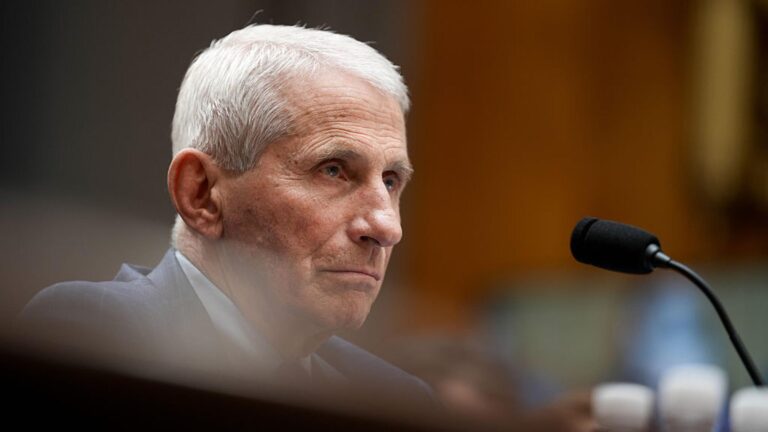
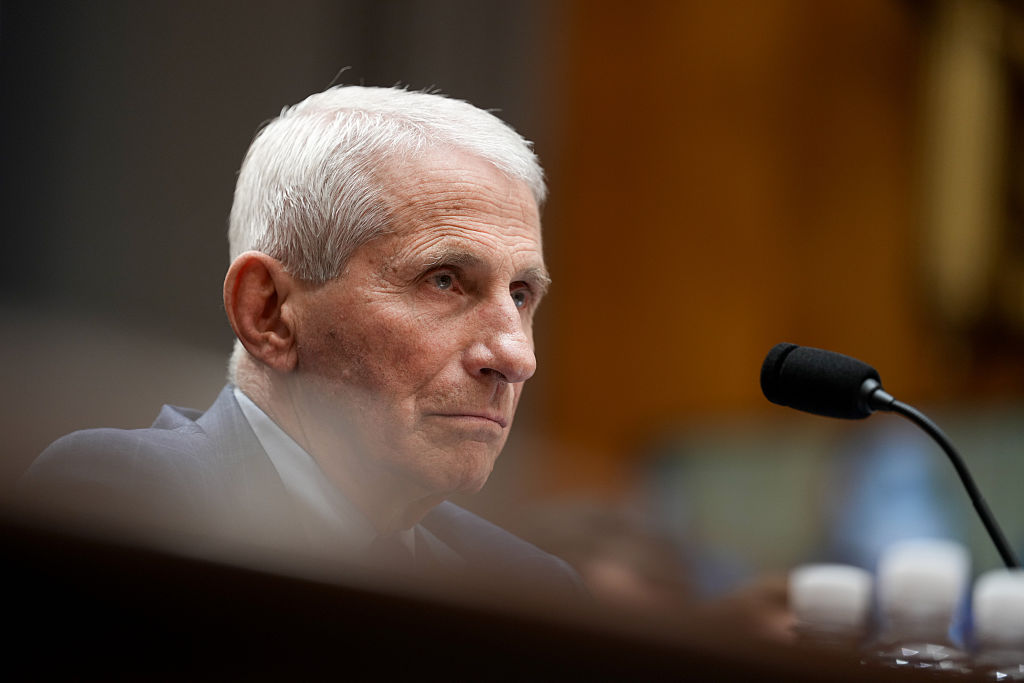
Anthony Fauci, former director of the National Institute of Allergy and Infectious Diseases, during a Senate Homeland Security and Governmental Affairs Committee hearing in Washington, D.C., on July 29, 2026. —Al Drago—Bloomberg/Getty Images

Dr. Anthony Fauci, the longtime infectious disease expert who helped lead the federal government’s response to the COVID pandemic, invoked his Fifth Amendment right against self-incrimination on Wednesday, refusing to answer questions at a Senate hearing that Republicans had hoped would expose him to potential perjury charges and discredit his handling of the nation’s pandemic response.

Appearing before the Senate Homeland Security and Governmental Affairs Committee after being subpoenaed by Senator Rand Paul of Kentucky, the panel’s Republican chairman and one of Fauci’s most persistent critics, the former director of the National Institute of Allergy and Infectious Diseases declined to answer questions just minutes into the hearing, saying Paul had made clear his goal was to seek his prosecution.

“The only conclusion I can reach is that the sole reason he is calling me before this committee is to get me to say something, anything, that could vindicate his repeated public pledges that I end up, in his words, ‘behind bars,'” Fauci said in his opening statement. He accused Paul of having an “obvious obsession with calling for my prosecution” and said the Senator’s release of his personal pandemic diary was intended to intimidate and embarrass him.

“Although it pains me to do so because of the respect that I have for the legislative branch of government and my decades-long record of cooperating with Congress,” Fauci said, “under the advice of my attorneys, I will invoke my right under the Fifth Amendment of the Constitution to refrain from answering your questions.”

The hearing marked a dramatic moment in the yearslong political battle over the pandemic. Fauci, who advised seven presidents and became the nation’s most recognizable public health official during COVID, has appeared before Congress hundreds of times over four decades;  Wednesday was the first time he invoked the Fifth Amendment.

The infectious disease expert has been a primary target of Republicans’ continuing effort to revisit the government’s response to the pandemic and the disputed origins of the coronavirus, issues that have remained central to conservative criticism of Fauci years after he left government service in 2022. Paul and other Republicans have long alleged that the National Institutes of Health funded so-called gain-of-function research at the Wuhan Institute of Virology that contributed to the pandemic, an accusation Fauci has consistently denied. Fauci has maintained that, under the government’s definition of gain-of-function research, NIH did not fund such work related to the virus that caused COVID. Federal reviews have not reached a definitive conclusion about the virus’s origin, and there is no evidence it was engineered and leaked from a laboratory.

Former President Joe Biden gave Fauci a preemptive pardon in the final hours of his Administration in an effort to protect him from politically motivated charges. But Paul, who has repeatedly accused Fauci of misleading Congress about federally funded virus research in China and the origins of COVID, argued the hearing was necessary regardless. “A pardon that protects a person from criminal prosecution doesn’t rewrite history,” the Kentucky Senator said in his opening statement. “It does not erase documents. It does not convert a misleading statement to a truthful one, and it does not prevent Congress from establishing what happened.”

Ahead of Wednesday’s hearing, Paul released roughly 1,100 pages from Fauci’s pandemic-era diary, arguing the documents showed discrepancies between Fauci’s private thinking and his public testimony. 

As Paul pressed ahead with questions despite Fauci’s refusal to testify, the former health official responded each time with the same statement: “On the advice of counsel, I respectfully decline to answer based upon my rights under the Fifth Amendment to the Constitution.”

At one point, Paul remarked, “Let the record record that the witness has refused to answer whether there’s a folder in front of him based on his Fifth Amendment right.”

The hearing also unfolded amid mounting pressure from Trump Administration officials to revisit Fauci’s testimony under oath. Health and Human Services Secretary Robert F. Kennedy Jr. said earlier this week that Fauci could face perjury charges if he lied during the hearing despite Biden’s preemptive pardon, arguing, “There are many things that (Fauci) said that we know are lies,” and adding that “if he lies again, then he could be subject to perjury prosecution.”

President Donald Trump likewise weighed in before the hearing, saying on Truth Social that Fauci “made too many bad calls” during the pandemic and asserting that he “didn’t let (Fauci) shut the Country down.” Trump has repeatedly criticized Fauci’s recommendations on masks, shutdowns, and other public health measures.

Biden’s pardon shielded Fauci from federal prosecution over actions and testimony connected to his government service during the pandemic. But Republicans have argued that any false statements made in new testimony could expose him to fresh legal jeopardy, a possibility Paul openly discussed before the hearing.

Asked this week about concerns that the hearing was designed to lure Fauci into committing perjury, Paul dismissed the criticism. “There’s no risk to perjury if you tell the truth,” he told reporters. “The only thing he can’t do is lie again.”

Democrats criticized the hearing as a partisan exercise. Senator Gary Peters of Michigan, the committee’s top Democrat, argued the panel should be focusing on current national security threats rather than revisiting disputes over the pandemic. “Instead of focusing on the national security challenges that we are facing in our country right now, today’s hearing looks backwards,” Peters said at the hearing. “Rather than building on that work to strengthen our preparedness against future disasters, we are instead relitigating the past.”

Source link