July 23, 2026:


President Donald Trump announced this week that he plans to impose tariffs on generic drugs imported into the U.S. starting in 2028—a policy that experts say could have far-reaching consequences for the prices and availability of those medications.
In a Truth Social post on Tuesday, Trump said that, starting in August 2028, all imported generic drugs will be slapped with a tariff of 100% for a year-long period, after which that rate will be raised to 200%.
“This is done in order to RESHORE Generic Pharmaceutical Production into America, with a penalty to those Companies that decide not to build Plant and Equipment within the stated period of time given to them,” the President said. “The objective of this Policy is to protect the people of the United States.”
He did not share further details of what “penalty” he would levy against pharmaceutical companies that choose not to build factories in the country. Since taking office for a second term, Trump has repeatedly imposed or threatened to impose tariffs on various products to pressure industries and countries into acquiescing to his demands. Companies have in turn raised the retail prices for products in a number of cases, increasing costs for consumers. A research note published by the Federal Reserve earlier this year found that the tariffs Trump put in place last year, up through the end of November, raised prices for core goods by 3.1% through February.
While much of Trump’s plan to tax generic drug imports is still unclear, experts say that, if the President follows through on the threat, the proposed tariffs could have a significant impact on many Americans.
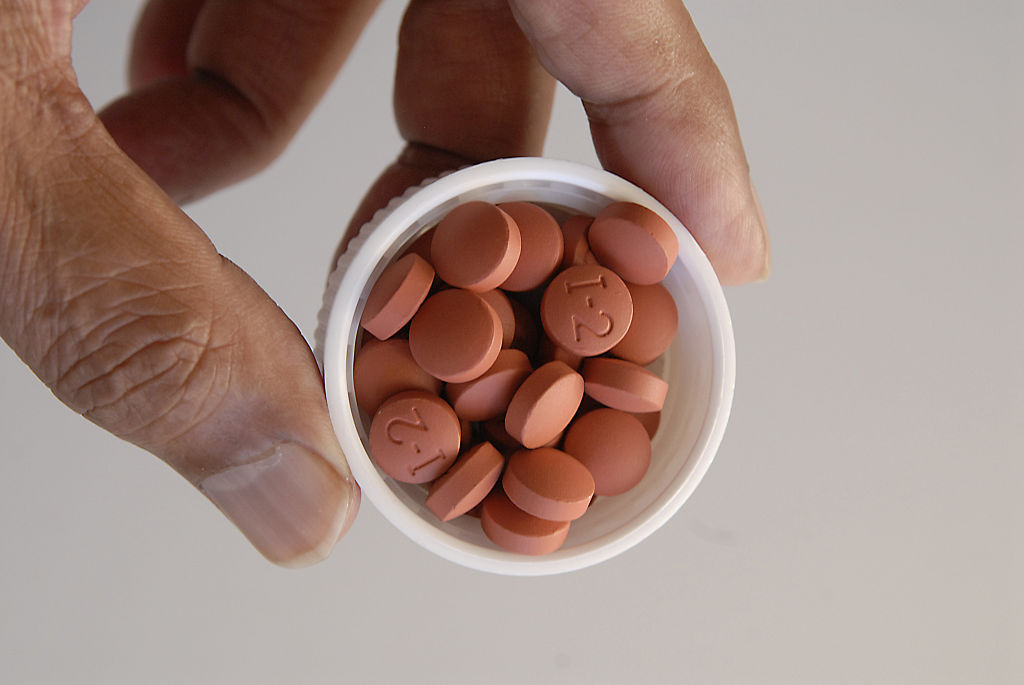
Generic drugs are medications that are created with the same active ingredients as those found in brand-name drugs but typically are sold at much lower prices.
Robin Feldman, a professor at the University of California Law San Francisco and an expert in drug markets, told TIME in an email that the average price of generic medications is “far below” that of brand-name ones. According to her research, which is based on claims for 1 million Medicare patients from 2005 to 2019, the average, dosage-unit cost of a generic drug is $4, compared to $157 for brand-name drugs after accounting for rebates.
Generic drugs make up more than 90% of prescriptions filled in the U.S., according to the Food and Drug Administration.
Over the past decade or so, production for those drugs has increasingly moved to other countries, with India and China as the leading sources—which has raised national security concerns from lawmakers on both sides of the political aisle.
India supplies roughly half of the generic drugs in the U.S., according to a 2025 report from the Senate Committee on Aging. The report additionally found that about 80% of the active pharmaceutical ingredients used by Indian manufacturers are supplied by China.
China also supplies many commonly used generic drugs—a 2023 report from a lobbying organization called the Coalition for a Prosperous America found that China accounts for about 95% of imports of ibuprofen and 70% of imports of acetaminophen.
“Tariffs are most effective when they are threatened but not actually applied. Here, the administration is sending a ‘Made in America’ message to the generics industry: In other words, make it here or sell it elsewhere,” Feldman told TIME. “Generic drugs account for 90% of pharmaceutical sales in the U.S, which means that the impact of the drugs would be far-reaching.”
Because generic drugs are far cheaper than the brand-name versions, though, she pointed out that they “would still be much less expensive than branded drugs” even if the President imposed his planned tariffs and the price of generic drugs doubled.
Even so, Merith Basey, the CEO of advocacy organization Patients For Affordable Drugs, expressed concern to Reuters that “Imposing massive tariffs on generic medicines risk making lower-cost generic drugs millions of Americans rely on more expensive and harder to access.”
Some experts have also said that they worry that high tariffs may lead to a shortage of some generic drugs in the U.S., if manufacturers decide to leave the American market entirely.
The rising cost of health care is already a major concern for many Americans: A little less than 50% of adults in the country say it’s hard to afford these costs, and more than 40% say they haven’t taken medication prescribed by their provider in the past 12 months because of the high costs, according to recent KFF polling. The country has also grappled with several impactful drug shortages in recent years.
The impact for consumers of Trump’s planned generic drug tariffs will ultimately hinge on whether the President follows through on his threat—and how the industry responds to it, which remains to be seen.
“We need to understand more the specifics of the policy, but the generics industry is committed to pursuing policies that support and stabilize both the industry and the access necessary to ensure patients have reliable options for affordable medicines,” John Murphy III, president and CEO of the Association for Accessible Medicines, a trade group for generic drug makers, said in a statement to news outlets.