The Backlash to Anthropic's Ad Misses Something Bigger

July 17, 2026:

The Backlash to Anthropic's Ad Misses Something Bigger

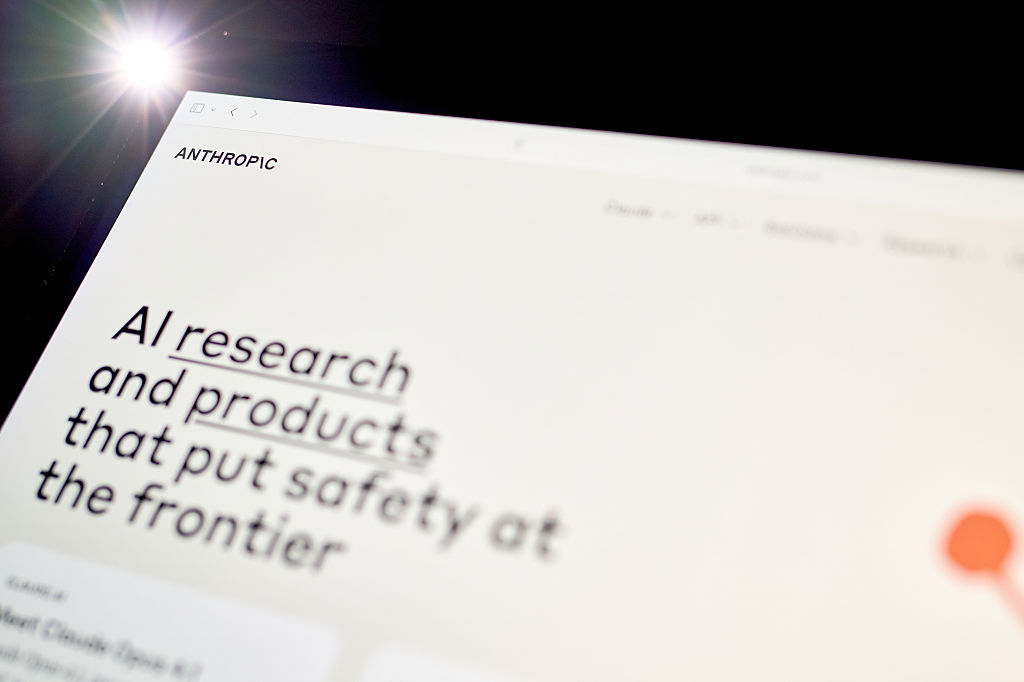
The Anthropic website on a laptop. —Gabby Jones—Bloomberg/Getty Images

People were quick to dunk on a recent Anthropic ad, part of a campaign designed to show the company is listening to people’s concerns about AI. The video features audio of people asking questions like “Can AI be trusted?” and “Who’s going to hit the brakes?” over flashing images that included protests, the unhoused, and a flaming home. After pivoting to a warmer tone—”Could AI help people stop feeling misunderstood?”—the ad finishes with the text, “There’s hope in hard questions,” followed by Anthropic’s tagline: “Keep thinking.”

Among the online critics was OpenAI CEO Sam Altman. “i thought this was satire, kept looking for the handle to be spelled c1audeai or something,” he posted to X. The ad’s most liked YouTube comment calls it “dystopian marketing slop.” Atlantic writer Lila Shroff described the ad as “tone-deaf.” In the words of one X poster, Anthropic seems to want to “scare everyone about AI, then pose as the only ones humble enough to be trusted.”

This isn’t the first time an Anthropic commercial has divided viewers. The company’s Super Bowl spot, which poked fun at OpenAI for testing ads in ChatGPT, won a Grand Prix in the Film category at Cannes Lions 2026. Yet it ranked in the bottom 3% for general audience likeability. according to one survey. Many people had no idea OpenAI was considering bringing ads to ChatGPT, so the punchline landed flat—perhaps indicative of the wider cultural disconnect between Silicon Valley and everyone else.

Ironically, the latest ad was meant to show the opposite: that Anthropic is listening. The voices came from people the company interviewed on a U.S. roadshow last spring, part of a wider effort that has surveyed more than 120,000 people across 159 countries. Daniela Amodei, Anthropic’s president, told TIME in a recent interview that the campaign was a “culmination of work that we have been doing, essentially around this concept that people’s thoughts and feelings and worries and excitements and concerns about AI are not only very valid, but something that, as a company, as Anthropic—one of the leaders in actually training these models and building this technology—we really want to hear.” (Anthropic did not provide comment for this article at the time of publication.)

The controversy the ad stirred up is symptomatic of a deeper rupture. The AI industry’s warnings about AI’s risks are often dismissed as mere marketing. When Anthropic chose not to release Mythos Preview on the grounds that its cybersecurity capabilities were too dangerous to release, for example, governments took the warning seriously. But much of the public did not. Critics treated the announcement as a sophisticated marketing stunt—even though, two months earlier, a hacker had used a weaker version of Claude to help steal 150 gigabytes of data from the Mexican government, and Mythos Preview is, by independent measures, significantly more powerful. 

To be sure, Anthropic benefits from presenting its models as uniquely powerful and itself as a responsible steward of a world-changing technology. And Anthropic has walked back safety pledges before. But taking Anthropic’s warnings seriously is not the same as trusting it to solve the problem.

Part of the public cynicism is born of the fact that Anthropic is racing as hard as anyone to build the technology it’s warning us about. But that doesn’t mean those warnings are insincere. The company believes that, were they to stop building AI, others would continue, and has therefore concluded the safest path is to try to lead its development.. The first proposition is plausible; the second is arguably  self-serving. Along with OpenAI and Google DeepMind’s CEO Demis Hassabis, Anthropic has recently said it would favor building a way to internationally coordinate  an option to one day slow down model development.

The fossil-fuel industry suppressed evidence of climate change for decades, just as Big Tobacco obscured the link between smoking and lung cancer. Had those industries spoken plainly about the dangers of their products, their motives would rightly have been scrutinized—but the candor itself would have been preferable to years of deceit. The same should be true of AI. A company that cops to the risks of its business is preferable to one that minimises or conceals them, even if you believe doing so doubles as brand-building.

The ad’s most provocative image was of American soldiers’ tombs at the Arlington National Cemetery. For some, evoking death and sacrifice was perplexing and distasteful; a step too far. “I can’t stress enough how f—ed up it is that Anthropic is running an ad that includes this image,” Zack Korman, CEO of AI cybersecurity company Embroidery posted to X. But if you believe, as Anthropic CEO Dario Amodei does, that AI poses a 10% to 25% chance of a civilisation-ending catastrophe, the image of tombs is a stark acknowledgement of the stakes. Amodei’s assessment of the dangers may be right or wrong, but an ad that grapples with those risks is arguably more honest than previous campaigns that present Claude as a tool for tinkerers and problem solvers.

Source link