


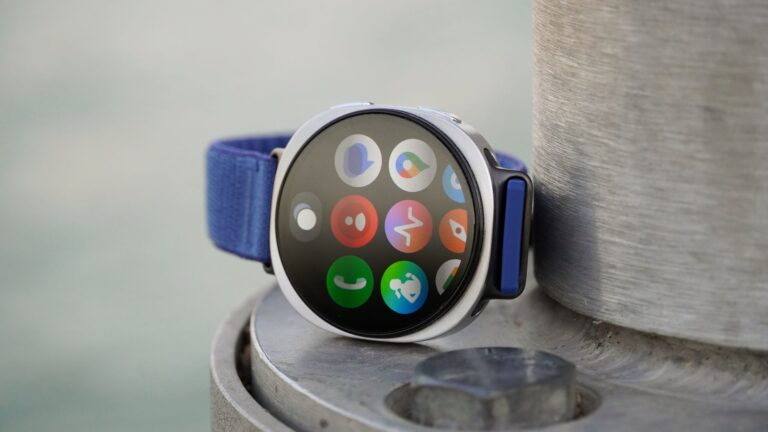

New chip ahoy!
The Samsung Galaxy Watch 9 should arrive in July 2026 and is expected to debut Qualcomm’s new Snapdragon chip. This upgrade alone should unlock features like better battery life, new on-device AI capabilities, 5G connectivity, and better all-round performance.
Pros
- Expected to debut the Snapdragon Wear Elite chip
- Might add ultra-wideband (UWB)
- New Galaxy AI features likely
- Expanded health monitoring features
Cons
- Should look similar to the Watch 8
- Some health and fitness tracking features expected to go behind a subscription paywall
- More expensive (?)

Current best
The Samsung Galaxy Watch 8 stands out from the crowd thanks to the squircle design. It’s incredibly light and slim, delivers accurate fitness tracking data, and has plenty of AI smarts. Battery life is the only weak point which means you need to charge it daily.
Pros
- Cushion design looks stunning
- Very slim and light
- Wear OS 6 with Gemini support
- Near Garmin-level accuracy for health and GPS tracking
Cons
- Requires almost daily charging
- No big price cuts yet
- Strap feels a bit too thin compared to the body
We’re nearing the middle of 2026, and this means two things — we’re nearly halfway to the launch of GTA VI (fingers crossed), and it’s time for new Samsung wearables to drop. Going by the last couple of years, we should have the next Samsung Unpacked announcement soon slated for July, where the new foldables, watches, and audio products will be unveiled. There’s little known about the Samsung Galaxy Watch 9 so far, and this could mean one of two things: either Samsung knows how to keep a secret, or the upgrades won’t be that significant.
Either way, if you’re looking to get a new Samsung watch or upgrade your existing one, should you wait for the Galaxy Watch 9 or simply buy the Galaxy Watch 8 right now? Word on the web is that Samsung might not be making any major hardware changes to the Watch 9, but it is rumored to finally get a new processor, which could usher in improvements across the board to battery life, AI features, and new metrics to monitor.
If you’re unsure about waiting, here’s a breakdown of what we expect from the Galaxy Watch 9 and how it should compare to the Watch 8.

Samsung Galaxy Watch 9 vs. Galaxy Watch 8: Design and display

It’s surprising that we don’t have any leaked renders of the Galaxy Watch 8 yet, but a mention of its model number showed up in a recent test firmware, thereby confirming that it should be on track for a July release. Based on everything we know about the Galaxy Watch 9 so far, it should look and feel almost identical to the Galaxy Watch 8. This also means we should be expecting the usual two sizes of 40mm and 44mm, with each having Wi-Fi and cellular options.
The Galaxy Watch 8 was pretty slim and light, and we expect the Watch 9 to have the same or better specifications. You should expect a thickness of about 8.6mm and a weight of either 30 grams or 34 grams, depending on the variant you choose. The same ruggedness should also transfer, which includes the IP68 rating and MIL-STD-810H certification.
Not everyone is a fan of the squircle design of the Galaxy Watch 8, but I personally think it looks quirky enough to stand out. The Watch 9 will most definitely use the same design, as I don’t think Samsung will backtrack to the circular design anytime soon (if ever).

We’re likely to see the same display size used on the Galaxy Watch 9 too. The 44mm Galaxy Watch 8 had a 1.47-inch Super AMOLED panel with a 480×480 resolution, up to 3,000 nits of peak brightness, and a Sapphire Crystal glass cover. It’s possible the Galaxy Watch 9 will tweak these specs a bit, like a higher peak brightness or even a slightly larger display in the same frame, but I don’t see any other changes beyond this.
The Galaxy Watch 8’s display has been excellent when we tested it, and we have no real complaints here. Touch response is great, sunlight legibility is adequate, and colors are rich and vibrant. You should expect the same or better quality display from the Galaxy Watch 9.
Samsung Galaxy Watch 9 vs. Galaxy Watch 8: Hardware & specs
The big upgrade that we’re all expecting to see in the Samsung Galaxy Watch 9 is the processor. Samsung has used the Exynos W1000 chip for the past two generations of Galaxy watches, so it’s due for an upgrade. My money is on Qualcomm’s recently announced Snapdragon Wear Elite platform for wearables.
Compared to the W5 Gen 2 chip, it’s expected to deliver up to 5x and 7x performance for the CPU and GPU, respectively. The NPU is rated at 10 TOPS and can handle 2B-parameter AI models, making it well-suited to running the upcoming Gemini Intelligence or even Gemini Live. The Watch 9 should still come with 2GB of RAM and 32GB of storage, just like the Watch 8.
As for pricing, the Galaxy Watch 8 was already $50 more expensive than its predecessor, starting at $349.99. Samsung has held onto this price till now with only minor discounts on some shopping platforms. I’m hoping Samsung keeps the same price for the Galaxy Watch 9 too. The 44mm variant starts at $379.99, and you can add another $50 if you pick the LTE variant. The Watch 9 could debut with 5G connectivity as the Wear Elite chip can support it.
|
Category |
Samsung Galaxy Watch 9 (speculative) |
Samsung Galaxy Watch 8 |
|---|---|---|
|
OS |
One UI Watch 9 (Wear OS 7) |
One UI 8 Watch (Wear OS 6) |
|
Screen Size |
40mm (1.34-inch, Super AMOLED, up to 3,000 nits, 438 x 438 pixels, Sapphire Crystal) ; 44mm (1.47-inch, 480 x 480 pixels) |
40mm (1.34-inch, Super AMOLED, up to 3,000 nits, 438 x 438 pixels, Sapphire Crystal) ; 44mm (1.47-inch, 480 x 480 pixels) |
|
Storage |
32GB |
32GB |
|
Swappable Band |
Yes |
Yes |
|
Battery |
40mm (325mAh), 44mm (435mAh) |
40mm (325mAh), 44mm (435mAh) |
|
Battery Life |
Up tp 40 hours |
Up to 40 hours |
|
Sensors |
Accelerometer, Barometer, Bioelectrical Impedance Analysis Sensor, Electrical Heart Sensor, Gyro Sensor, Geomagnetic Sensor, Infrared Temperature Sensor, Light Sensor, Optical Heart Rate Sensor |
Accelerometer, Barometer, Bioelectrical Impedance Analysis Sensor, Electrical Heart Sensor, Gyro Sensor, Geomagnetic Sensor, Infrared Temperature Sensor, Light Sensor, Optical Heart Rate Sensor |
|
GPS |
Yes, dual-band |
Yes, dual-band |
|
Water Resistance |
5ATM, IP68 |
5ATM, IP68 |
|
Dimensions |
Unknown |
40mm (42.7 x 40.4 x 8.6 mm) ; 44mm (46 x 43.7 x 8.6 mm) |
|
Weight |
Unknown |
40mm (30g) ; 44mm (34g) |
|
Colors |
Unknown |
Graphite, Silver |
Some of the other specs that could change with the new chip would be an upgrade to Bluetooth 6 and Wi-Fi 6. Dual-band GPS should make it as well, which is what makes the Watch 8 one of the best GPS smartwatches on the market.
The Galaxy Watch 9 is expected to use the same health tracking sensors and battery capacity as the Watch 8. The one-day battery life of the 8 was our biggest gripe with the watch, especially since at least a two-day battery life has become quite common for most modern smartwatches. Even if the battery capacity remains the same on the Watch 9, I’m hoping that the new chip is able to extract a longer runtime per charge.
Samsung Galaxy Watch 9 vs. Galaxy Watch 8: Health & fitness tracking

The Samsung Galaxy Watch 8 already introduced a redesigned BioActive sensor for more accurate readings and the tracking of new metrics like Antioxidant Index, Running Coach, Vascular Load, and AGEs Index. We could see some upgraded LEDs for better tracking, or even for tracking new metrics.
Whether all of these features will be open and free to use like before also comes into question. Samsung has publicly toyed with the idea of a Samsung Health subscription model, and perhaps 2026 is the year it finally announces it. I don’t think it will hide commonly used health-tracking metrics behind a paywall, but advanced features like Sleep Coach could be put behind a paywall.
The Galaxy Watch 8 already does a fantastic job of tracking health and fitness data. In our review of the watch, we found that certain metrics like Energy Score tended to be overestimated at times. For instance, even when the score would be above 80, the watch would still suggest prioritizing rest. I’m hoping the Watch 9 addresses these few shortcomings with more accurate analysis.
Samsung Galaxy Watch 9 vs. Galaxy Watch 8: Should you wait?

Honestly, it doesn’t seem like the Galaxy Watch 9 is going to bring about any major upgrades, but if you’re not in a hurry, there’s no harm in waiting for a month or so to find out. If you already own the Galaxy Watch 8, I don’t see any reason to upgrade to the Watch 9, so you can safely skip this generation.
If you can’t wait and need a new watch or an upgrade right now, I would confidently recommend the Galaxy Watch 8 today. It’s still a fantastic product with a lot of life left in it. Apart from having to charge it daily, which is not a big deal in my opinion, it delivers excellent tracking performance, a beautiful display, is lightweight and comfortable, and has a cellular option.
If you need better ergonomics and slightly longer battery life, there’s the Galaxy Watch 8 Classic that’s also worth considering.
Value yet to be proven
The Samsung Galaxy Watch 9 is not out yet which means it’s hard to draw conclusions on it. From leaks so far, it’s not going to be a big upgrade so you could skip it if you have the Watch 8.
Best Galaxy for your wrist
The Galaxy Watch 8 is still the best Samsung smartwatch to buy, even nearly a year later. It doesn’t have a multi-day battery life, but it’s fantastic in pretty much all other areas.