There are already clear losers from the war in Iran: The battered Iranian regime itself, the civilians under heavy bombardment in Iran and Lebanon, the Gulf countries’ whose reputation as a stable safe haven have been shattered by missiles and drones, the people everywhere — but particularly in the world’s poorest countries — impacted by high fuel and fertilizer prices and disrupted supply chains.
For the moment, it’s also not going very well for the Trump administration, which, despite some early US military success, finds itself stuck in an unpopular and costly war without a clear exit strategy. What the war will mean for others, from Israel to Iranian society, is still too early to say.
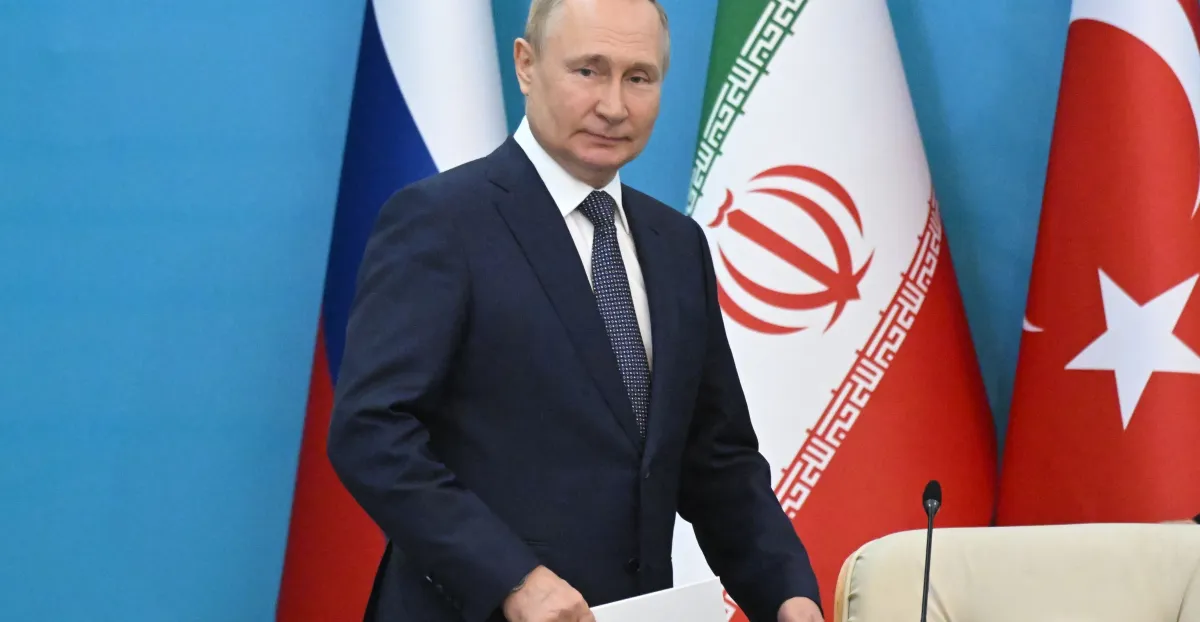
But there is one clear winner of the war so far: Russian President Vladimir Putin.
This is somewhat counterintuitive. Iran is an important strategic ally to a country with few close friends these days. Ayatollah Ali Khamenei is the third Russian-backed leader — after Syria’s Bashar al-Assad and Venezuela’s Nicolás Maduro — removed from power in recent months. Putin has strongly condemned the war and the killing of Khamenei.
But to the extent that Iran’s plight is a geopolitical setback for the Kremlin, it’s outweighed by the benefits of expensive oil, weakened sanctions, diverted munitions, and a distracted Western alliance. And it all happened at a moment right when the Russian leader, who faces economic upheaval at home and a continued bloody stalemate in Ukraine, needed a boost the most.
“In the short run, at least, Putin won the jackpot on this one,” said Angela Stent, an expert on Russia’s foreign policy at Georgetown University and the American Enterprise Institute.
Accounting for about a third of Russia’s government revenues, oil and gas are the lifeblood of the Russian economy, and therefore of its war effort in Ukraine as well. It’s not a coincidence that global crude prices were rising to record highs in the 2000s at the same time Putin was consolidating power. So the longer that energy prices remain hovering above $100 per barrel, the better it is for the Kremlin, particularly as Russia’s exports don’t rely on the now partially blocked Strait of Hormuz.
The Financial Times estimates that Russia is now earning an extra $150 million per day in oil sales thanks to the price surge since the start of the war — potentially a windfall of nearly $5 billion by next month if prices remain high, which they may even if the war ends.
It has also gotten easier for Russia to sell its oil. Last week, the Trump administration temporarily lifted sanctions on Russian oil currently at sea, allowing it to be shipped to buyers around the world, in an effort to take the pressure off energy prices.
The relief couldn’t come at a better time for Russia. Russian energy revenues dropped by nearly a quarter last year to their lowest levels since the Covid pandemic and were set for further declines. US sanction and tariff threats had resulted in a dramatic drop in Russian oil purchased by India, one of Russia’s most important customers, and the oil that was being sold was coming at a steep discount, a discount that has vanished in the past few weeks. The US and European governments were also belatedly taking steps to sanction and seize the “shadow” tankers used to transport Russian oil in violation of Western sanctions.
Russia’s difficulty selling oil before the war was only one aspect of an overall grim picture. A former Russian central bank economist recently warned in the Economist that the country’s economy had entered “the death zone” of slow growth, growing deficits, and little activity outside the defense sector. This may have provided some hope for Ukrainians that Russia’s taxing war effort was not sustainable indefinitely, but for the moment, Moscow has been handed a lifeline.
“It definitely gives the government some options that they didn’t have before,” said Janis Kluge, an expert on the Russian economy at the German Institute for International and Security Affairs. For now, however, Putin is happy to reap the benefits, telling Russian energy companies last week that they should “ take advantage of the current moment” to reduce deficits.
Arms and attention shift to the Middle East
If the war in Iran had broken out in 2022 or 2023, it might have provided a battlefield advantage to Ukraine. At that time, Russia was heavily dependent on Iran for the inexpensive Shahed one-way attack drones it has used to enormous effect in Ukraine. Now, however, Russia is producing thousands of its own version of the Shahed, known as the Geran-2, per year, reducing its dependence on its Middle Eastern ally.
On the other side of the front line, officials say American munitions meant for Ukraine, including badly needed systems like Patriot missile interceptors, may be diverted to the Middle East. Responding to questions about munitions shortages, Trump has lamented that US weaponry had been provided to “P.T. Barnum (Zelenskyy!)” and suggested that future aid to NATO and the Ukraine war effort could be linked to European militaries helping to open the Strait of Hormuz, which they have shown little inclination to do.
And while Russia is not getting militarily involved in the defense of its ally, it is reportedly taking the opportunity for some payback, providing the Iranians with targeting information on US forces in the region, much as the US has been providing information to the Ukrainians for years. It’s not clear exactly how central this help is to the Iranian missile effort, which, though badly degraded, has killed at least seven US servicemembers and hit high-profile targets, including a CIA station in Saudi Arabia.
On the diplomatic front, Ukraine has once again slid down the list of priorities in Washington and European capitals. US negotiators have delayed planned talks that were set for this week in Turkey. It’s far from clear whether Russia was engaging seriously in these talks in the first place, but Putin is no doubt content to keep prosecuting a war he continues to believe can be won on the battlefield.
Ukrainian President Volodymyr Zelenskyy acknowledged the issue last week, telling reporters, “We would very much not like the United States to step away from the issue of Ukraine because of the Middle East.”
Ukraine hopes to gain an advantage
Zelenskyy is also hopeful that there are some advantages to be gained in the crisis. For once, Ukraine is a source of military aid, rather than a recipient, having dispatched experts to the Middle East last week to provide guidance on shooting down Iranian missiles and drones. The Ukrainian government is hopeful that these consultations could turn into long-term deals for its country’s burgeoning defense tech sector, which, in addition to badly needed funds, could also gain Ukraine some leverage with the Gulf States, some of which also have close relations with Russia. The US reportedly turned down a drone tech deal with Ukraine last year, and Trump turned down Zelenskyy’s offer of help last week.
If the war has provided a showcase for Ukraine’s air defense know-how, it’s been a less impressive performance by Iran’s Russian-provided air defenses, which have proven badly outmatched by US and Israeli attacks. It’s hard to imagine that too many countries will be lining up to buy Russia’s S-300s after this war.
A reprieve, not a reversal
Just how much of an advantage Russia gains from America’s latest war may depend in large part on how long it lasts. The economic benefits are likely to be minimal if the disruption to global oil markets ends in the next few weeks. If the war were to end in full-scale regime change and the replacement of the Islamic Republic with a pro-American government, that would also be far less advantageous to Russia than a prolonged quagmire for the US that ends with a hardliner like newly anointed Supreme Leader Mojtaba Khamenei or another like-minded leader in power.
Politically, though, the effects may be longer lasting. Anger in the Global South over US support for Israel during the war in Gaza already undermined the Biden administration’s efforts to build a united front to isolate Russia. Putin, who has offered to serve as mediator in the Iran war, is likely to take full political advantage of a situation where much of the world sees the US, rather than Russia, as the aggressor.